What we like
- Up to eight room zones can become separate Matter occupancy sensors
- Zone setup can use an existing Thread network without an Aqara hub
- Side, corner and ceiling mounting suit different room shapes
- Ambient light sensing is shared alongside occupancy
What could be better
- $30 more than FP300 and needs continuous USB-C power
- Scanning the device code directly leaves out custom zones
- Headcount is not documented as a shared Matter feature
- Reflective surfaces, airflow and close groups can reduce accuracy
Buy it for room zones
Spatial Multi-Sensor FP400 makes sense when one open-plan room needs several different occupancy signals. A desk light can respond to the desk zone while the sofa and doorway trigger their own routines. Aqara lets up to eight custom zones appear as separate occupancy sensors in a Matter platform after they are configured in Aqara Home.
That is the reason to spend $79.99, not simply the promise of more sensitive presence detection. A whole-room occupied or unoccupied signal is available from cheaper sensors. FP400 earns the premium when replacing several sensor positions or when the location of a person inside the room should change the automation.
Matter setup has a worthwhile middle path
The simplest direct pairing method is also the most limited. Scanning the Matter code on the FP400 itself exposes one whole-room occupancy sensor and one ambient light sensor. It leaves out the custom zones that justify the price.
With a compatible Thread border router already running, Aqara documents a better route. Aqara Home can configure the zones, sensitivity and absence delay over the local Thread network without an Aqara hub, then share the whole-room sensor, up to eight zone sensors and the light sensor to a Matter platform. Remote configuration, duration statistics, Aqara automations and logs still require a compatible Aqara hub.
The alternative Zigbee mode is for a deeper Aqara setup. It is not a second simultaneous connection, and changing protocols resets the device. Buy FP400 for the path you intend to use rather than treating the two radios as automatic redundancy.
Do not buy it as an exact people counter
Aqara advertises tracking for as many as 10 people in its app, but its own documentation says multi-person counts can be wrong by one to three people. Targets closer than about one metre can merge or move unpredictably in the map. Headcount is also absent from the documented list of functions shared with a third-party Matter platform.
That makes FP400 useful for coarse questions such as whether the sofa or desk area is occupied, not as a reliable occupancy-limit counter. Matterhome has not tested its detection accuracy. Treat the 10-person figure as the sensor's app-side tracking capacity, not a guarantee that every controller receives an exact count.
Placement still takes work
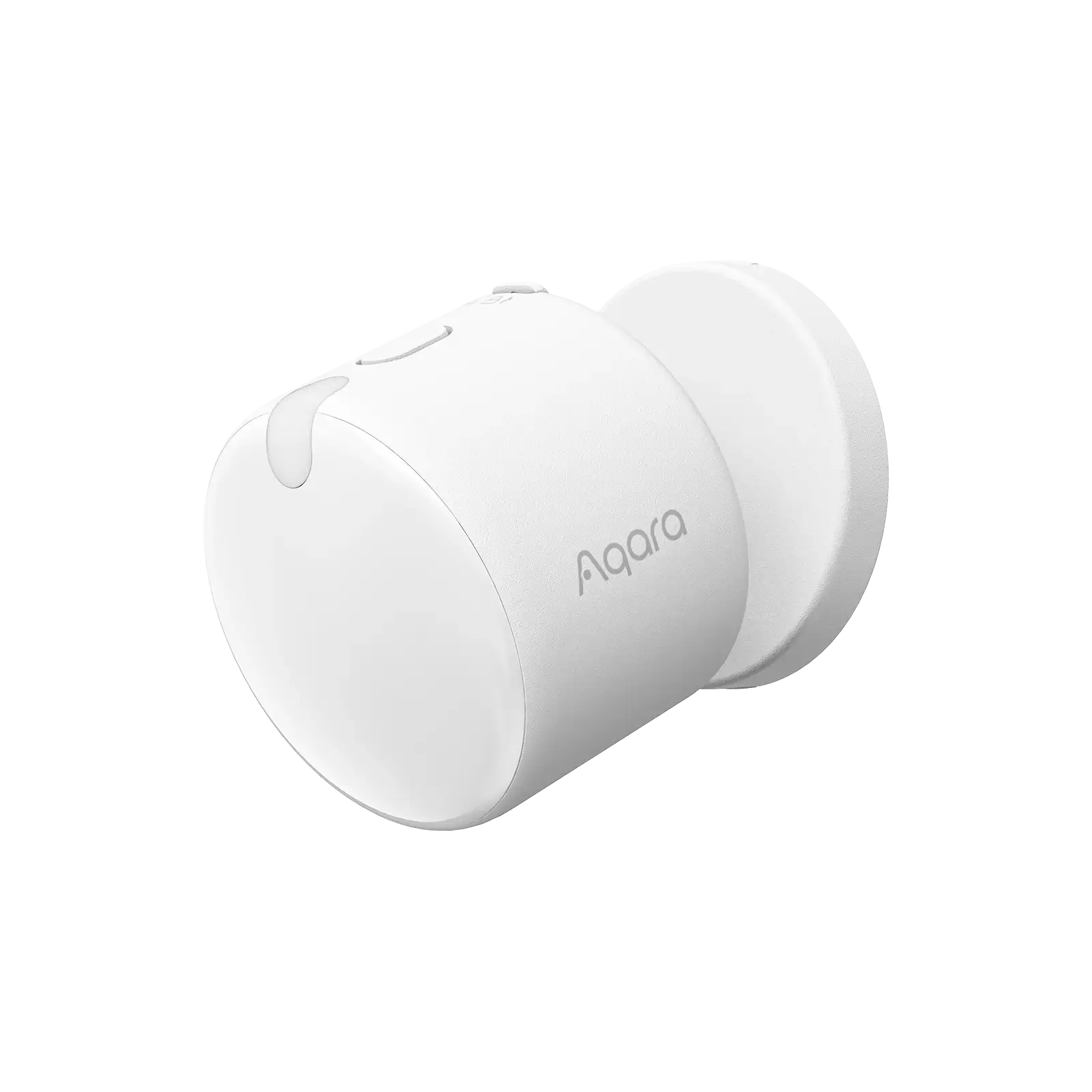
FP400 uses continuous 5 V USB-C power, so the best radar position also needs a cable route. The adjustable base supports wall, corner and ceiling positions, and Aqara recommends corner mounting for broad room coverage. A rented room or a finished wall with no nearby outlet may make the otherwise useful flexibility awkward.
Radar does not remove the need for tuning. Aqara's troubleshooting guide calls out moving curtains, fans, air-conditioning airflow, pets, robotic vacuums, mirrors, glass and metal as possible sources of false or reflected targets. The app can mark boundaries and interference zones, but a complex room may need more calibration than the product-page diagrams suggest.
FP300 is the easier default
Aqara FP300 was $49.99 in the US on its latest check. It runs on replaceable batteries and adds temperature and humidity readings to presence and light sensing. It is the better buy for a bedroom or office that only needs a whole-room occupancy signal and has no discreet USB route.
FP400's $30 premium is reasonable for an open living space where separate sofa, dining and entry zones can replace several simpler sensors. Skip it when one occupied or unoccupied state is enough, or when the people-count headline is the main attraction.
Content feedback
Spot a mistake or missing context?
Send a quick note so it can be checked against the source material.