What we like
- Only $10 more than the ordinary MS-1 for linked sirens
- Separate batteries for smoke detection and Thread communication
- No custom routine needed to link matching alarms on one Thread network
What could be better
- Older MS-1 and MSC-1 alarms cannot join the Interlink group
- Large 110 mm body and no CO detection
- Linked warning depends on Thread coverage and the communication battery
The $10 upgrade that makes sense in pairs
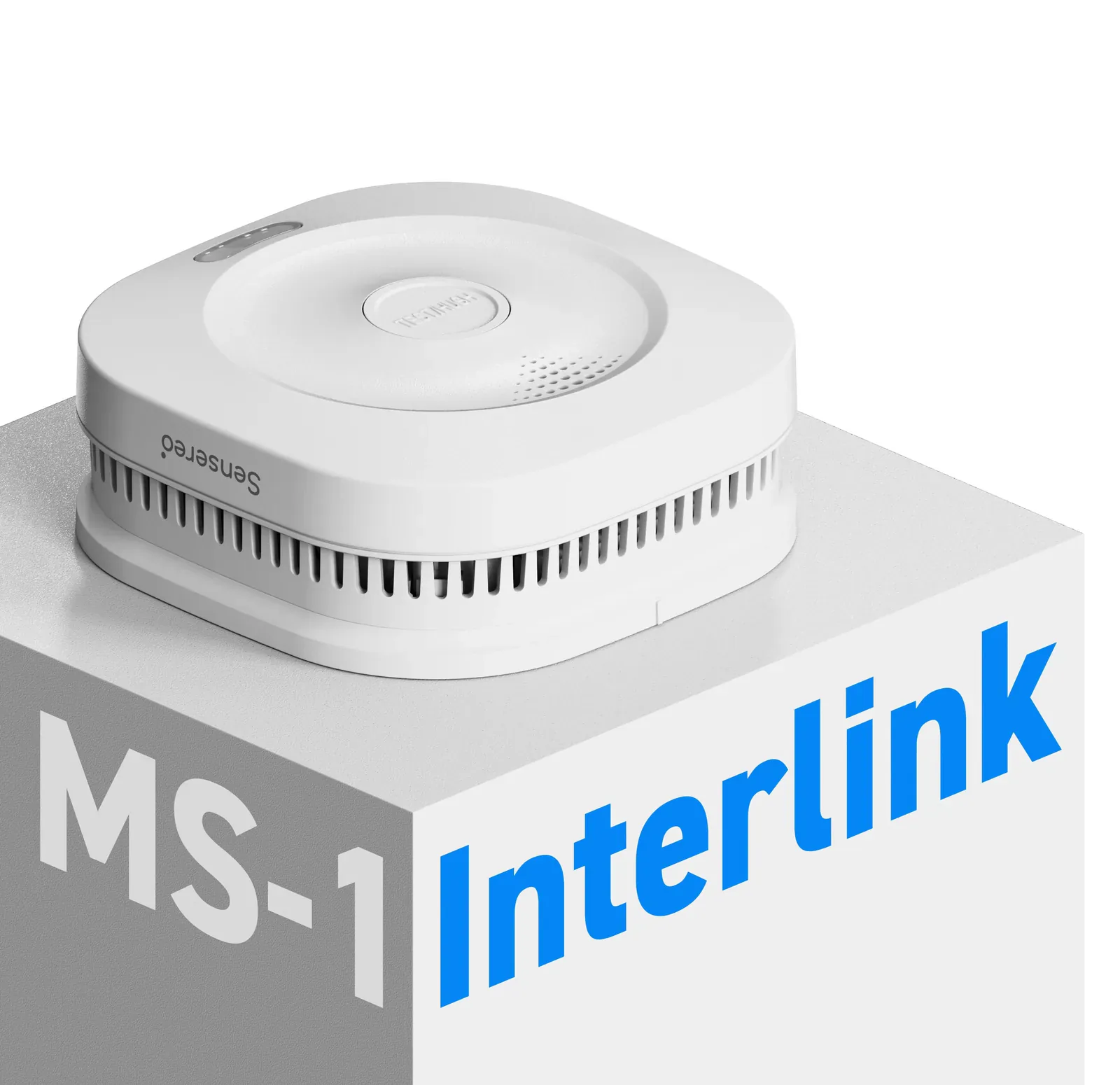
Sensereo MS-1 Interlink gives a convincing reason to spend a little more on a smoke alarm. When one compatible unit detects smoke, the others on the same Thread network sound too. You do not have to assemble a smart-home routine to turn separate alarms into a group.
Sensereo's direct store listed it as available at $59.99 on September 10, 2026. The ordinary MS-1 is $49.99, making Interlink a $10 premium per unit. For three new alarms, that is $179.97 versus $149.97 before applicable destination charges. I would pay the extra $30 for the linked model rather than buy three ordinary MS-1s and later discover that they cannot warn together.
Your older Sensereo alarms cannot join
This is the biggest drawback for an existing owner: standard MS-1 units cannot become members of the Interlink group. Neither can the smoke-and-CO MSC-1. They can appear in the same app, but that does not give them this alarm-to-alarm behaviour.
The new alarm is therefore easier to recommend as part of a fresh set than as a single upgrade to a house full of older Sensereo devices. One Interlink unit on its own has nobody to sound with. Its extra feature starts to earn its cost when there are at least two matching units.
Interlink also travels over your Thread network. Good coverage between the alarm locations is part of the product's value, not just a convenience for initial pairing. If you want linked sirens that use their own separate radio system, this is not that design. A Matter controller and Thread border router are needed for its connected features.
A useful battery split, in a fairly large case
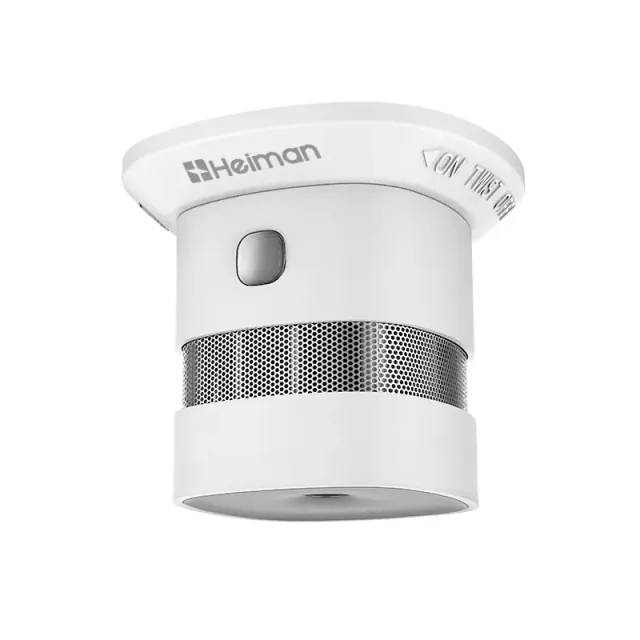
The 110 mm body is 41.6 mm deep. It looks like a conventional ceiling alarm, with a broad front test/hush button and vents around the edge. It is hardly discreet compared with Heiman's 60 mm HS1SA-M, but the wide button is a sensible use of the space.
Sensereo separates the power supplies: a sealed battery runs smoke detection, while a replaceable CR123A powers communication. Losing the connection therefore does not remove the alarm's own smoke warning. The distinction cuts both ways, though: a working local alarm does not prove that the networking battery and linked warnings are still healthy.
Sensereo specifies a seven-year replacement life for the whole alarm. Changing the communication battery does not extend that deadline, and the separate battery means this is not seven years of entirely maintenance-free ownership. Regular physical testing and cleaning still belong in the cost of keeping it.
Buy linked smoke warning, not a combination alarm
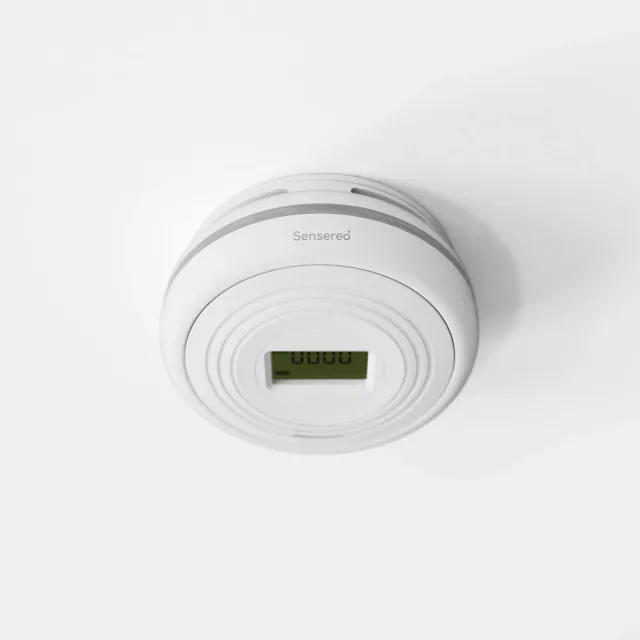
This model detects smoke only. MSC-1 costs $69.99 and adds CO sensing plus an LCD, but loses Interlink. Choose between them by the warning you need rather than assuming the more expensive product includes every feature of the cheaper one.
For a single small room where linked sirens are not needed, Heiman HS1SA-M is a compact alternative at €31.95 including German VAT, before delivery. For several new Sensereo smoke alarms, I would choose Interlink over the ordinary MS-1.
The reviewed model is marketed to European EN 14604 requirements; a dollar price does not make it a US-listed replacement. Keep an existing suitable, working interlinked system within its service life if the missing feature is merely a phone notification. MS-1 Interlink is appealing when its network and matching-unit requirements fit the house, not when buying it would break the warning system you already have.
Spot a mistake or missing context?
Send a quick note so it can be checked against the source material.