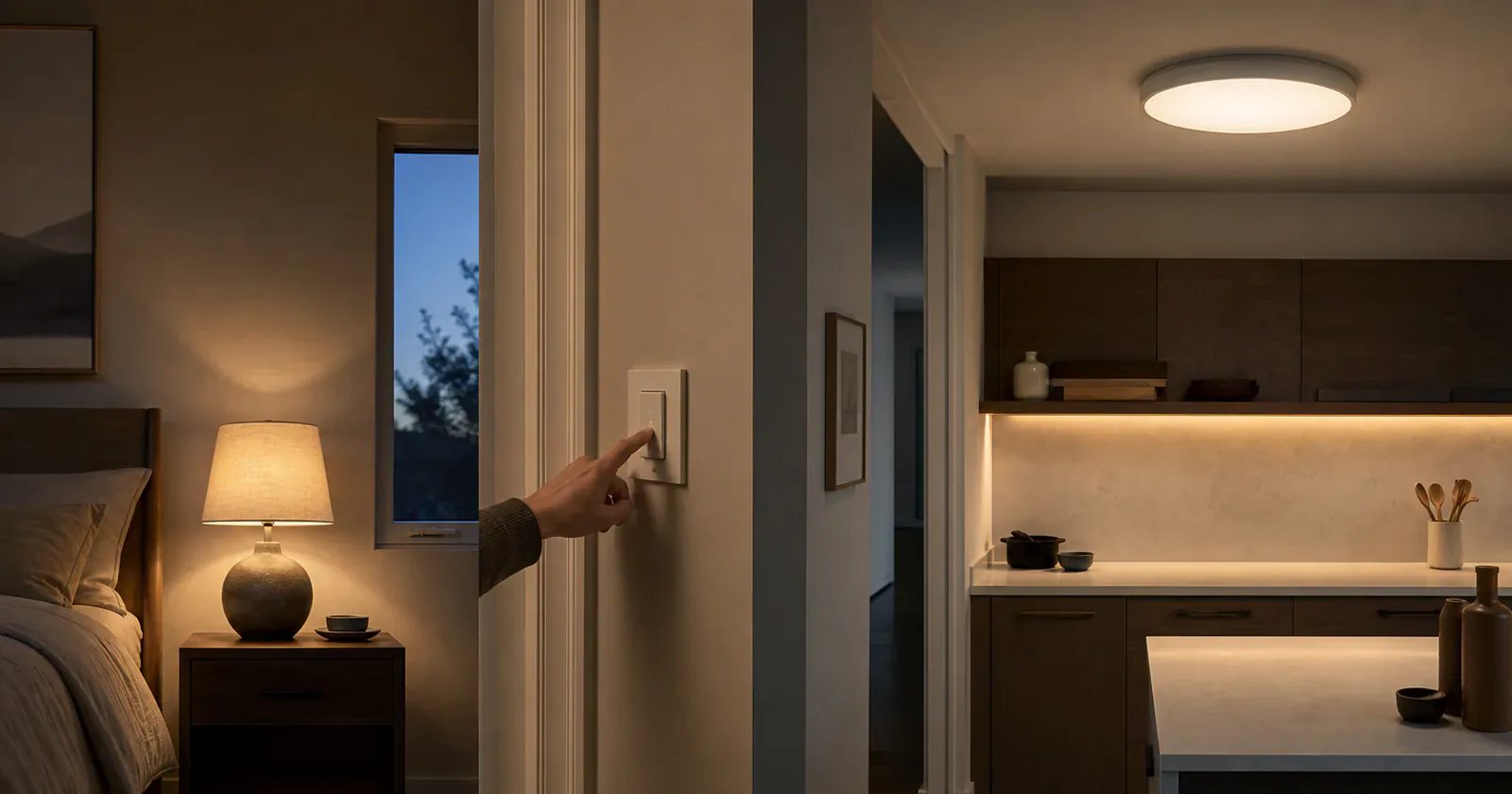
A room needs one dependable way to turn on the light before it needs color scenes, voice control, or an automation. If everyone reaches for the wall, make the wall control smart. If you rent, want color, or already like the lamp, change the bulb. If the fixture itself is the reason to buy, choose a complete smart lamp or ceiling light.
That order prevents the common mistake of buying a smart bulb for a room where somebody will cut its power every night. It also keeps Matter in the right role. Matter can carry ordinary light controls across ecosystems. It does not decide whether the physical switch, bulb shape, fixture, installation, dimming range, or brand-specific effects fit the room.
The quick choice
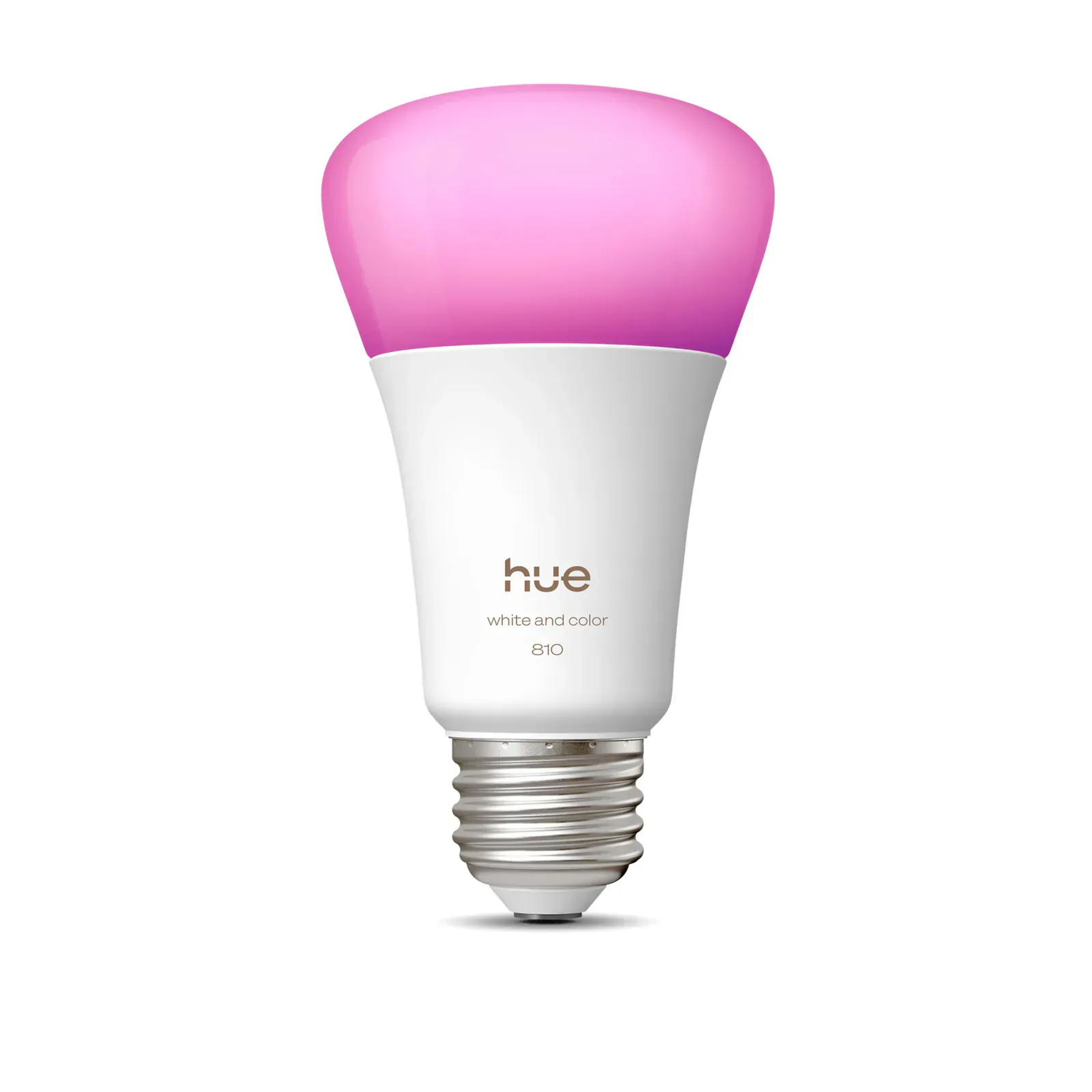
- Smart bulb: Start here for a rental, bedside lamp, or color lighting. Check the bulb base, Thread or Wi-Fi path, low-end dimming, and whether the switch can stay on.
- Smart switch or dimmer: Start here in a shared room where people use the wall. Check the neutral wire, load type, regional wall box, multi-way wiring, and bulb compatibility.
- Complete smart lamp: Start here for a desk, nightstand, shelf, or renter-friendly accent. Check its size, local buttons, integrated LED, network path, and which effects remain in the brand app.
- Smart fixture or wall switch: Start here for a planned ceiling-light replacement. Check the cutout or mounting fit, existing dimmer, electrical rating, installation access, and repairability.
- Purpose-built lighting system: Start here for a TV, gaming, holiday, or outdoor project. Check the exact kit, weather rating, cable run, screen size, Wi-Fi reach, and vendor-app dependence.
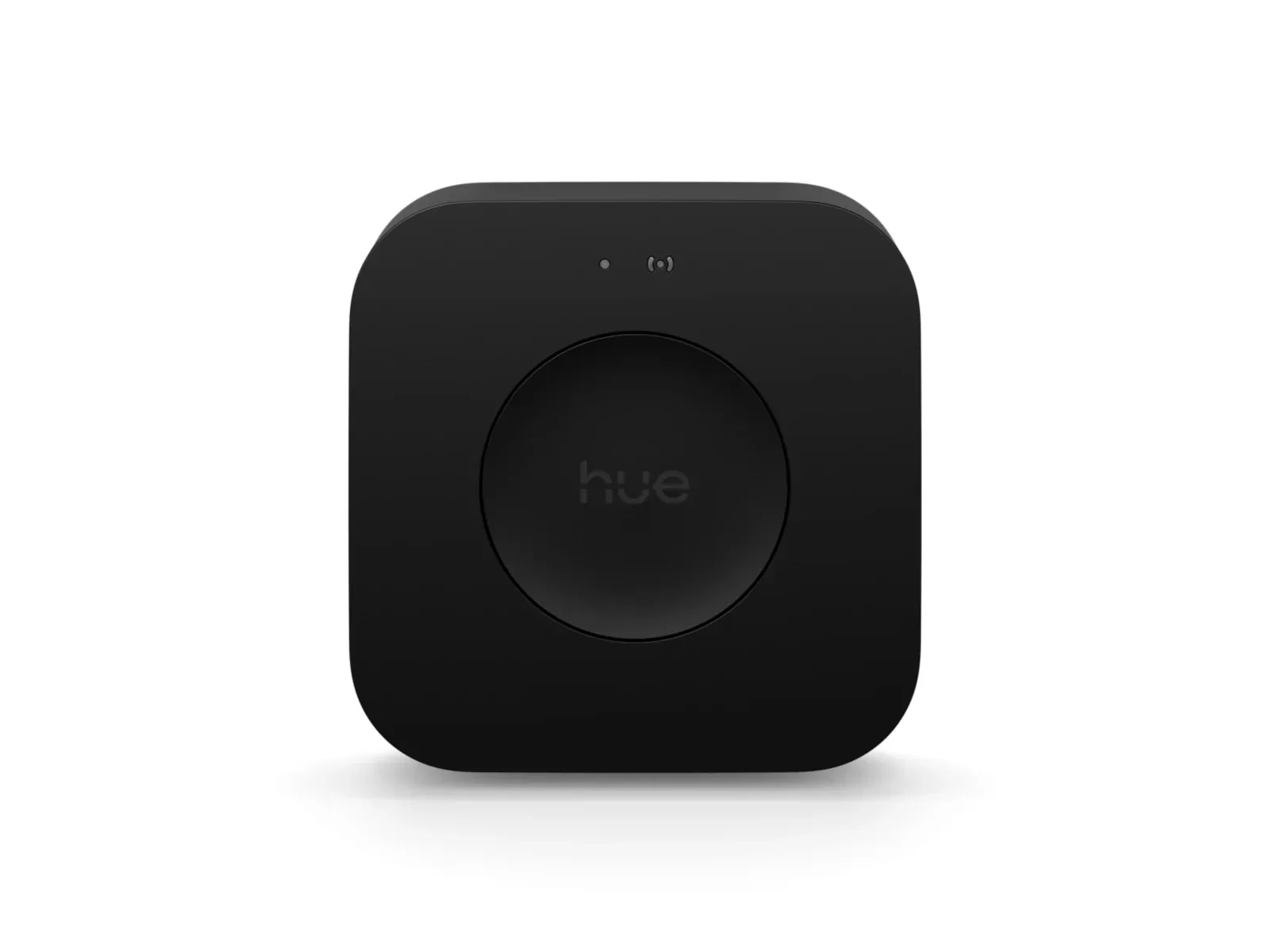
The best choice may combine two paths. A room can use always-powered color bulbs with a wall controller designed for smart-bulb commands. That only works well when the controller, automation platform, and bulbs expose the events and settings the plan needs. Do not assume an ordinary wired dimmer can safely dim a smart bulb.
Most exact product cards in this guide reflect North American listings in Matterhome's current archive. The decision method travels; socket shapes, voltage, wall boxes, electrical ratings, and product availability do not. Use the local equivalent only after confirming its exact Matter path and installation requirements.
Why Philips Hue is still my default without a Hue Bridge
Philips Hue is my personal go-to for reliability. In my own setup, Hue has earned the first look because its bulbs have been the lighting products I trust to respond consistently. That is a personal experience, not a lab comparison or a claim that every Hue product is more reliable than every competing bulb.
My buying rule makes the recommendation much narrower: I use only bulbs that pair natively over Matter over Thread, and I do not run a Hue Bridge or another dedicated lighting-brand hub. Direct Matter does not mean infrastructure-free. The setup still needs a Matter controller and a Thread border router. My hub-free preference means there is no separate bridge whose main job is to run the lights.
Philips Hue documents both paths. A Bridge can bring the broader Hue catalog into Matter while keeping Hue-only scenes, accessories, entertainment features, updates, and centralized management available inside the Hue system. Matter does not expose all of those features to other ecosystems. Direct setup works only with the newer Matter-enabled lights whose exact package includes a Matter logo and setup code. That cuts out older Hue bulbs and many otherwise appealing Hue shapes, strips, lamps, and outdoor products.
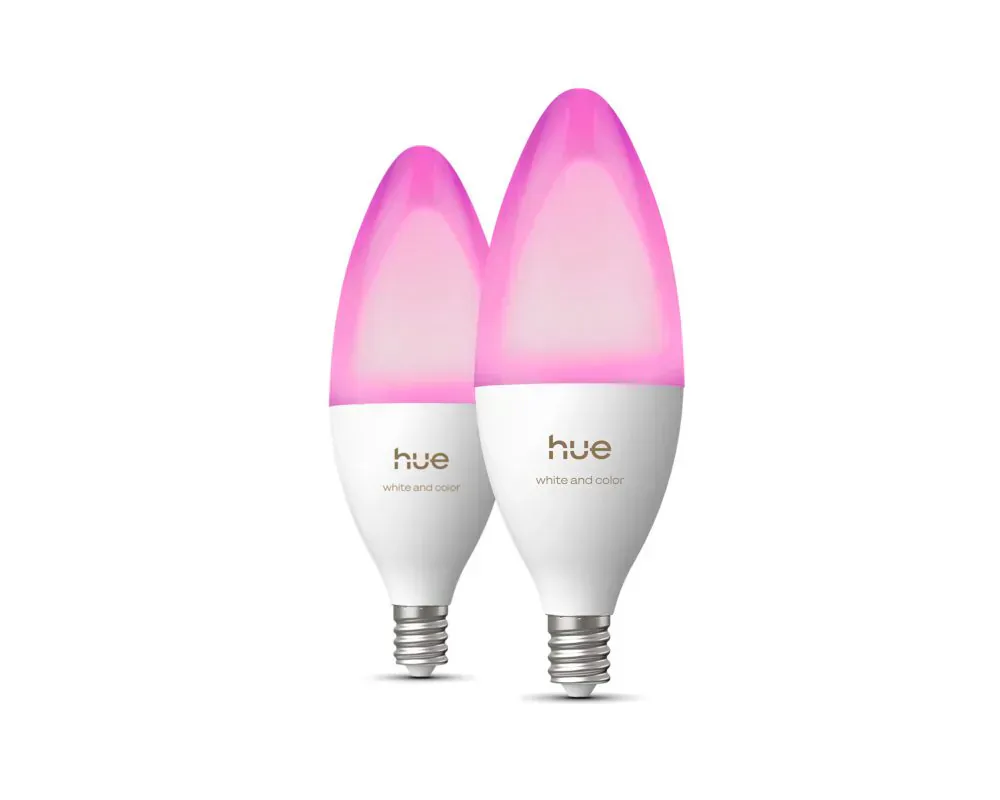
Matterhome's cards above cover current North American models. Philips Hue sells newer Matter-enabled regional fittings elsewhere, including E27 and GU10 options in the UK, but product names, sockets, and availability differ. Check the local product page and the exact package instead of treating an A19, A60, E26, E27, E12, E14, GU10, or BR30 recommendation as global. Hue's direct-setup support page tells owners to keep bulb firmware current, but it does not document one universal update workflow across Apple Home, Google Home, and Alexa. Confirm the update path in the ecosystem you plan to use.
I am comfortable with the smaller shortlist. I would rather wait for Hue to extend native Thread across more of the range than add a Bridge only to unlock another bulb shape. Signify and Silicon Labs announced that select newer Hue bulbs using their current radio platforms are designed for both Zigbee and Matter over Thread. As of August 15, 2026, those products still require choosing Zigbee or Thread during setup. Concurrent operation is planned for a later 2026 software update, but no complete supported-model list or exact release date has been published. I am waiting for that update and for the dual-protocol hardware to reach more products before treating it as part of a buying decision. Our Hue Zigbee and Thread update note tracks that distinction.
Bulbs work when the room can keep them powered
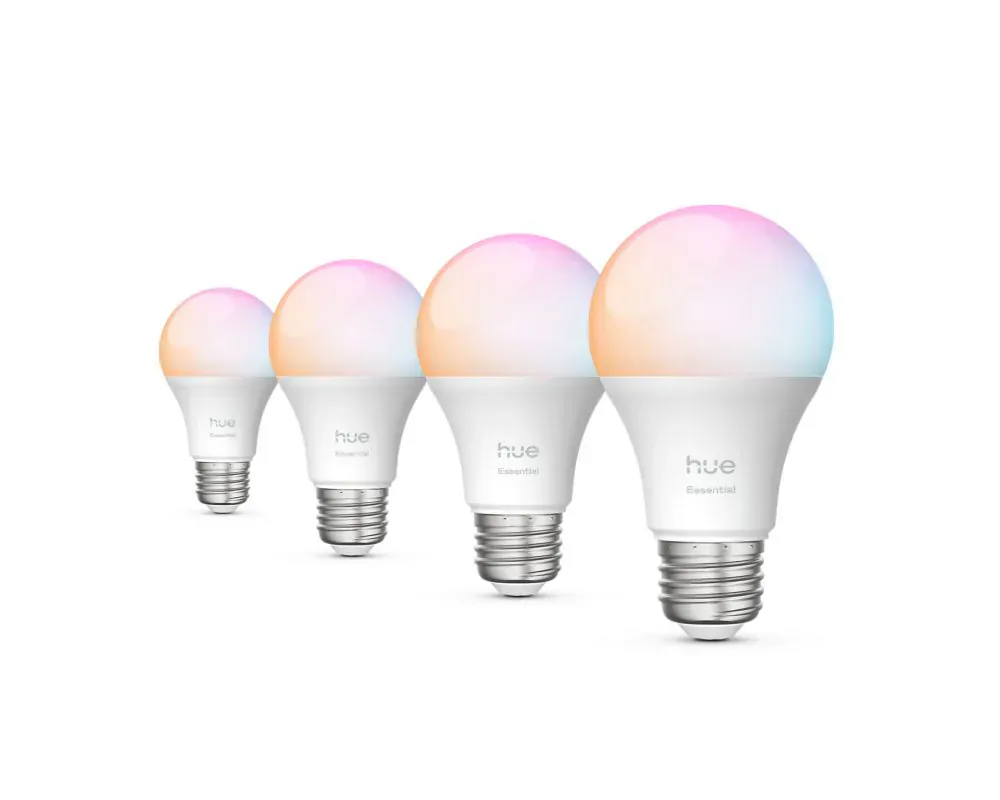
A smart bulb is the easiest lighting change to reverse. It suits a rental, a table or floor lamp, a single fixture that needs color, or a room where nobody minds leaving the physical switch on. Matter-over-Thread bulbs also fit a home that already has reliable Thread coverage and wants to avoid adding more Wi-Fi clients or a lighting bridge.
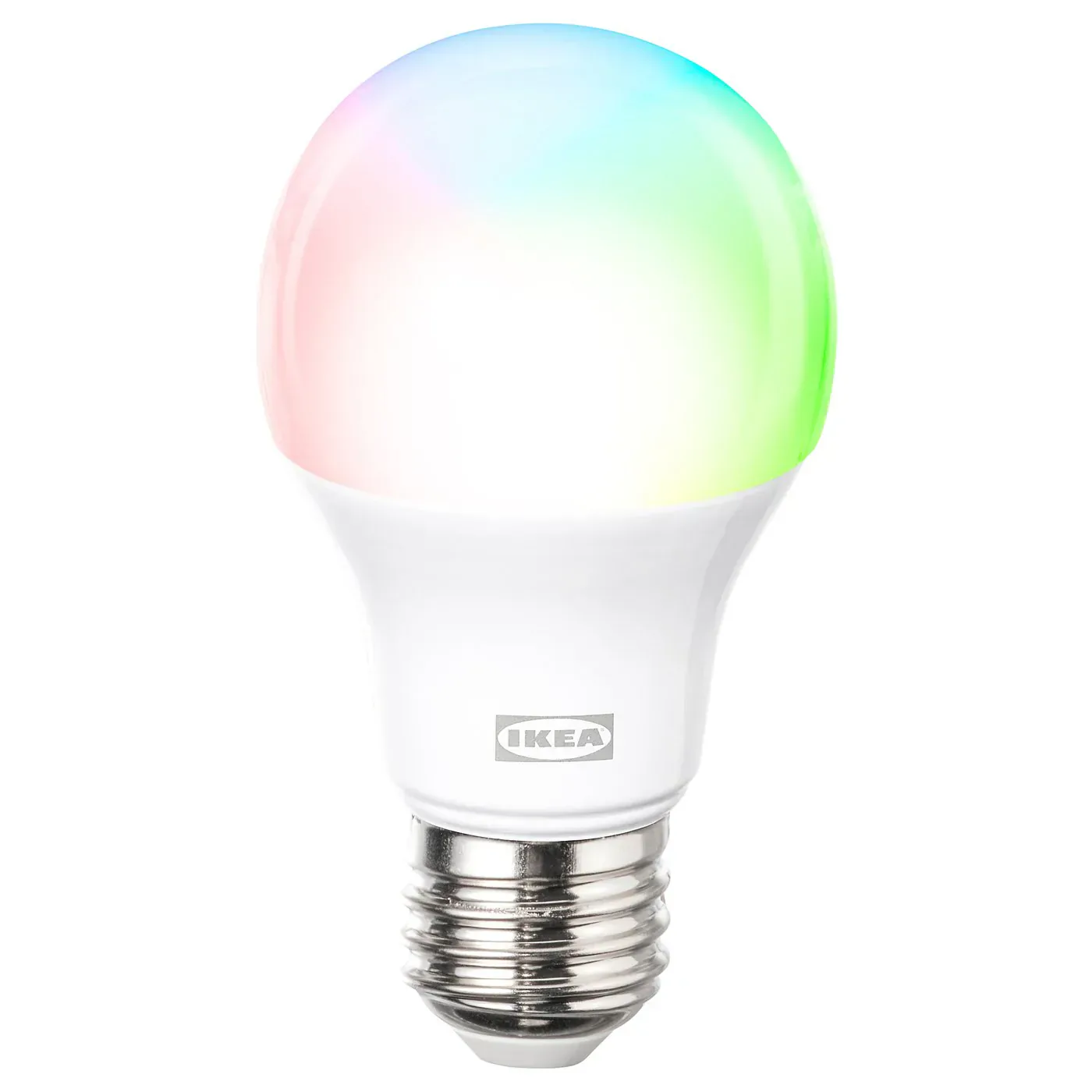
Philips Hue is not the only direct Thread option. IKEA KAJPLATS covers several common bulb formats at lower prices, while Aqara's Bulb T2 line offers Thread for direct Matter or Zigbee for an Aqara-centered setup. Aqara makes you choose a mode; the two network paths do not run concurrently. Buy the exact base, brightness, and white-only or color version, then test one bulb before filling a fixture or room.
Wi-Fi bulbs are still a reasonable answer when the home has solid 2.4 GHz coverage and no Thread border router. Tapo L535E, Nanoleaf's Matter Wi-Fi A19, and LIFX Everyday A19 all avoid a separate brand hub. They still need a compatible Matter controller or platform for commissioning and ecosystem control; remote access may also require that platform's home hub. They do not strengthen a Thread mesh, and their richer effects, firmware tools, and scene editors remain in their own apps.
Skip every smart bulb in a wall-controlled fixture if the household will keep switching off the circuit. No protocol can reach a bulb with no power. A wall controller that keeps smart bulbs powered can solve that problem, but a conventional dimmer wired to the load is not the same thing.
Switches win when the wall remains the household habit
A smart switch or dimmer keeps the familiar control point. That makes it the stronger answer for kitchens, hallways, bathrooms, main ceiling lights, guest rooms, and any shared room where asking people to ignore the wall switch would be unrealistic. It can also make several ordinary bulbs smart at once without putting a radio in every socket.
The electrical checks come first. Confirm the market, voltage, neutral-wire requirement, load type, dimmable bulb compatibility, wall-box depth, and single-pole or multi-way wiring. If any of that is uncertain, use a qualified electrician. Matter can standardize the control endpoint, but it cannot make an incompatible LED load dim cleanly or create space in a crowded wall box.
Inovelli White Series is the most flexible direct-Thread option in this group because it can control a normal load or use Smart Bulb Mode to keep compatible smart bulbs powered. Its no-neutral and multi-way options have specific hardware requirements, and advanced button events vary by ecosystem. Eve Dimmer Switch is the cleaner choice for a normal neutral-wired dimmable circuit, but Eve says an authorized electrician must connect, install, and set it up. Aqara Dimmer Switch H2 US is another direct-Thread route with an alternate Zigbee mode, but it is North American wall hardware. Aqara has a separate European H2 product for European boxes and loads.
Use a wired dimmer for ordinary dimmable bulbs. Use a smart-bulb controller or a documented decoupled mode when the bulbs themselves need constant power. Mixing those jobs without checking the switch manual is how a room ends up with flicker, unreachable bulbs, or two competing dimming systems.
A complete lamp or fixture can be the lower-risk choice
A complete smart lamp earns its price when the object belongs in the room even without Matter. It avoids rewiring, gives renters another option, and may include local buttons or a remote that keeps the light usable when nobody wants to open an app. The tradeoff is repairability: an integrated LED lamp is harder to revive than a normal lamp with a replaceable bulb.
IKEA VARMBLIXT is the direct Matter-over-Thread choice here. It is a decorative lamp first, with an integrated light source and included remote. LIFX Luna uses Matter over Wi-Fi and makes more sense when its compact form, local controls, and LIFX effects are part of the purchase. Nanoleaf Smart Multicolor Ceiling Light is a hardwired fixture, not a casual lamp experiment. It requires a standard on/off wall switch and does not support a conventional dimmer. Its mounting and installation access should decide the purchase before its Matter support does.
This is where my personal Thread-only bulb rule stops being a universal recommendation. A home without Thread may be better served by a good Wi-Fi lamp, while a ceiling renovation can justify a wired fixture. If long-term repairability matters more, pair a normal lamp with a direct Matter bulb.
Entertainment and outdoor lights belong to their brand systems
TV backlights, gaming panels, segmented strips, animated string lights, and permanent outdoor lights make Matter useful but secondary. Matter can carry the controls the exact kit exposes, generally power, brightness, and color, into an ecosystem that uses them in schedules and broad scenes. Screen sync, camera calibration, gradients, segment control, music modes, and detailed holiday effects usually stay in the manufacturer's app.
Govee has the deepest range in Matterhome's current archive for those jobs. That does not make every Govee kit interchangeable. Match a TV product to the display size and sync method. Match outdoor string lights to the required length, socket style, weather rating, and power placement. Treat permanent eave lighting as an installation project that must still look acceptable in daylight.
Buy these products for the brand experience and physical kit first. Matter is the convenient shared control layer after the product is installed and configured. If using the manufacturer app for effects feels like a deal-breaker, a simpler bulb, switch, or lamp will be easier to maintain.
Let the room overrule the protocol
Start with the failure the room needs to avoid. If someone keeps cutting power at the wall, solve the wall control. If a rental needs color without rewiring, solve the bulb or lamp. If the fixture is part of the room's design, judge the fixture before its protocol badge. Network preference comes after the physical control still works for everyone who uses the room.
For my own bulb purchases, the first filter remains direct Matter over Thread, followed by the exact Hue generation and fitting. That means fewer choices today. The reduced catalog is acceptable because it preserves the setup I want: Hue reliability as I have experienced it, no Hue Bridge, and bulbs that join the Matter and Thread network already running in the home.
That preference is a filter, not a template for every room. A shared kitchen may deserve a wired dimmer, a nightstand may be better with a complete lamp, and an entertainment setup may justify a vendor-centered system. The durable answer is the one with an obvious physical control, a network path you understand, and no hidden assumption that the household has to remember.
Content feedback
Spot a mistake or missing context?
Send a quick note so it can be checked against the source material.