What we like
- Adds color and adjustable white light to existing E26 lamps
- Nanoleaf app groups and color palettes suit an existing Nanoleaf room
- Wi-Fi model avoids an additional Thread border router
- Four-pack reduces the per-bulb price when all four are useful
What could be better
- Cheaper Matter color bulbs weaken the value of the two-pack
- One color at a time cannot reproduce a multizone panel or lightstrip
- No built-in Rhythm music response
- Needs continuous power and cannot use a conventional dimmer
Good for a Nanoleaf room, less compelling as a bargain
Nanoleaf's Matter Wi-Fi A19 bulb is easiest to justify when the room already uses Nanoleaf lights. A pair of ordinary lamps can join the same app and color palettes without replacing the lamps or adding another lighting brand. That is a modest but useful upgrade.
The case is weaker for someone starting with one reading lamp. The bulb adds adjustable white light and color, but those functions are widely available for less. Buy this model because the Nanoleaf experience matters to you, rather than treating its logo or Matter badge as evidence of superior light.
The lamp changes what you get from the bulb
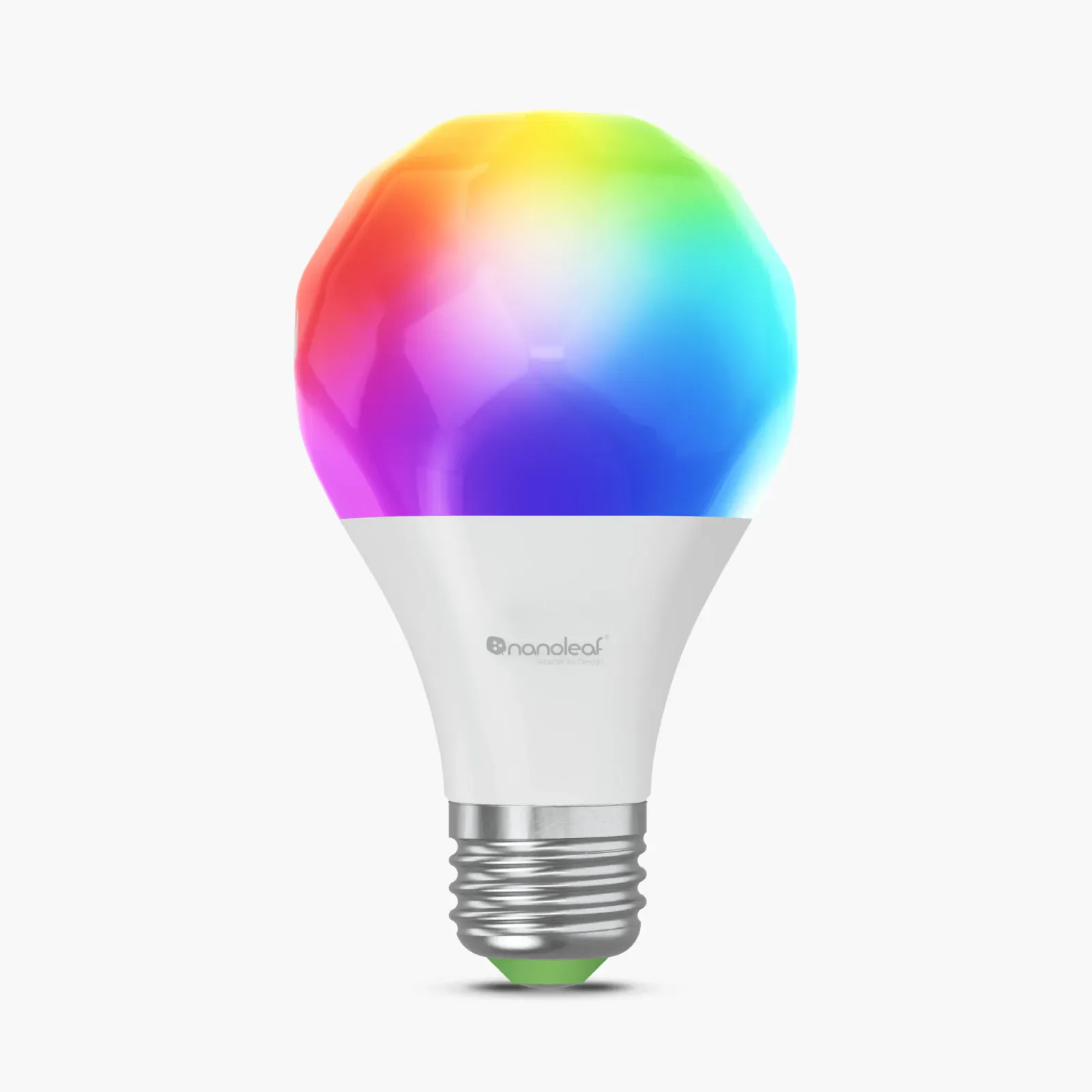
The faceted diffuser gives an exposed bulb some character. Under a shade, the more useful feature is the 2700–6500 K white range: warm light for an evening lamp and cooler white when wanted. A heavily colored or opaque shade can make the RGB feature less rewarding, so the existing fixture is part of the purchase.
Nanoleaf specifies 900 lumens average and 1000 lumens maximum for this model. Those figures do not establish saturated-color brightness or how evenly a particular shade lights the room. We have not measured its color accuracy, low-end dimming or response time. A claimed 1% dimming setting is not proof that it becomes faint enough for every bedside use.
It displays one color at a time. The rainbow in the product illustration represents available colors, not a gradient you can display across one bulb at once. It can change colors in a scene, but it does not turn a table lamp into one of Nanoleaf's multizone panels. The current feature table also excludes built-in Rhythm music response.
Familiar controls need a powered lamp
The selected US model is A19 with an E26 screw base and Matter over 2.4 GHz Wi-Fi. It needs no Nanoleaf hub or Thread border router; using it in a Matter ecosystem still requires that platform's compatible controller. Nanoleaf sells a separate Thread bulb on the same store page, so the selected connectivity matters.
Normal Matter controls cover power, brightness, color and white temperature. Nanoleaf remains useful for its own groups and scenes. That shared app can justify paying more if you actually use those features; it adds little when every lamp is controlled only through the household's existing Matter app.
The ordinary lamp switch must stay on for connected control. A conventional knob or wall dimmer is unsuitable, because the bulb manages its own dimming. Nanoleaf's optional Sense+ wireless switch is listed at $29.99, which is as much as the two-bulb pack. Account for that sort of extra control if other people will not leave the power switch alone.
The delivered pack price is the useful comparison
On September 10, 2026, Nanoleaf's US store listed the Wi-Fi two-pack at $29.99 and four-pack at $49.99. Standard contiguous-US delivery adds $9.99: $39.98 for two or $59.98 for four, before tax. That is roughly $20 or $15 per delivered bulb respectively. The larger pack only saves money if four lamps need it.
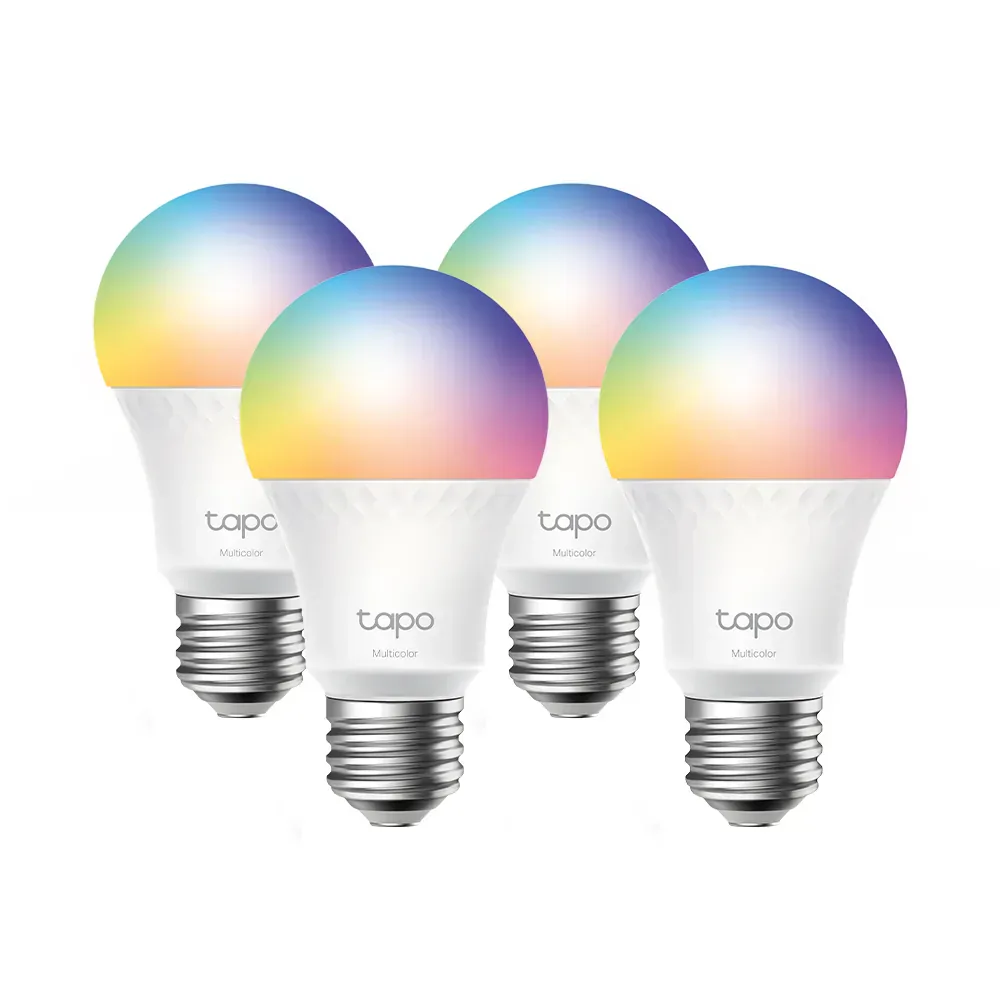
Tapo L535E was $10.99 for one bulb before its own delivery and tax. It offers Matter over Wi-Fi and a specified 1100-lumen white output, making it the more persuasive starting point for basic color lighting. The ratings are not a measured head-to-head comparison.
Nanoleaf's own Caveman two-pack was $9.99 on clearance, or $19.98 with standard delivery. This different model is rated at 800 lumens at 2700 K. It deserves a look for basic color lighting if its final-sale terms are acceptable.
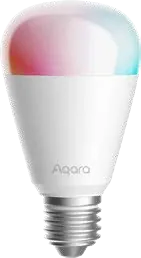
Aqara T2 Color is the more purposeful alternative for a wider 2000–9000 K white range and an existing Thread or Aqara home. Otherwise, keep a working smart bulb whose light and controls already suit the lamp. Changing its wireless transport alone will not make the room more useful.
Content feedback
Spot a mistake or missing context?
Send a quick note so it can be checked against the source material.