What we like
- 0.2% minimum dimming suits a lamp used very late at night
- Extended 1000–20000K white range adds more mood-lighting flexibility
- Works within Hue or directly through Matter over Thread
What could be better
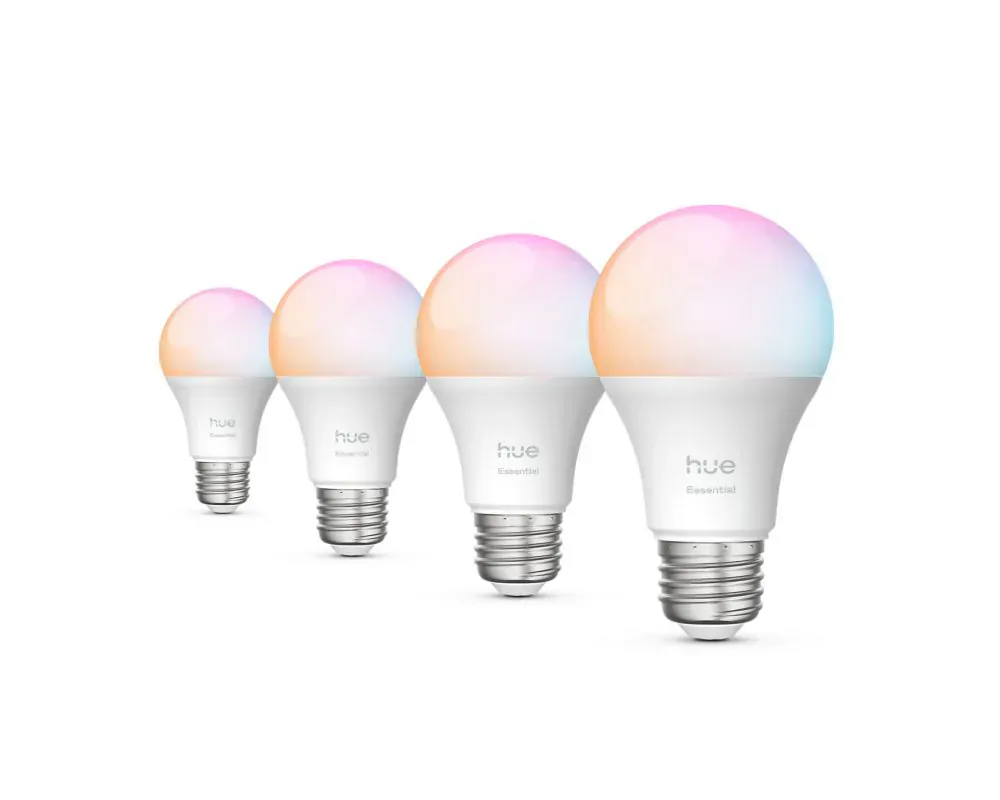
- One bulb costs almost as much as four Hue Essential A19s
- 810-lumen output gives little brightness advantage over Essential
- The 1100-lumen version costs only $5 more at current US prices
A better night-time lamp, an expensive ordinary bulb
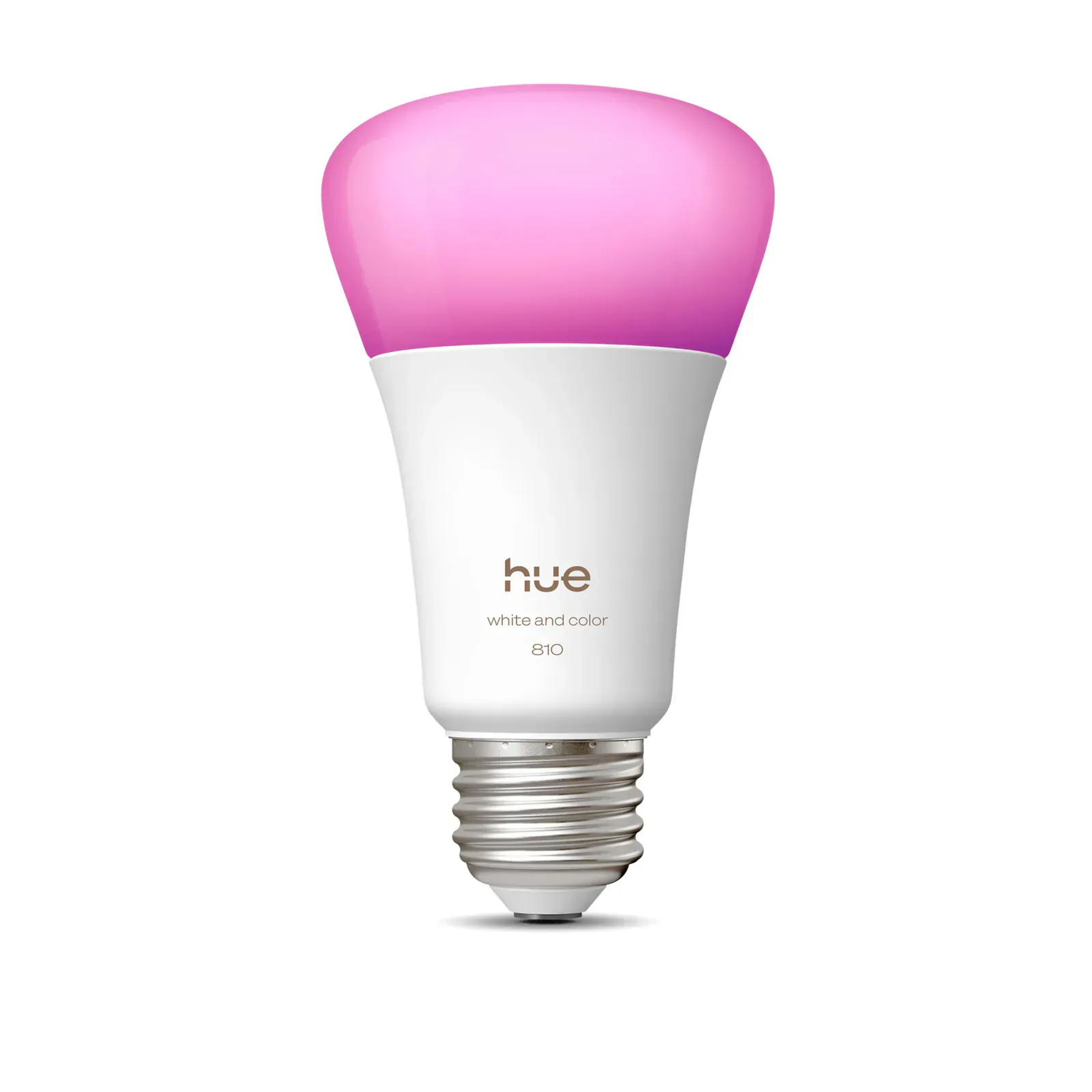
The refreshed premium Hue A19 is most interesting when you turn it down. Its specified 0.2% minimum and unusually wide white range make it a more flexible candidate for a bedside lamp than Hue Essential. A soft glow late at night is a concrete reason to spend extra; the word premium by itself is not.
At full brightness, the case is much weaker. This model is rated at 810 lumens, almost the same as Essential's 800 lumens. Philips Hue's US store had the single premium bulb in stock at $54.99 on September 10, 2026, while four Essential A19s were $59.99. Both qualified for free shipping. For routine lighting across several lamps, that difference is difficult to defend.
This review covers the refreshed White and Color Ambiance 60W-equivalent A19 E26, product 046677590826. The brighter 75W A19 and larger 100W A21 are different purchases, as are older generations sold under similar Hue names. A separate multi-item promotion was available; the comparisons here use each listing's single-item price before that offer and applicable tax.
Spend more where the low end matters
The premium bulb's 1000–20000K white range reaches much warmer and much cooler tones than Essential's 2200–6500K. Together with its lower dimming floor, that gives you more room to shape a lamp around the time of day. The warmer, faint end is the part most likely to justify the expense in a bedroom or a quiet reading corner after the reading is finished.
Hue calls its refreshed lighting full-spectrum and includes Chromasync color matching. Those are manufacturer features, not measurements of perfect color consistency or a health benefit. We have not tested this bulb's output, flicker or matching against other Hue generations. The published minimum also does not prove that the lamp will look exactly ten times dimmer than Essential to your eyes.
Buy it for the range you expect to use. If your lamp spends its life at a normal warm white and moderate brightness, much of the premium goes unused. Color scenes can be enjoyable, but Essential can already supply colored light; simply wanting a purple corner is not enough to make the more expensive bulb the obvious winner.
Another $5 buys a more convincing brightness upgrade
Hue's refreshed 1100-lumen A19, product 046677591168, was in stock at $59.99. It keeps the same stated 0.2% dimming floor and 1000–20000K white range while offering more maximum white output. When the lamp needs to handle both everyday room lighting and evening atmosphere, that extra $5 is worth considering before buying this 810-lumen version.
Check the lamp's fit and intended bulb type, but do not confuse the 60W and 75W labels with actual power draw: they are incandescent-equivalent brightness classes. This 810-lumen model is a 7.2W LED. Paying for the smaller model is most defensible when its output is already enough and the saving matters across several purchases.
For a group of ordinary lamps, Hue Essential's four-pack is the stronger value comparison. For one lamp that is too dim, the higher-output premium A19 is the more relevant alternative. These are two different reasons to pass on the 810-lumen bulb.
Use the connection that serves the room
This refreshed generation supports direct Matter over Thread as well as Hue's Zigbee route. An existing Matter controller and Thread border router can supply standard light controls without a Hue Bridge. The Matter logo and code distinguish the direct-capable generation when a retailer mixes old and new stock.
The Hue Bridge remains useful when scenes, accessories and entertainment are the reason for choosing Hue. Direct Matter does not reproduce that whole experience in another platform. For an established Hue home, replacing working bulbs purely to get a new connection is particularly unconvincing: the bridge already gives older Hue lighting a Matter path.
Choose this bulb for a lamp whose low-light behaviour matters enough to justify its price. Keep a working premium Hue bulb if it already dims and colors the room as you want. Buy Essential for economical coverage, or the 1100-lumen model when a little more spending solves the actual problem of insufficient light.
Content feedback
Spot a mistake or missing context?
Send a quick note so it can be checked against the source material.