What we like
- Three leak locations share one audible central alarm
- Sensors arrive paired with the included controller
- Can expand to ten supported sensor units
What could be better
- Batteries and USB power adapter are extra
- All three locations depend on the powered controller
- Adding sensors requires reconnecting the controller to the Matter platform
One alarm can be easier to hear
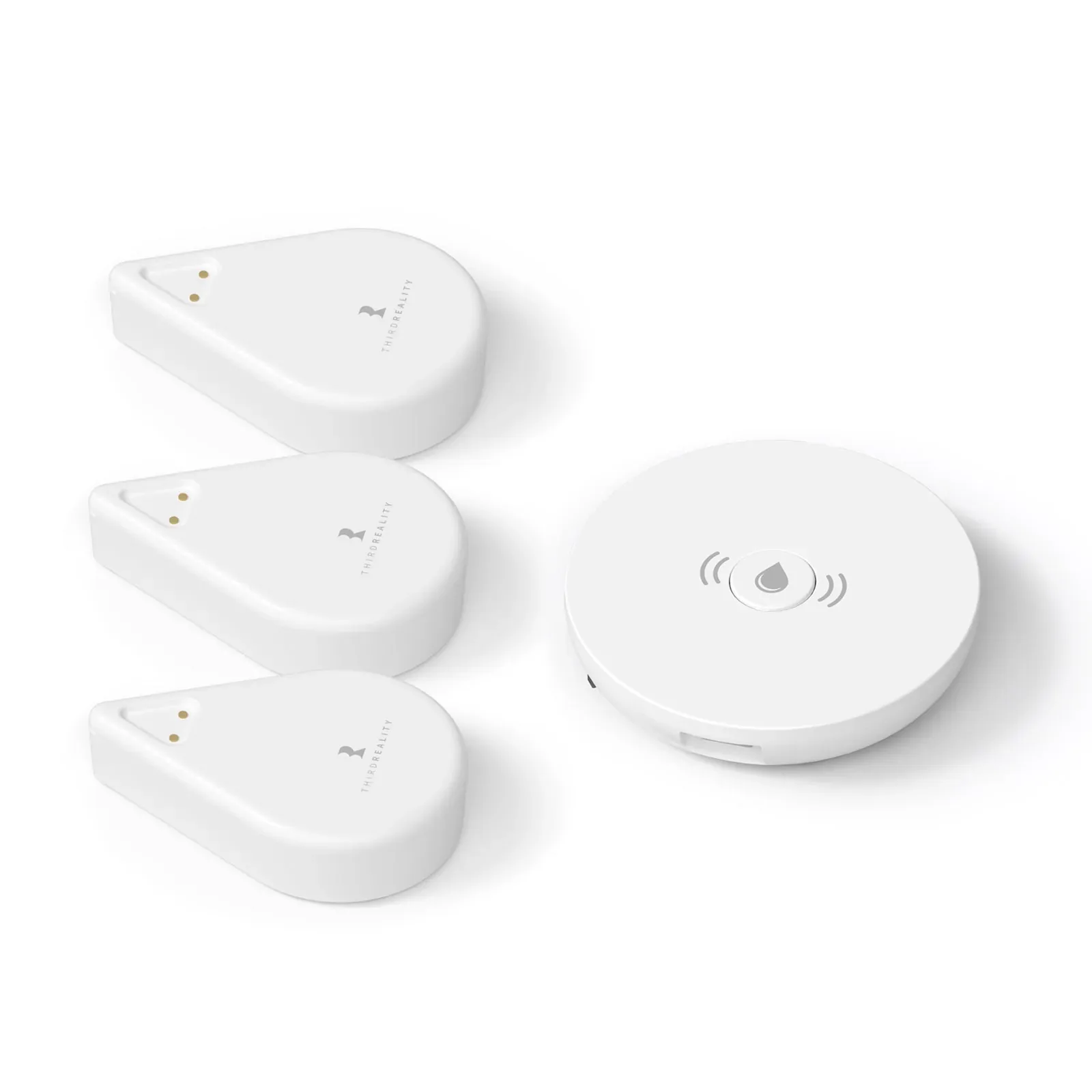
ThirdReality KM1 makes sense when the places most likely to leak are poor places for an audible alarm. The kit puts a battery sensor at each of three locations, while a separate powered controller provides the siren. You can place that controller somewhere more audible than the space beneath a washing machine.
That arrangement is the product's strongest feature. It can cover a sink cabinet, appliance tray and utility area without placing a separate Matter radio at every point. The three sensors arrive paired with the controller, which joins your smart home over Wi-Fi.
It is an alerting kit, not an automatic water shutoff. Water must reach a sensor, and someone or a separately designed system still has to respond.
The $39.99 kit needs more than its box
The US kit was listed at $39.99 on September 9, 2026. It includes three sensors, the controller and a USB cable. AAA batteries and the controller's 5 V USB power adapter are not included. Standard US shipping adds $10 below ThirdReality's $129 threshold, taking the hardware order to $49.99 before those accessories and any applicable tax.
That is still a plausible price for three monitored locations, but it weakens the simple bargain claim. The central alarm has to be something you want, rather than merely an extra box you accept to obtain cheap sensors.
ThirdReality specifies a 100 dB controller alarm, with a physical option to silence it. We have not measured its loudness or audibility through walls. Its location matters, and switching the alarm off removes the local warning that distinguishes the kit.
A shared controller is both useful and limiting
The controller can accept up to ten supported sensors. That offers room to expand, but adding one is less convenient than the number suggests: the manual says the controller must be reconnected to the Matter platform before the new sensor appears.
Every sensor also depends on that controller. Loss of its power affects the shared alarm and connected reporting. The advertised 100 m sensor range is an open-area claim, not a guarantee through floors or metal appliances. We would choose KM1 for locations that can reach a sensibly placed central unit, rather than assume one kit covers every corner of a house.
The exact manual documents Apple Home, Alexa and Home Assistant. Google Home and SmartThings are not established for this kit. The included KM1 controller also does not replace the separate Matter controller needed by your home platform.
Separate sensors can be the better value
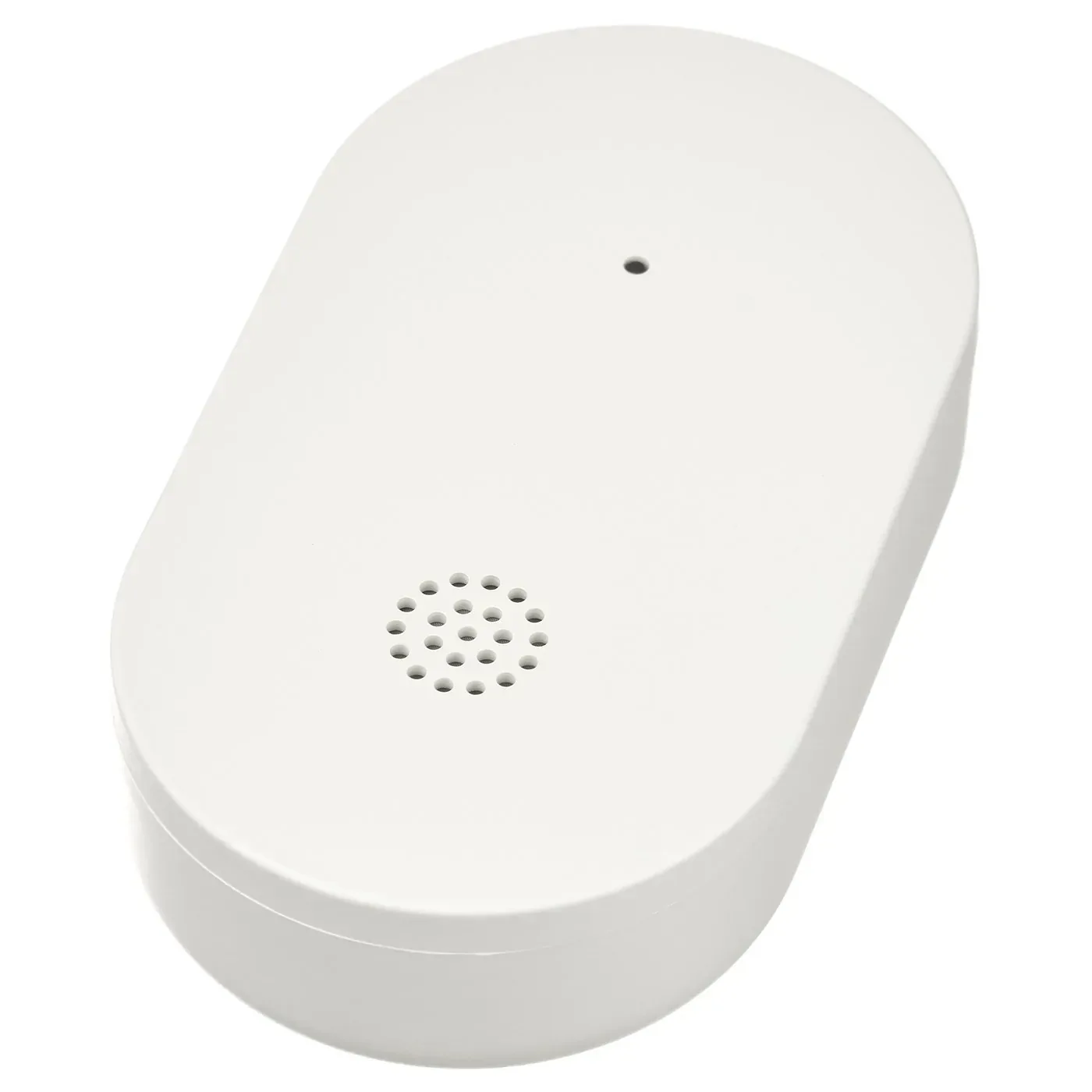
IKEA KLIPPBOK was listed at $11.99 per sensor, or $35.97 for three before batteries and delivery. Each has its own local alarm; connected use requires suitable Thread infrastructure and platform support.
Choose KLIPPBOK when individual audible alarms suit the locations or you only need one sensor. Choose KM1 when a shared siren in a better position is worth the powered controller and total cost. Neither purchase should be judged only by whether a phone can display a leak sensor: the useful outcome is a warning that reaches someone who can act.
Content feedback
Spot a mistake or missing context?
Send a quick note so it can be checked against the source material.