An alarm clock that also runs the bedroom
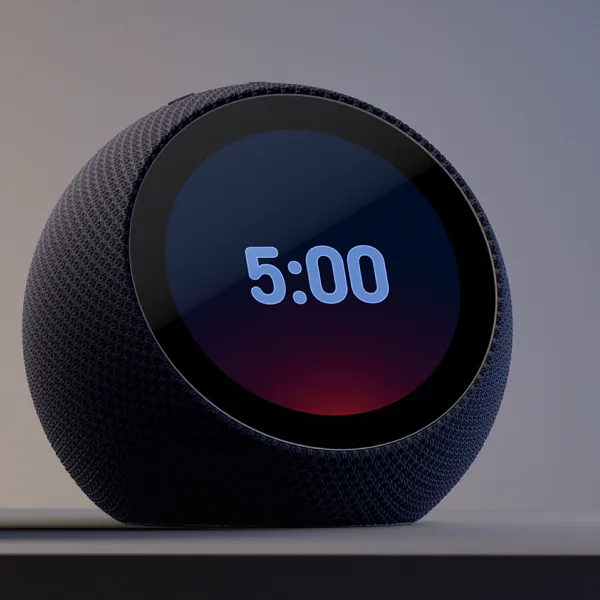
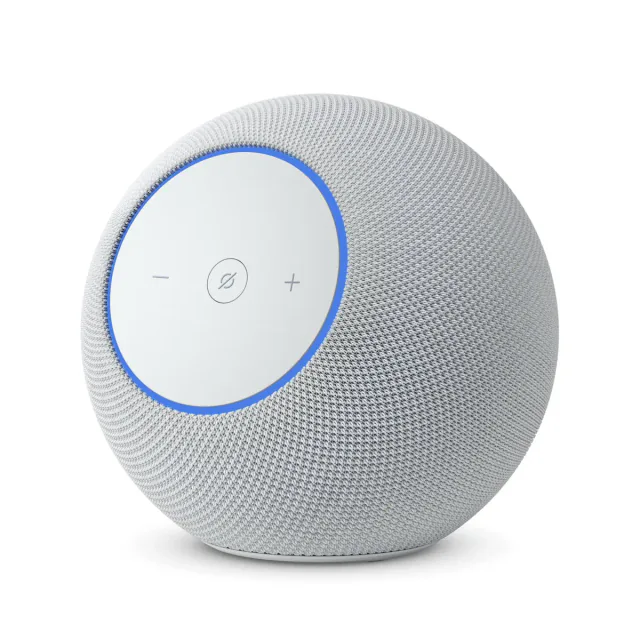
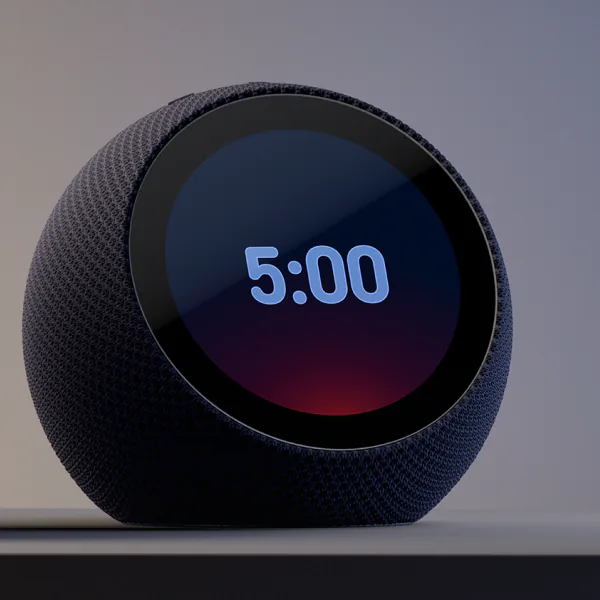
Echo Time is the Echo to buy for a nightstand when the alarm is the point. It is a sphere about 4.5 inches across with a 3.2-inch round touchscreen, hundreds of clock faces and no camera, which suits a bedroom better than an Echo Show. Before the alarm, the screen brightens like a sunrise; at night it dims to the time or the next alarm and cuts blue light. For someone who wakes to Alexa every day and would otherwise keep a separate alarm clock beside a Dot, it is the tidier nightstand.
It also carries the hub from the 6th-generation Echo Dot: Echo Time is an Alexa Matter controller, a Zigbee hub and a Thread 1.3 border router. In an Alexa home with no hub-equipped Echo or eero yet, the clock can add a Thread blind motor, a Zigbee lamp or a bedside sensor without a separate hub. That is a useful extra but a poor reason to pay this price. The Dot does the same hub job for about half as much, and a home that already has Echo Hub, Dot Max or a Thread-capable eero gains another border router, not a new capability. Accessories it adds appear in the Alexa app, and Apple Home, Google Home and Home Assistant still need their own controllers.
The smart alarm is the reason to buy, with conditions
Amazon's smart alarm watches for lighter sleep and can wake you early, within a window of 10 to 60 minutes before the alarm time. It relies on what Amazon calls Omnisense: room temperature and presence sensors build a picture of your sleep routine, and ultrasound from the clock picks up breathing and distance, with nothing to wear. Sleep sensing is opt-in, and the microphone mute button also switches it off, so a bedroom that mutes Alexa overnight gives up the smart alarm. How reliably it catches lighter sleep is Amazon's claim; Matterhome has not tested it.
Two conditions come with it. The smart alarm is an Alexa+ feature. Prime includes Alexa+; without Prime it costs about $20 a month in the US and about CAD 28 in Canada. In the UK, Germany, France, Italy and Spain, a new Echo comes with free Early Access for now, after which Alexa+ costs about £20 or €23 a month without Prime. A year of that subscription costs more than the clock, so a household without Prime should buy Echo Time only if the ordinary alarm, clock faces and hub are enough.
The second is power. Echo Time has no battery and runs from its mains adapter, so a power cut turns off the clock and its alarm. Keep a phone alarm for the mornings that matter.
Against Spot, Show 8 and Nest Hub
Amazon's Echo Spot is the cheaper Alexa clock, at a little over half Echo Time's US price. Its smaller screen shares the front with the speaker, and it can control Matter devices over Wi-Fi but cannot add Thread or Zigbee accessories, which is fine in a home whose hub lives elsewhere. Echo Time earns the extra money through its sleep-sensing alarm, or by being the first hub in a home that has none; otherwise Spot is the better buy.
Echo Time costs the same as Echo Show 8 at list. The Show has a much larger screen, stereo speakers and the same kind of hub, but its camera suits a kitchen better than a nightstand. In a Google Home bedroom, Nest Hub (2nd gen) is the camera-free alternative at about half the price, with a 7-inch screen, a sunrise alarm and Google's own Sleep Sensing, which Google still calls a preview. It dates from 2021, and Google's original minimum update commitment has passed.
Prices outside the US
The same Echo Time sells in Canada for about CAD 290, twice the new Dot's price, and in Germany for about €215, roughly €110 more than the Dot. Amazon also sells it in France, Italy and Spain. In the UK, Amazon sells it at a reported launch price of about £185, about £90 more than the Dot. The adjustable stand is sold separately for about $40 in the US and €40 in Germany.
Apple Home and Thread details
- Thread role
- RouterRelays Thread traffic for nearby devices.
- Thread version
- 1.3
We list only values our sources state. Values shown were taken from this review's sources and are awaiting an editor's check.
Keep reading
Spot a mistake or missing context?
Send a quick note so it can be checked against the source material.