What we like
- PINs and fingerprints provide entry without a phone
- Works with older second- and third-generation Nuki locks
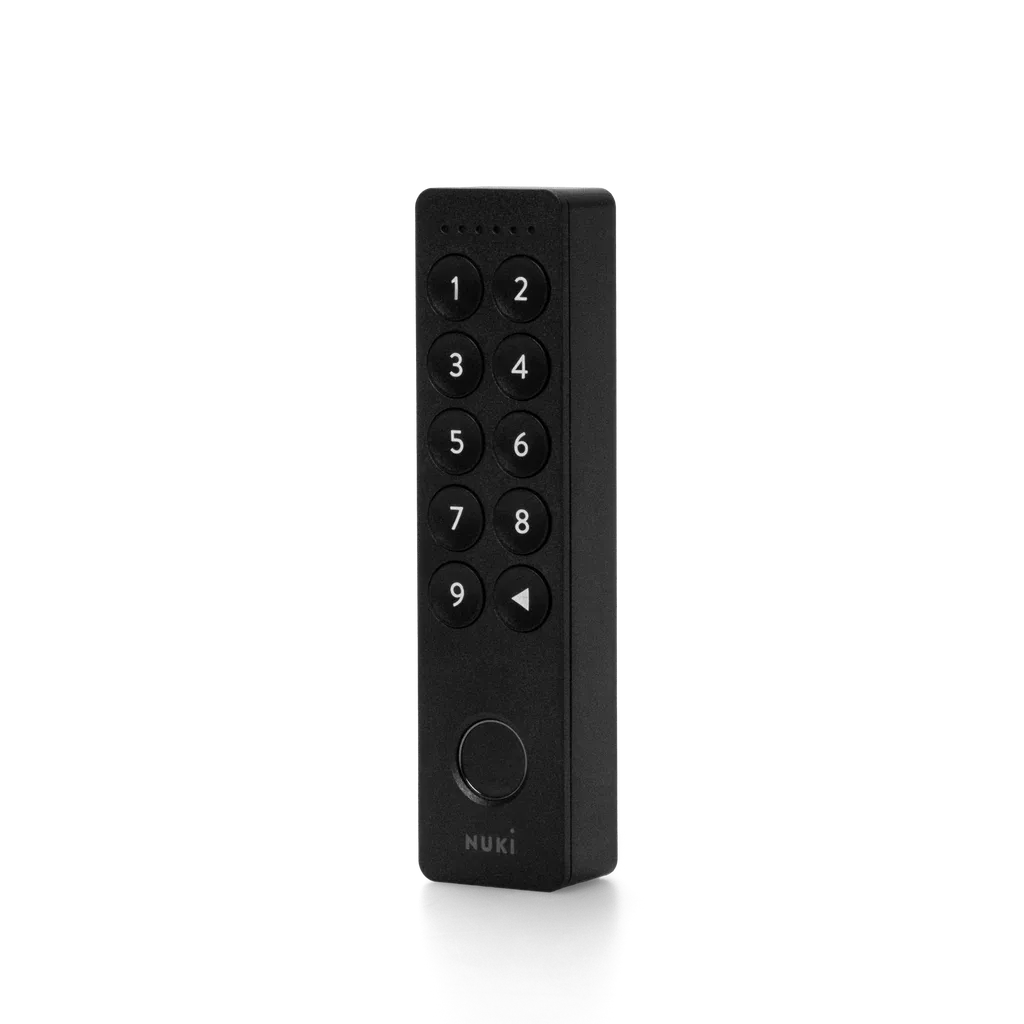
- Narrow 29 mm body with physical number buttons
- Four replaceable AAA batteries; no wiring needed
What could be better
- Only €20 / £20 / $20 cheaper than the NFC version
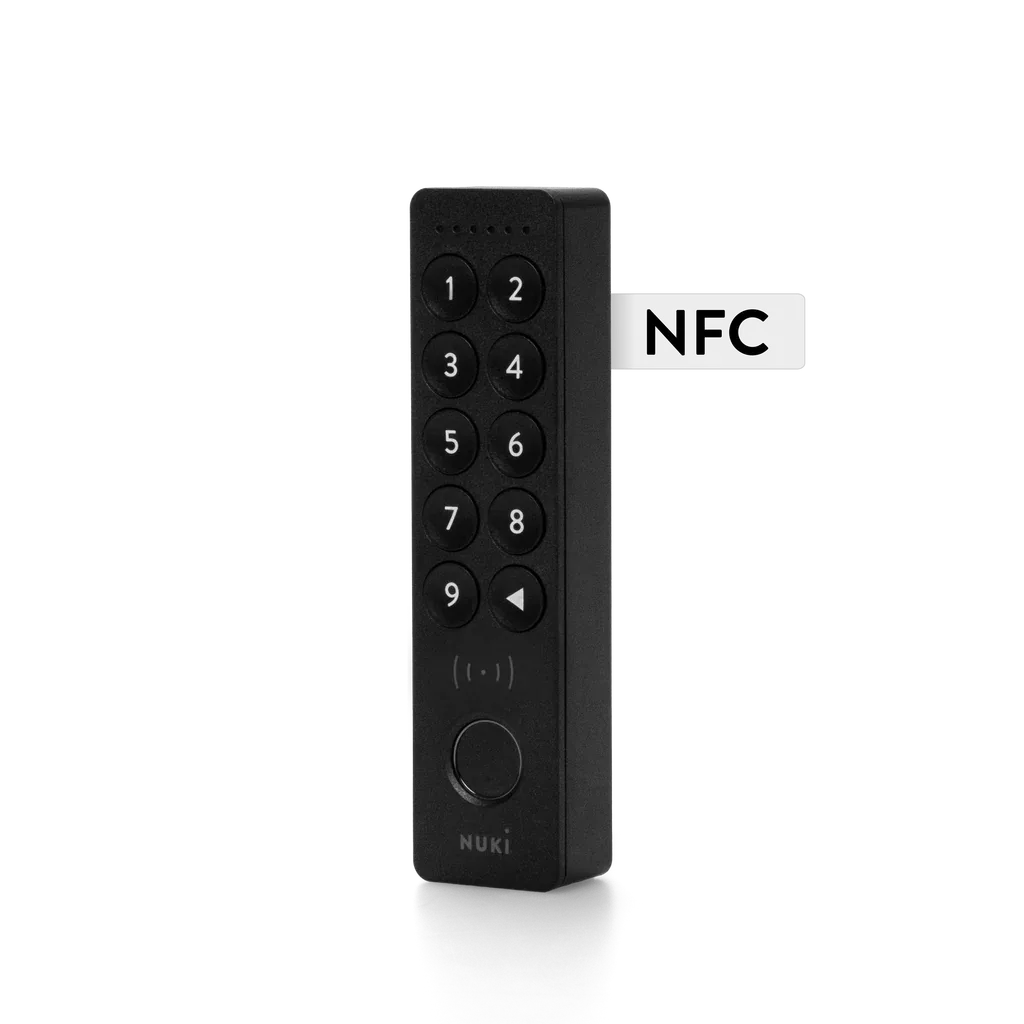
- No phone or watch wallet taps
- One keypad pairs with one lock; fingerprint enrolment needs a nearby phone
- IP54 protection is lower than the original code-only keypad’s IP65
Fingerprints are the useful upgrade
Keypad 2 gives a compatible Nuki lock a deliberate way to open without a key or phone. Touch the fingerprint reader after a trip to the garden, or give a visitor a code. That can be more useful than phone-based Auto Unlock when a short outing does not rearm its location trigger.
The appeal is strongest for households that find app invitations and phones at the door irritating. Fingerprints also avoid teaching every regular visitor a code. We have not tested recognition accuracy with wet, dirty or cold fingers, so a working PIN remains a useful second option rather than assuming every touch succeeds.
This is an accessory: you still need the motor that turns the lock. Its Bluetooth link is separate from Matter. Local keypad entry needs neither a Thread hub nor Nuki's paid Remote Access upgrade, including when paired with Smart Lock Go.
The older lock is its best argument
The regular Keypad 2 supports Nuki Smart Locks from the second generation onwards. The NFC version requires a Matter-capable model, including fourth-generation locks, Go, fifth-generation Pro and Ultra.
That gives the regular keypad a clear job: add fingerprints to a working second- or third-generation Nuki without replacing the motor. Buying a new lock merely to gain wallet taps is a much larger expense than the keypad price suggests.
For a new purchase alongside a compatible Matter lock, the case is weaker. On September 10, 2026, Keypad 2 was €159, £145 or $159 in Nuki's respective euro, UK and US stores. Keypad 2 NFC was only €20, £20 or $20 more. Even if wallet entry is not essential today, that small difference is worth comparing with the NFC model's actual phone requirements.
Twenty fingerprints is not twenty people
The reader stores up to 20 fingerprints. Registering several fingers for one person uses several slots, so a large household should plan around fingers rather than treating that number as the user allowance.
Fingerprints attach to code permissions in Nuki. Removing a code removes its associated fingerprints, and access can have time limits. Current Nuki locks support up to 200 keypad codes, while the second-generation lock supports 100. Those limits depend on the lock, not just which keypad you buy.
Code administration can work remotely when the lock has remote access. Fingerprint enrolment needs a phone nearby over Bluetooth. That is reasonable for family members but less convenient for someone expecting to enrol a new guest while away.
One keypad pairs with one lock at a time. It does not become a shared controller for several doors merely because they appear in the same Nuki app.
A slim box with batteries to maintain
At 118 × 29 × 21 mm, Keypad 2 is narrow enough to look relatively discreet beside a door. The physical buttons use digits 1–9, without zero, for six-digit codes. There is no large illuminated touchscreen dominating the entrance.
Four included AAA batteries keep it independent of doorbell wiring. Nuki estimates roughly a year of use, but that is a manufacturer estimate; temperature and activity affect replacement intervals. The keypad comes off its mounting plate to change the cells.
IP54 protection covers dust and splashing water. It is not the IP65 rating of Nuki's original code-only Keypad, and those ratings should not be swapped between models. The Bluetooth specification gives a range of up to five metres depending on the surroundings, so a convenient-looking wall position still needs a reliable connection to the indoor lock.
Buy the entry method, not another box
The original code-only Keypad was €89 in Nuki's euro store, making fingerprints a €70 step up when buying accessories separately. If nobody wants a fingerprint reader, that simpler product deserves consideration.
For a complete new system, compare bundles. The fifth-generation Pro with Keypad 2 was €379, versus €428 for the €269 lock and €159 keypad separately. The corresponding NFC set was €399. Prices are before delivery; regional offers and US checkout taxes can change the final total.
An existing Keypad 2 owner has much less reason to spend again. If codes and fingerprints already solve entry, keeping the working accessory is better value than replacing it just to add another method.
Content feedback
Spot a mistake or missing context?
Send a quick note so it can be checked against the source material.