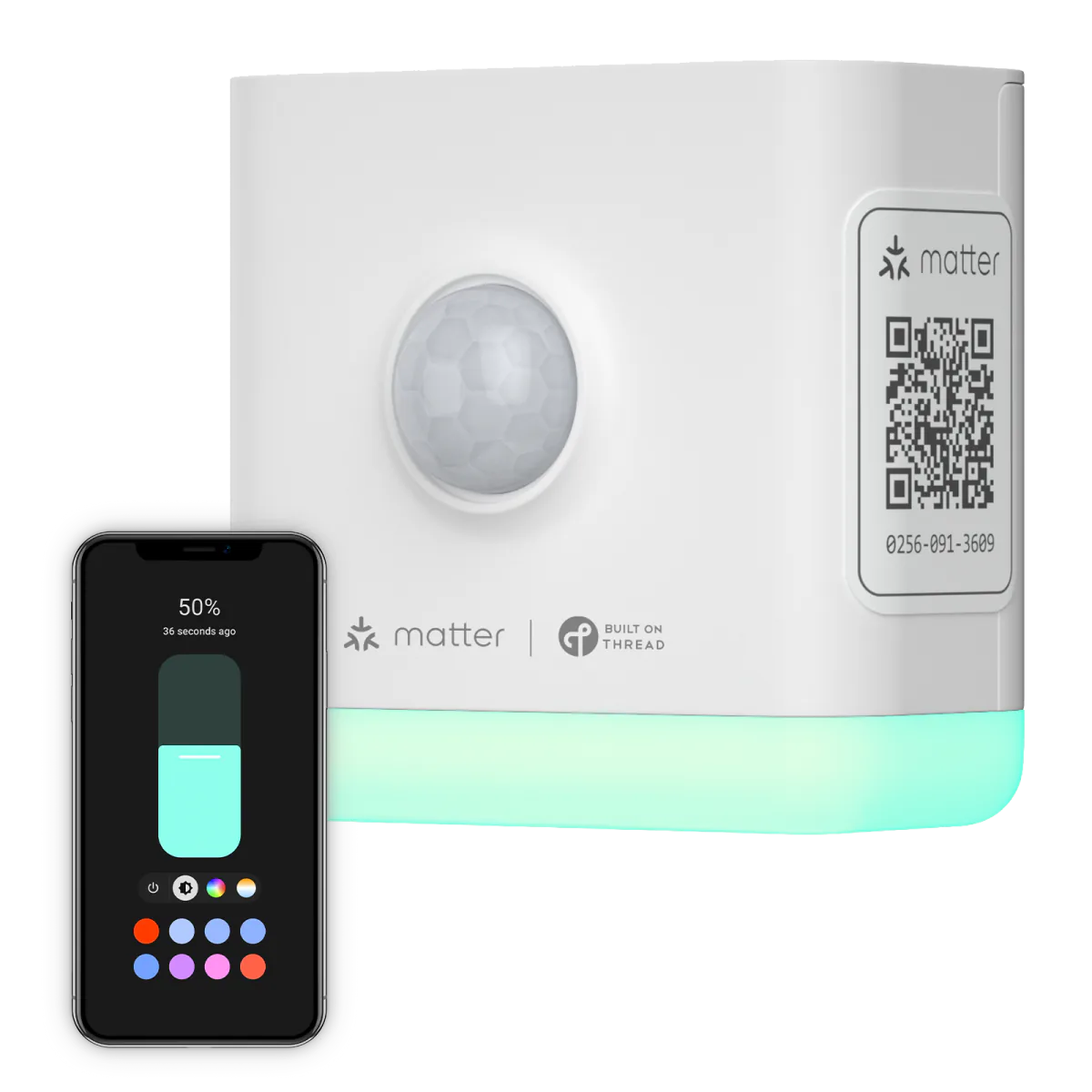
The most important control on ThirdReality's Smart Night Light-T is the reset pinhole. One short press enables a local routine that turns on the RGB light only when the room is dim and the motion sensor detects someone. Another press turns that routine off. This makes the light useful in a hallway or bedroom before a smart-home automation is even configured.
The same design has an unusual constraint: switching the light from an app or voice assistant disables the local routine for 12 hours. Buy this $29.99 light for one control model or the other. Mixing both casually can leave the hallway dark when someone expects the built-in behavior to take over.
A local routine is the point
The compact unit combines an adjustable RGB light, motion sensor, and ambient-light sensor. Its local routine checks both sensors before turning on the light, so it can respond to someone entering a dark space without waiting for an internet service or a platform automation. The light, motion state, and illuminance reading are still reported while that routine is enabled or disabled.
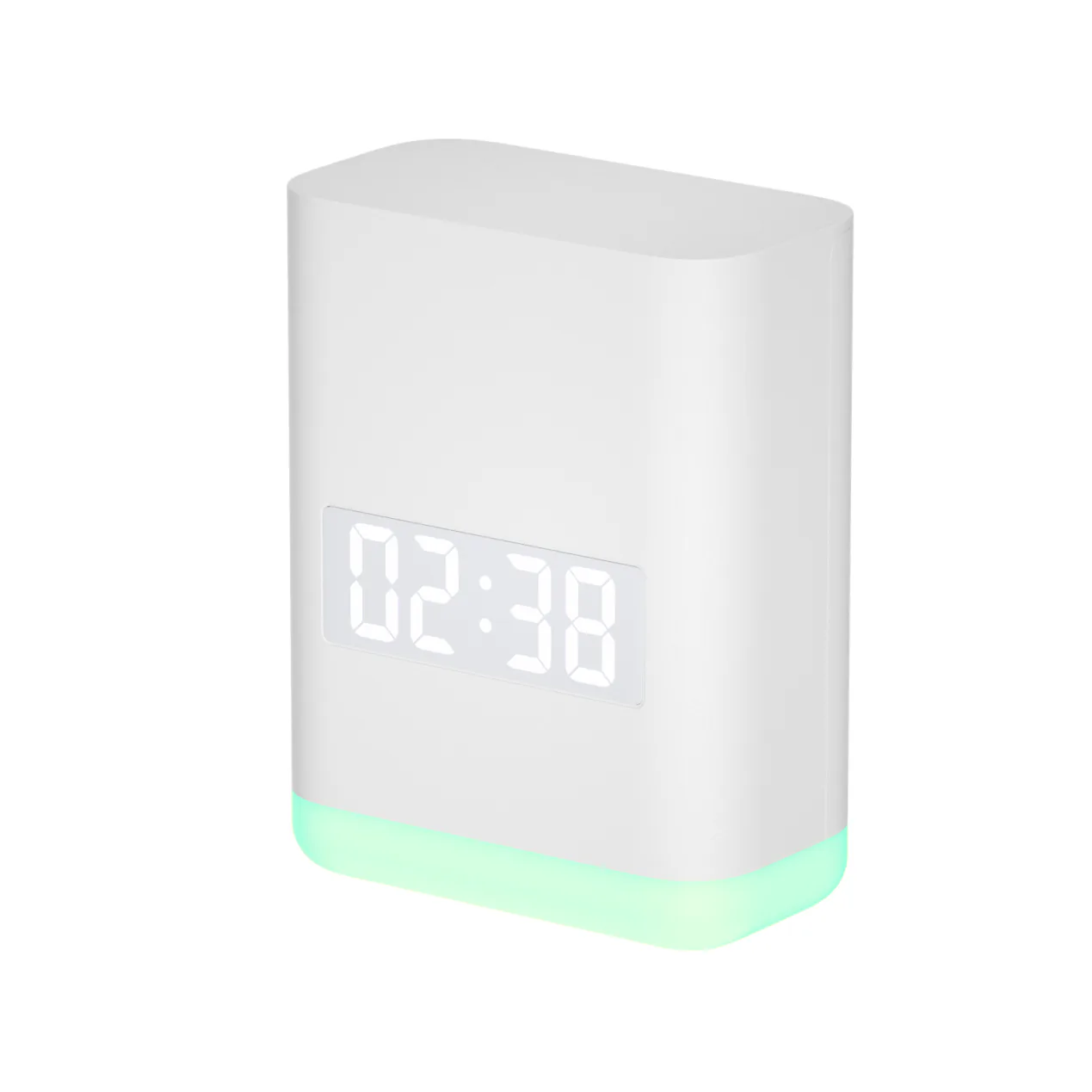
This is motion detection, not the 60 GHz static-presence sensing found in ThirdReality Smart Timer Light TL2. The Night Light-T is the better shape for a pass-through area. It is a weaker choice for a reading chair, desk, or bed where someone may remain still.
Treat the ambient-light value as a threshold signal rather than an instrument reading. ThirdReality's manual says it refers to lux but is not exactly the same as a measured lux value. Matterhome has not tested the sensor, light output, or triggering behavior.
The 12-hour pause changes daily control
The built-in routine is only useful when household members know not to override it casually. An on or off command from an app or voice assistant pauses the routine for 12 hours, even though the sensors and light continue to report their states. That may be sensible when someone wants the night light to stay quiet for an evening, but it is a long and easy-to-forget override.
Use the local routine when the job is simple and consistent. Use an ecosystem automation instead when schedules, shorter overrides, notifications, or coordination with other lights matter. Do not build both paths around the same behavior without testing how manual commands affect them.
Thread is direct, but maintenance still uses a phone
Smart Night Light-T model 3RSNL02042TM is certified for Matter 1.4 over Thread. It needs a compatible Matter controller and Thread border router, with Bluetooth used during commissioning. It does not need a ThirdReality or Zigbee hub.
The current manual provides setup sections for Apple Home, Google Home, and Home Assistant. The product page also names Homey. Alexa and SmartThings are less certain: the manual says the light can pair with any Matter-certified ecosystem but does not document the exact controls or sensor exposure in either platform. Buyers relying on those ecosystems should verify the current light, motion, and illuminance capabilities first.
Firmware updates use 3R-Installer. The manual describes linking the app from a Matter platform and keeping the phone on stable 2.4 GHz Wi-Fi during the update, even though the night light's operational network is Thread. That maintenance path is separate from ordinary Matter control.
Pick the adapter and the sensing job
The device itself takes 5 V, 500 mA over USB. ThirdReality currently sells the single pack as P1SNLA1-T with a United States adapter and P1SNLA1-T-EU with a continental European adapter; both are marked available at $29.99. There is no listed United Kingdom adapter variant.
Choose this model for a corridor, staircase, or bedroom where motion in darkness should produce a small local light and Thread already works. Choose TL2 for a United States outlet when a visible clock, countdown timer, and static presence sensor are more valuable. Skip both when the sensor must run on a battery or the light cannot stay near USB power.
Best for
- Hallways, stairs, and bedrooms that need a low light only after motion in the dark
- Apple Home, Google Home, or Home Assistant households with working Thread infrastructure
- Buyers who want one compact powered device to provide a light plus motion and ambient-light sensors
Skip if
- The home lacks a compatible Thread border router or a convenient USB power outlet
- Someone will regularly switch the light from an app or voice assistant while relying on its local routine
- You need static presence detection, a calibrated lux sensor, or a United Kingdom power adapter
Alternatives To Consider
Content feedback
Spot a mistake or missing context?
Send a quick note so it can be checked against the source material.