What we like
- Dry-contact output can trigger a separate control circuit
- Retains a suitable existing physical wall switch
- Small gateway for nearby SwitchBot accessories
- Supports mains, 12 V DC or 24–48 V DC module power
What could be better
- No power meter, dimming or built-in door-position sensor
- Metering siblings are not dry-contact substitutes
- No built-in overload cutoff on this model
- Installation and delivery can outweigh the low module price
Keep the hardware you like
Relay Switch 1 is useful when an ordinary switch or existing controller does its physical job well, but you want to operate it remotely. The module hides behind suitable controls, leaving the visible wall plate alone. A supported local switch can still operate the relay, so everyday use need not mean reaching for a phone.
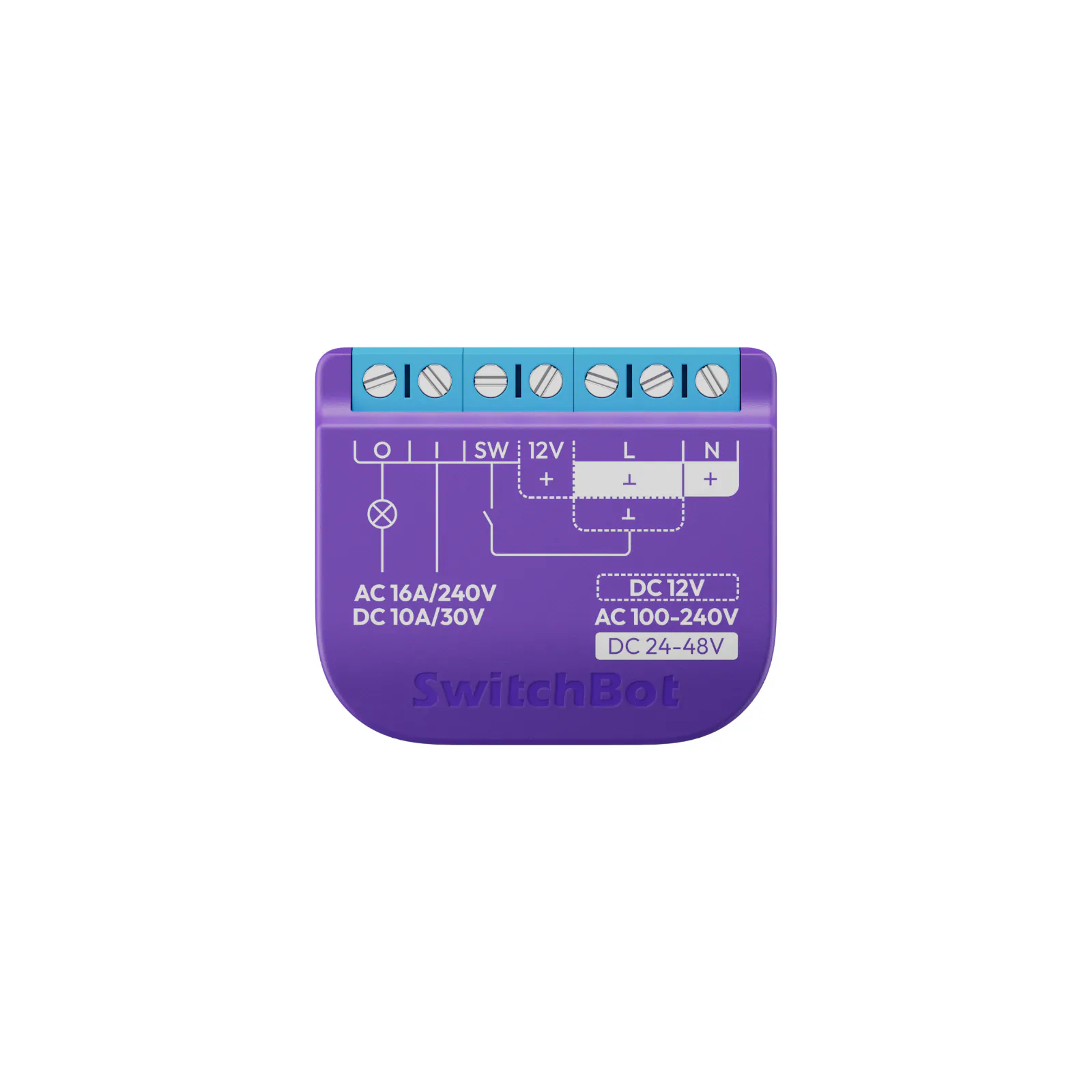
Its distinguishing feature is a dry-contact output: the switched contact is separate from the module's own power supply. That suits an existing controller expecting a contact closure, such as a compatible garage-door trigger. The purple box is more versatile for that job than its similarly named metering siblings.
A dry contact is a different purchase
Relay Switch 1PM and 2PM use powered outputs. Neither is a straight replacement when the receiving equipment requires a dry contact. The small price difference does not make them better versions of this relay.
SwitchBot's garage-door examples also need context. This bare module has no door-position sensor and no dedicated garage-door mode in its specification. A switch tile changing state tells you what the relay did, not whether the door is open, shut or obstructed. Buy a complete door-control solution if that feedback is the point of the project.
For lights, this is on/off control only. It does not dim them or measure consumption. The non-metering model has temperature protection, but lacks the overload cutoff offered by the PM models; it still depends on correctly selected circuit protection.
The extra gateway is a useful bonus
An installed Relay Switch 1 can connect up to ten supported SwitchBot Bluetooth devices to the SwitchBot network. It can also share up to two supported accessories through Matter, such as a Curtain 3 and a Bot. Those are separate limits: ten Bluetooth connections do not mean ten Matter accessories.
That can save buying a separate SwitchBot hub for a small nearby collection. It is less compelling when you already have adequate hub coverage, and a relay hidden in a wall is not an ideal way to choose the best radio position. We have not measured its reception through wall boxes.
The relay itself uses Matter over 2.4 GHz Wi-Fi, with no Thread border router or extra SwitchBot hub. The receiving home still needs a compatible Matter controller. SwitchBot's app supplies configuration, including a power-recovery option to leave the output off when electricity returns.
Cheap hardware, a larger installed bill
On September 10, 2026, one module was available at $15.99 in the US and €19.99/£19.99 in the EU/UK. The advertised JZJZ15 code reduced those prices to $13.59, €16.99 and £16.99. Eligible orders below $99 in the US, €99 in the EU or £99 in the UK add $9.99, €9.99 or £9.99 shipping: $23.58, €26.98 or £26.98 for one discounted relay, before installation and any additional applicable tax.
The 42 × 36 × 16 mm body needs space for its connections and a suitable enclosed indoor location. Mains operation requires a neutral; the module also supports 12 V DC or 24–48 V DC power. Those supply options do not change the separate output ratings or make every connected appliance suitable. Include an electrician's assessment and installation in the purchase decision.
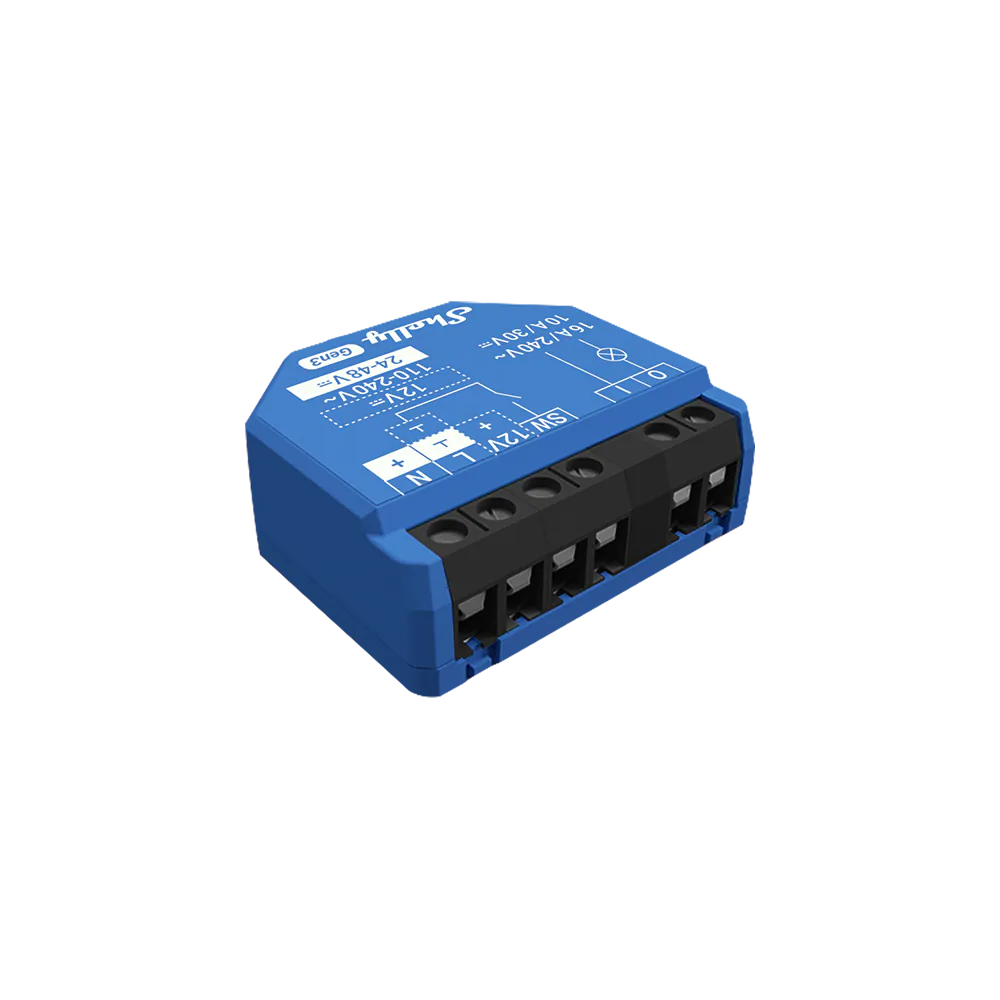
For a comparable dry-contact job, Shelly 1 Gen3 adds local browser controls and scripting. SwitchBot is more appealing when its accessory gateway will be used. Keep an installed relay that already performs the task reliably; changing the logo adds little to the room.
Content feedback
Spot a mistake or missing context?
Send a quick note so it can be checked against the source material.