What we like
- Two independently controlled outputs without a neutral at the switch
- Only €4 above 1L Gen3 in the same size enclosure
- Bypass included; local schedules and Matter after updating
What could be better
- Different 200 W and 700 W output limits
- LED load on output 1 needs the bypass fitted at the light
- No dimming or consumption readings
The second channel is a worthwhile €4 extra
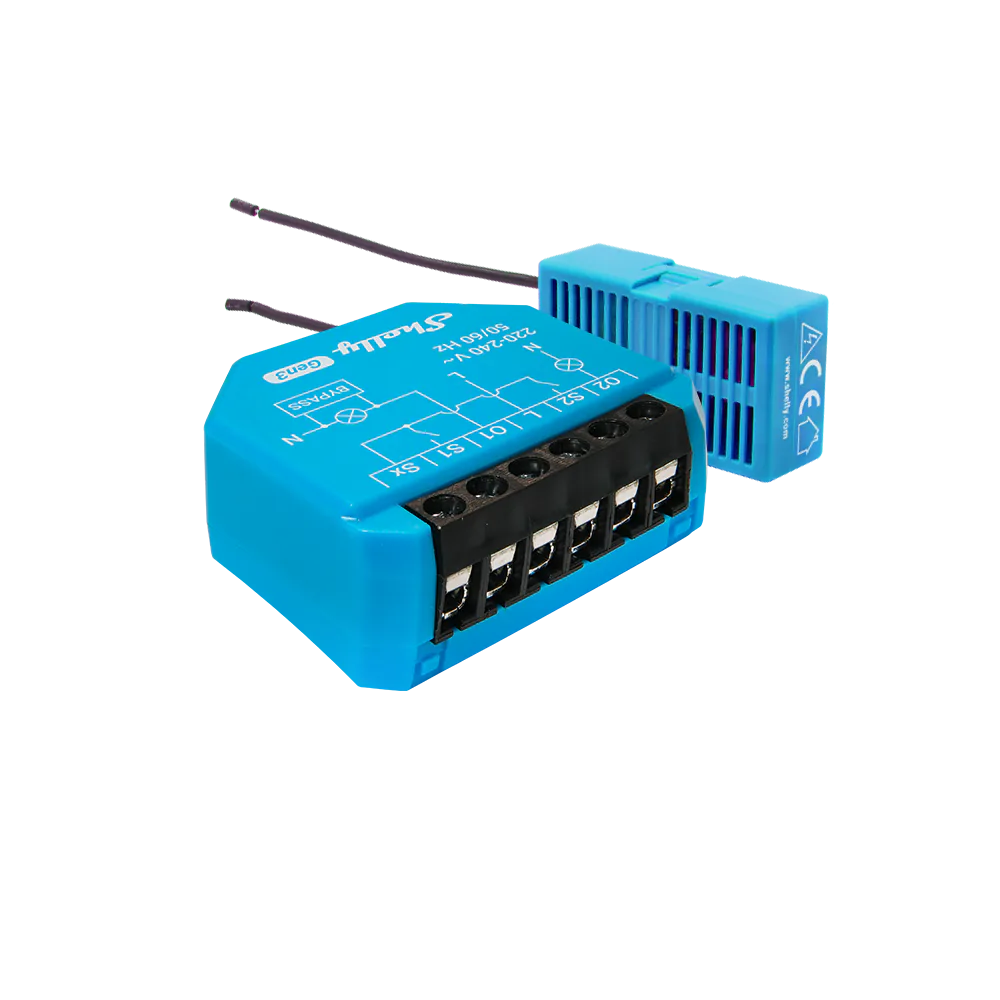
Shelly 2L Gen3 is appealing for a room with two lighting groups controlled from one position, such as a ceiling light and a separate row of wall lights. It can keep the existing controls while adding independent automation, without needing a neutral conductor at the switch.
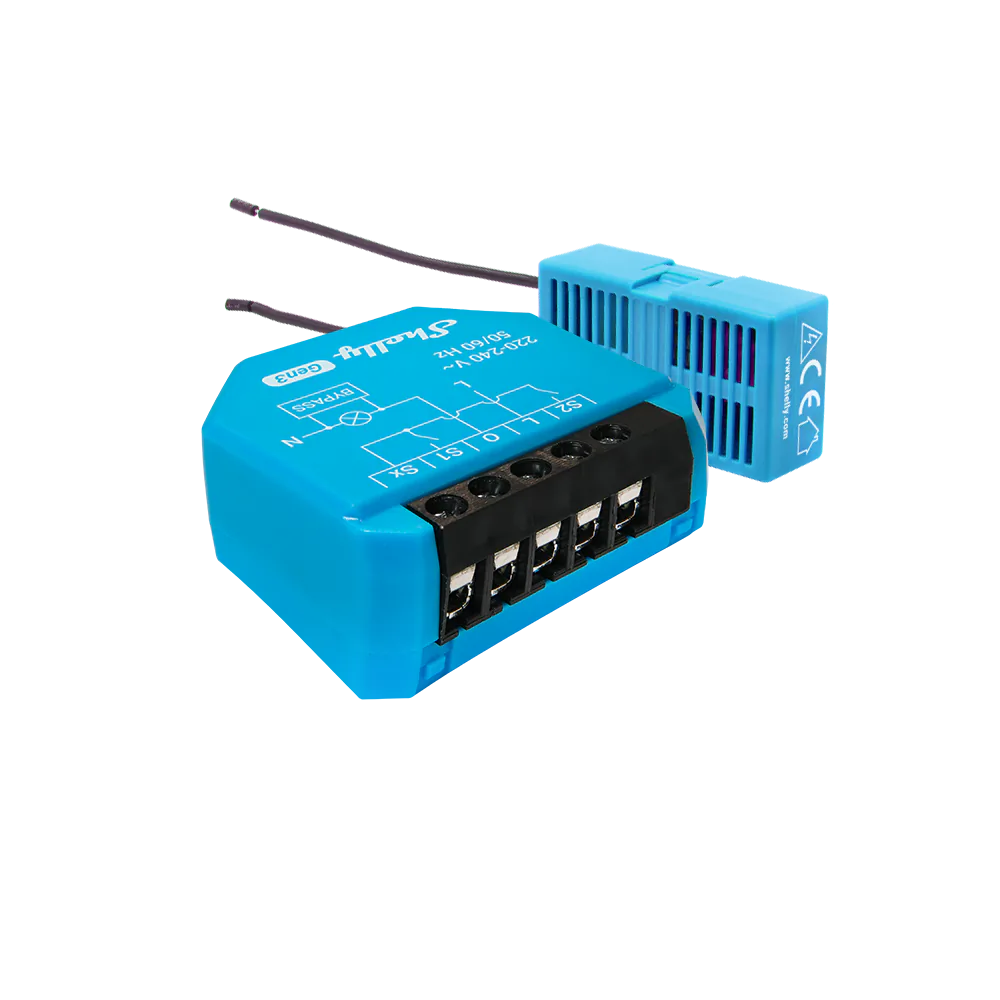
The EU shop listed it in stock at €36.90 on September 9, 2026, including VAT and a Shelly Bypass for 1L/2L. Shipping and electrical installation are additional. That is only €4 more than the single-channel 1L Gen3, and both use a 37 × 42 × 16 mm body. When the two circuits meet at a suitable installation point, the second output earns its small premium.
The two outputs do different jobs
Output 1 has a 200 W maximum; output 2 has a 700 W maximum. They are not a pair of 700 W channels. The difference matters when one lighting group draws considerably more power than the other, and the actual lamps and installation must suit the assigned output.
Shelly's current specifications also distinguish load types. Output 1 supports incandescent and LED lights without step-down transformers for lower-voltage lighting. Output 2 additionally lists fluorescent lights and fans. Those distinctions are more useful than treating the product as a universal two-channel appliance relay.
There is no power meter or dimming. Each output provides on/off control, so this is a good way to automate separate lighting groups, but it will not adjust their brightness or report which group consumes more electricity. It is also not a substitute for a blind controller simply because it has two outputs.
A bypass means work at the light as well
For an LED load on output 1, the included bypass must be installed at that load. Shelly exempts incandescent lights from the requirement. Access to the fitting is therefore part of the buying decision, even when the relay can fit behind the existing switch.
This is a 220 to 240 V, 50 Hz model, and mains installation requires a qualified electrician. The lack of a neutral at the relay does not eliminate the need for appropriate wiring, protection and space for the connections. Shelly's minimum-load guidance conflicts, so extremely low-power LEDs should not be assumed to work merely because the bypass is included.
Useful automation without replacing the controls
Each channel supports timers and schedules. Local browser access, scripting and MQTT give it more flexibility than a pair of remote app buttons, while local operation can work without Shelly Cloud. Current firmware enables Matter over Wi-Fi after an update and activation.
That combination suits lighting you want to automate while retaining ordinary wall control. It is less compelling where the missing neutral is not a problem: the no-neutral design is what you are paying for, and it brings no energy-monitoring advantage.
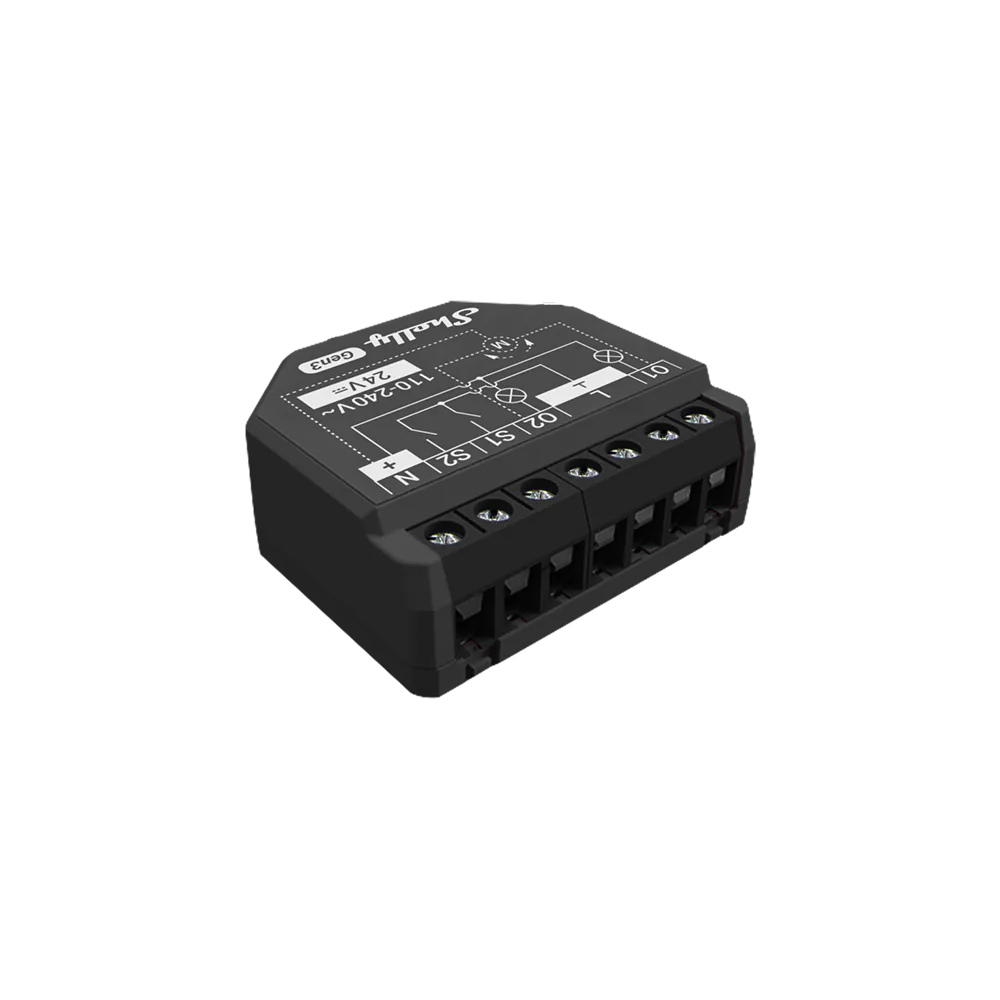
Choose 1L Gen3 for a single suitable lighting circuit. If a neutral is available, compare 2PM Gen3, which adds power measurement and a dedicated cover-control mode for supported motors. The 2L makes its strongest case where two lighting circuits need smart control and bringing a neutral to the switch would add unnecessary work.
Content feedback
Spot a mistake or missing context?
Send a quick note so it can be checked against the source material.