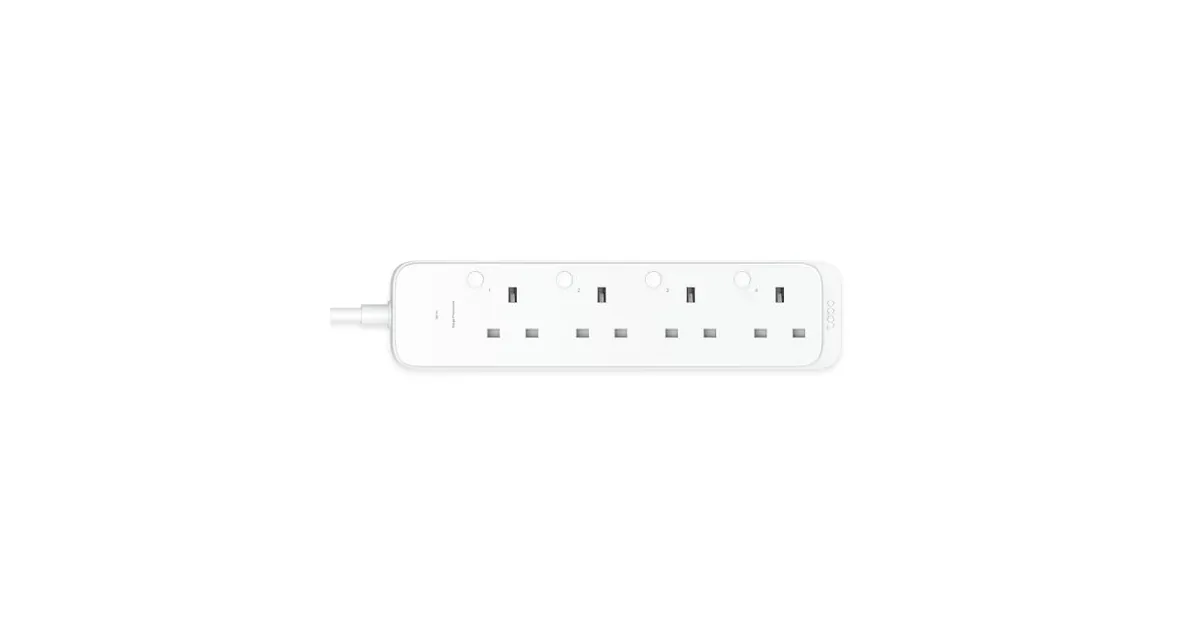
T3 named the Tapo P304M strip smart plug its Best Smart Energy Product in the T3 Awards 2026 on July 6, 2026. That is a small award note, but it points to a useful buying category for Matter homes: the multi-outlet power strip that can make a desk or media cabinet smarter without replacing every device plugged into it.
The P304M is a UK smart Wi-Fi power strip with four individually controllable outlets, Matter support, and Tapo-side energy tools. TP-Link lists Apple Home, Alexa, Google Assistant, SmartThings, and Matter compatibility on the UK product page, along with 2.4 GHz Wi-Fi, Bluetooth for setup, surge protection, a 1.5 m cord, and a 250V, 13A, 3250W maximum load.
The buyer filter is not whether a power strip sounds less exciting than a thermostat, switch, or smart meter. It is whether the strip sits in a place where four controllable outlets are actually useful. A TV console, workbench, charger shelf, aquarium corner, or office desk can justify one multi-outlet Matter device. A room where the loads are spread across different walls may be easier to manage with separate plugs.
The other check is energy data. TP-Link says the P304M can track power use, estimate electricity bills from a configured rate, set power thresholds, and help prevent overcharging. Those are useful Tapo app features, but Matter control and portable energy history are not the same thing. Apple Home, Google Home, Alexa, SmartThings, and Home Assistant can differ in how much device-level energy information they expose from Matter devices.
Matterhome is adding a device guide for the UK P304M because TP-Link's official page gives enough detail to model the product, and because the regional outlet format matters. U.S. buyers should compare Tapo P316M instead. Continental European buyers should look at regional Tapo or Eve plugs before assuming this UK strip is the right hardware.
If you are shopping from the T3 award list, the safer move is to buy by placement first. Pick the P304M when one UK power strip will clean up several nearby loads and when Tapo's app can remain part of the energy-monitoring plan. Skip it if your main requirement is a universal Matter energy dashboard across every smart-home app.
- Editor
- JC Martinez
AI tools may help draft or organize pages. Matterhome checks product claims against cited sources before publication.
Spot a mistake or missing context?
Send a quick note so it can be checked against the source material.