What we like
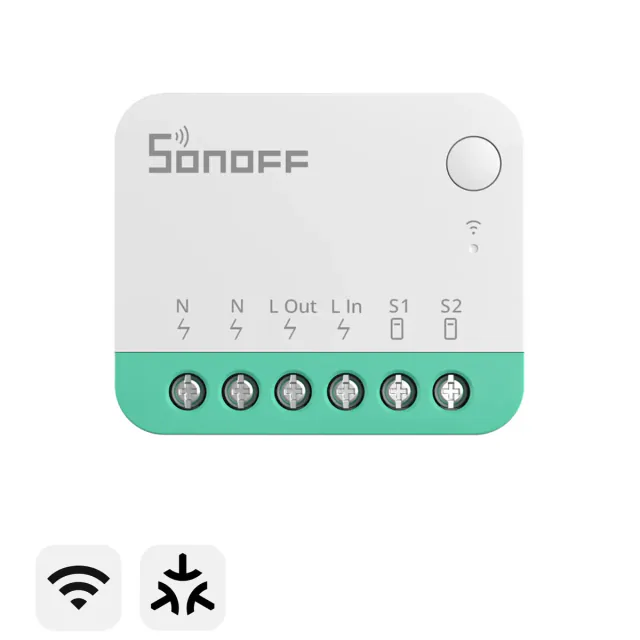
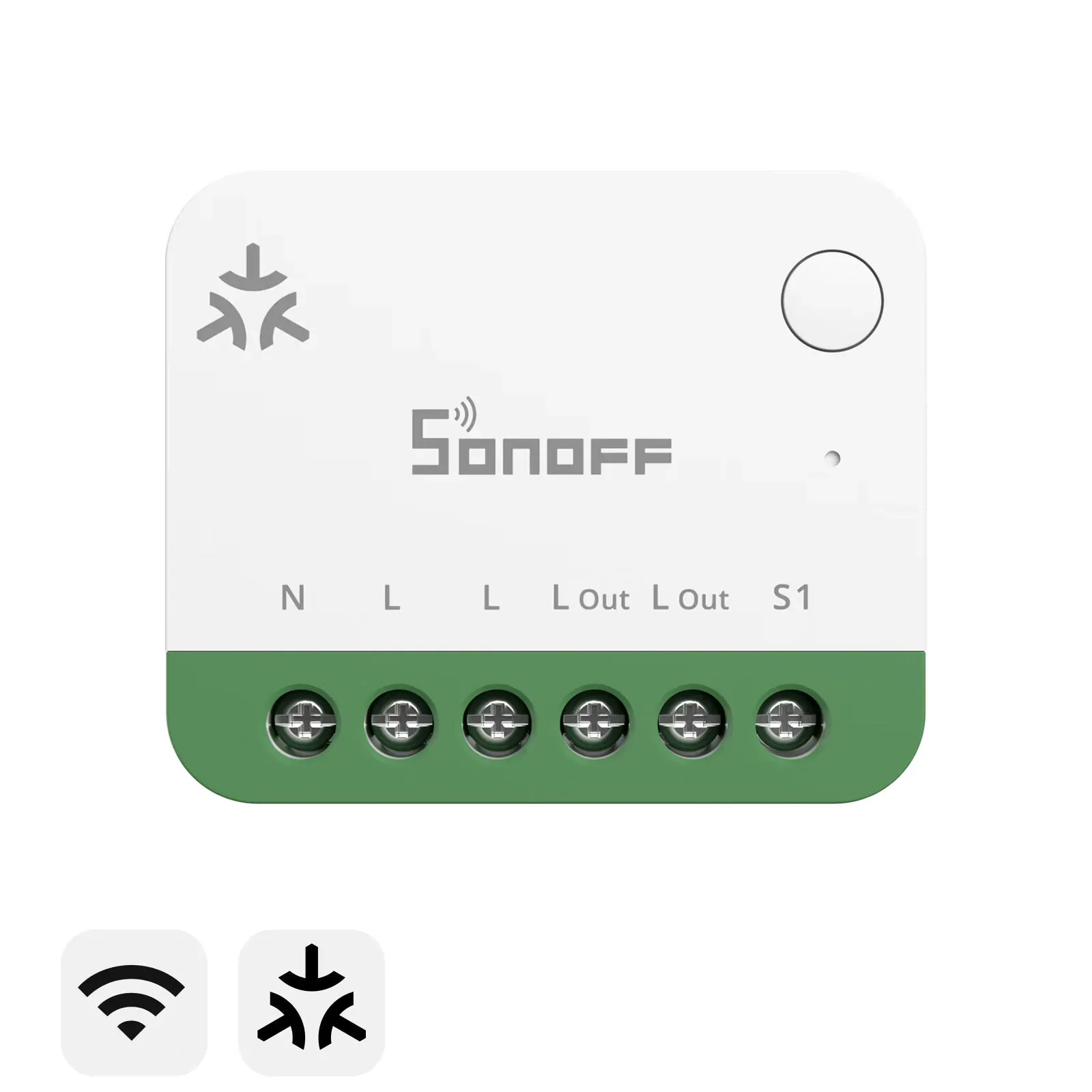
- Adds metering in the same 39.5 × 33 × 16.8 mm size as MINIR4M
- Local browser controls without a required SONOFF cloud account
- Home Assistant receives energy readings over Matter or MQTT
What could be better
- Only one switched channel and no dimming
- Energy detail and advanced controls vary by integration
- Needs a neutral; 16 A maximum applies to resistive loads
The extra $7 buys something useful
SONOFF MINI ONE PM is a strong candidate for a new smart-switch retrofit when you also want to know what the connected circuit consumes. Its listed US price was $19.90 on September 9, 2026, including tax as listed by SONOFF, with shipping and cart promotions separate. That is $7 more than MINIR4M, yet the two share the same 39.5 × 33 × 16.8 mm dimensions.
The extra money buys energy measurement, a 16 A resistive-load rating instead of 10 A, and a local browser interface. Those are meaningful improvements for a circuit you want to understand or manage more closely. They are much less valuable for a light that only needs to turn on at sunset. Keep an existing MINIR4M if it already does that job well.
Local control makes this more interesting
MINI ONE PM is part of SONOFF's OpenEdge range. You can use its local browser interface for switching, live energy readings, schedules and device settings without requiring a SONOFF cloud account. That gives the product a useful life beyond whichever smart-home app you happen to prefer.
Home Assistant users have two documented local options. SONOFF lists switching, current, voltage, power and imported/exported energy through Matter. Its MQTT integration adds access to features such as the external switch input, protection status and detached-relay settings. MQTT is therefore useful for deeper automation, rather than a requirement just to obtain energy readings.
That distinction matters. The appeal is access to the device's richer functions when you need them; you can still use ordinary Matter control for a simpler arrangement. Other Matter apps should not be assumed to expose the same energy fields or controls as Home Assistant.
Metering is information, not automatic savings
Bidirectional measurement can distinguish energy consumed from energy flowing the other way in a suitable installation. For an ordinary load, the more immediate benefit is seeing its draw and recognizing when it is active. It does not identify individual appliances on a shared circuit or make a wasteful load efficient by itself.
There is still just one switched channel, despite the two L Out terminals. It cannot dim a light, and its 16 A maximum is a resistive-load rating rather than a universal motor rating. Like MINIR4M, it needs a neutral, room for wiring and professional mains installation. The compact case is helpful, but the installation remains part of the cost.
A good upgrade when the readings have a purpose
We would choose MINI ONE PM over MINIR4M for a fresh installation where metering or local browser access will be used. Choose the cheaper module when those extras would sit idle.
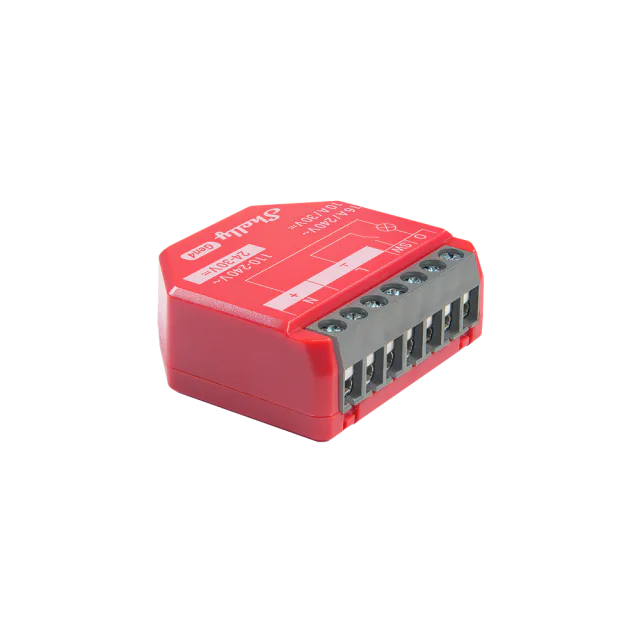
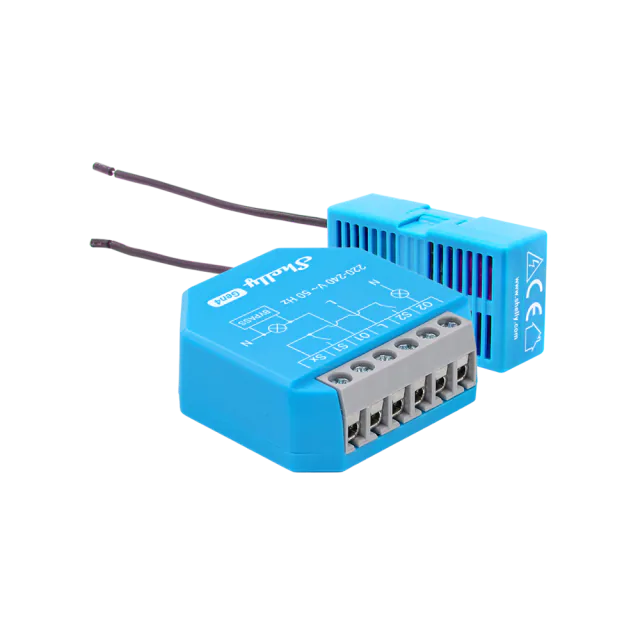
Shelly 1PM Gen4 is an alternative for a single metered AC output, especially if a future move to its alternative Zigbee mode matters. It has a larger body. MINI ONE PM is the more compact option here, with a particularly useful choice of local controls for Home Assistant households.
Spot a mistake or missing context?
Send a quick note so it can be checked against the source material.