What we like
- Battery placement avoids routing a USB cable to the best viewing angle
- Meross Bluetooth app retains range and threshold tuning alongside Thread
- Three distance-based occupancy outputs allow different lighting triggers
- Included CR123A battery, adjustable stand and IP67 housing
What could be better
- Rated stationary-presence range is four meters
- Three zones do not provide a detailed room map or identify people
- Battery-life headline depends on conditions and detection mode
- Alexa does not receive the light-sensor function
Easier to put where it can actually see you
Meross MS605 makes its best case in a study or reading corner where a USB cable would force a sensor into the wrong position. Its included CR123A battery lets you aim the adjustable stand toward the place people sit, without tracing a wire back to an outlet. Infrared motion sensing and 24 GHz radar are intended to keep the area occupied through the small movements of quiet activity.
At the September 10, 2026 check, Meross's USD single-sensor listing was $33.99 with free delivery under the published policy, before any additional local taxes. Two sensors were $54.99 and four were $105.99. Those larger numbers buy more sensors, not a more capable version. Regional availability and checkout prices can differ.
One is the sensible first purchase. A discount on four is less useful if the first room reveals that the sensor's range or tuning does not suit your home.
The four-meter limit matters more than the pack discount
Meross rates presence detection to four meters and larger motion to six. That is a meaningful limit for a quiet person at the far end of a room. The stand can fold and rotate, but rotating the mount does not turn the sensor into an all-around room monitor.
The manual recommends a view toward the chest of a seated person. Aiming at a back, hiding it behind objects or facing swaying curtains can lead to missed presence or an occupied room after everyone leaves. Battery freedom helps you choose a better view; it does not remove the need for one.
The IP67 housing broadens the placement options, especially around damp rooms. Cold conditions can shorten battery runtime, and the seal must remain intact. Meross's three-year battery claim is an advertised maximum, not a maintenance interval we have verified. Its more power-efficient PIR-led mode also trades some detection accuracy and stability for lower consumption.
The three zones are useful, with a narrower meaning
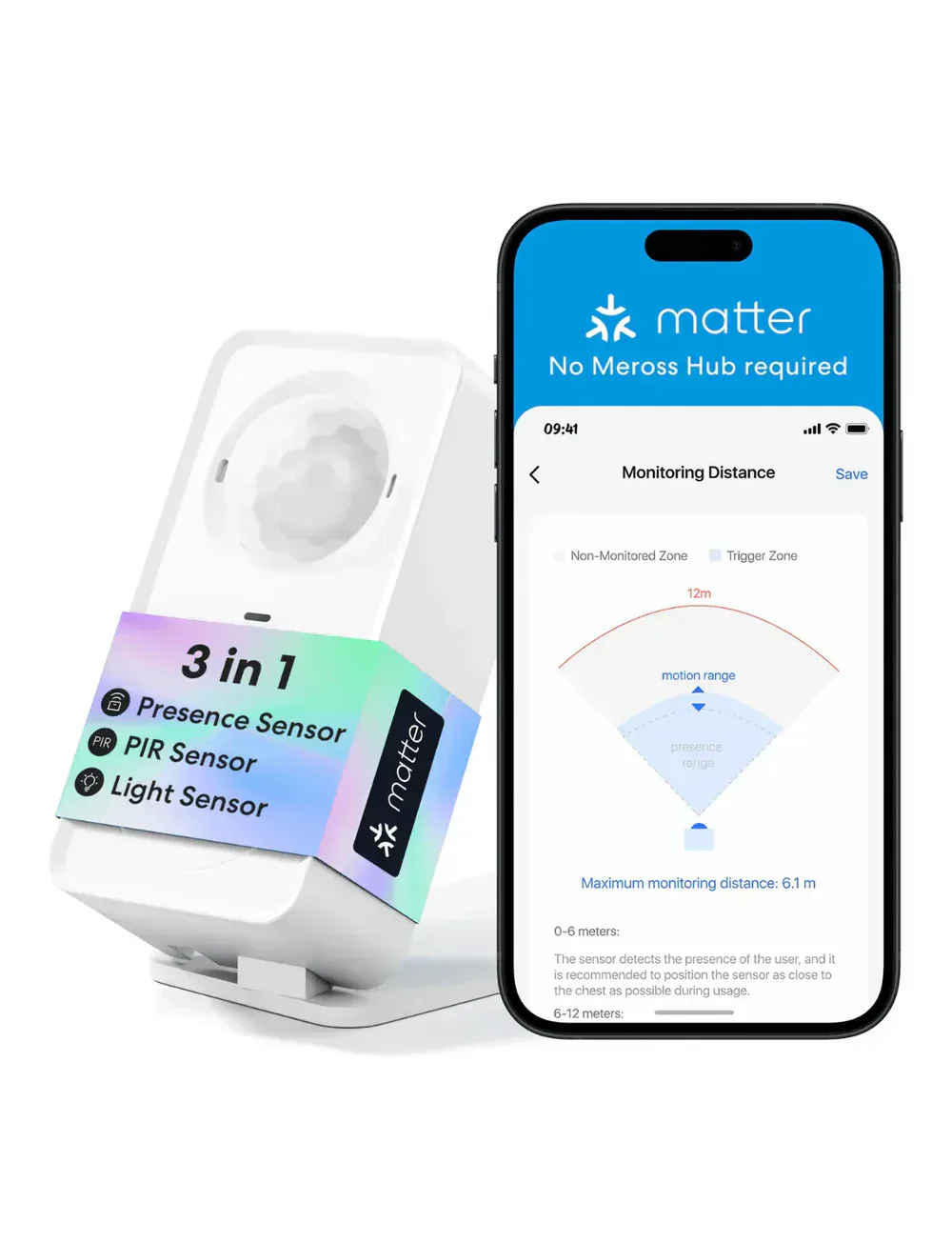
MS605 can expose three separately configured occupancy sensors. Meross's own app illustrates them as distance ranges: one can cover the broader area while another responds closer to the sensor. That can give a nearby lamp a different trigger from a general room light.
These are distance-based outputs, not a detailed floor plan or identification of three people. The controls shown do not establish that two chairs at the same distance can be distinguished left from right. Meross also warns that the displayed distance scale does not map precisely to physical distance. Its promotional examples of individual bedside lamps are therefore more ambitious than we would make the buying decision depend on.
More control than a simple sensitivity slider
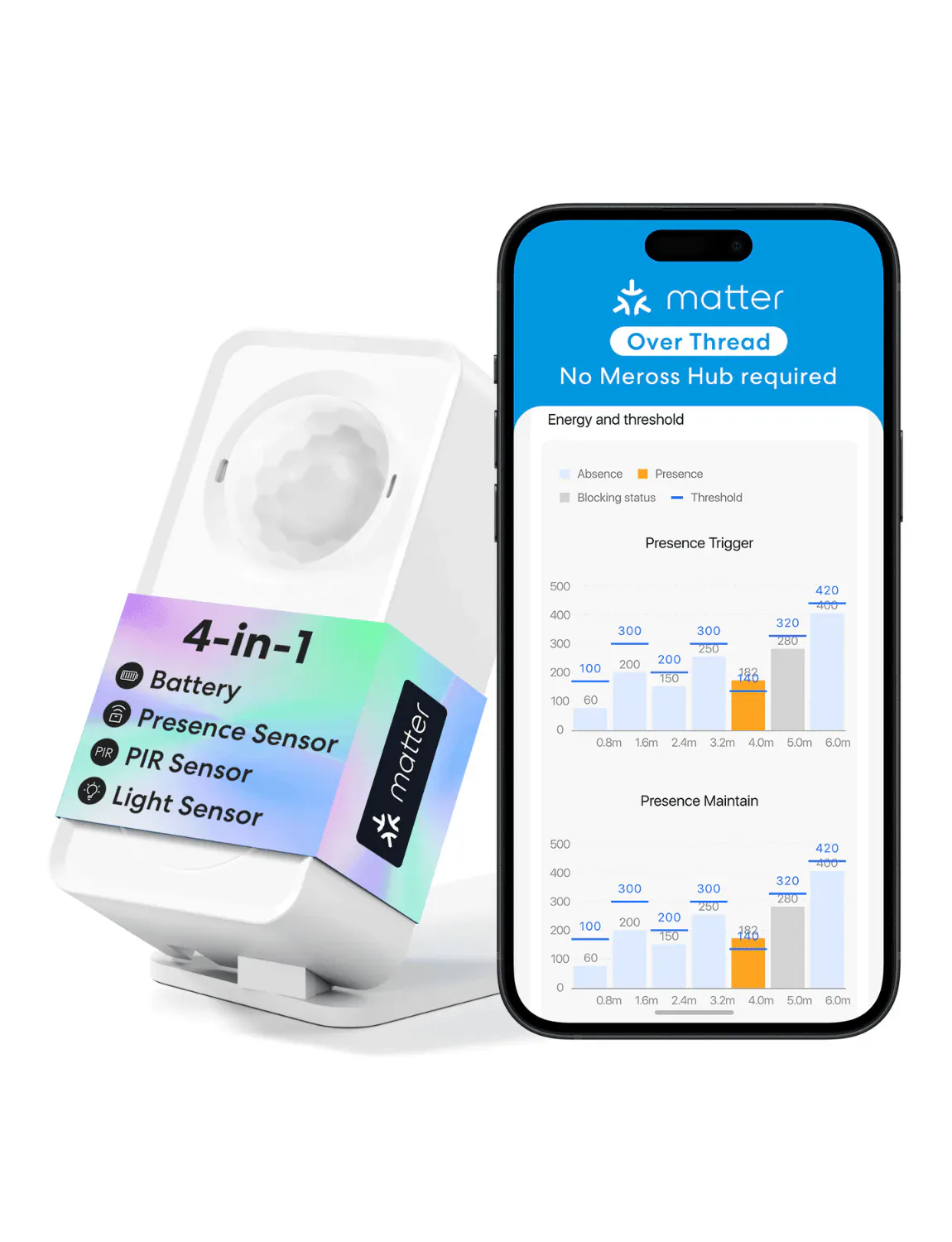
The Meross app provides range masking, room adjustment, separate thresholds for detecting and maintaining presence, and entry/absence delays. Those are useful tools when a room needs to ignore a moving curtain while still noticing someone sitting quietly. They also make this a product for someone willing to observe and adjust the result.
A longer absence delay can prevent an irritating false lights-off event, at the expense of leaving the light on longer after departure. Meross recommends at least 30 seconds for everyday use. We have not measured false-trigger rates or established that one preset works across different rooms.
These controls use a nearby Bluetooth connection to Meross's app. Normal sensor reporting runs over Thread, so the phone does not need to stay nearby. Repositioning or retuning the sensor means returning to the Meross app; its sleeping Bluetooth connection may need waking first.
A good buy when Thread is already paid for
You need a compatible Matter controller and Thread border router to run ecosystem automations. A Meross hub is not required for that route. Buying new infrastructure solely for this sensor changes the value considerably; the small sensor price is not the complete cost for a home starting from scratch.
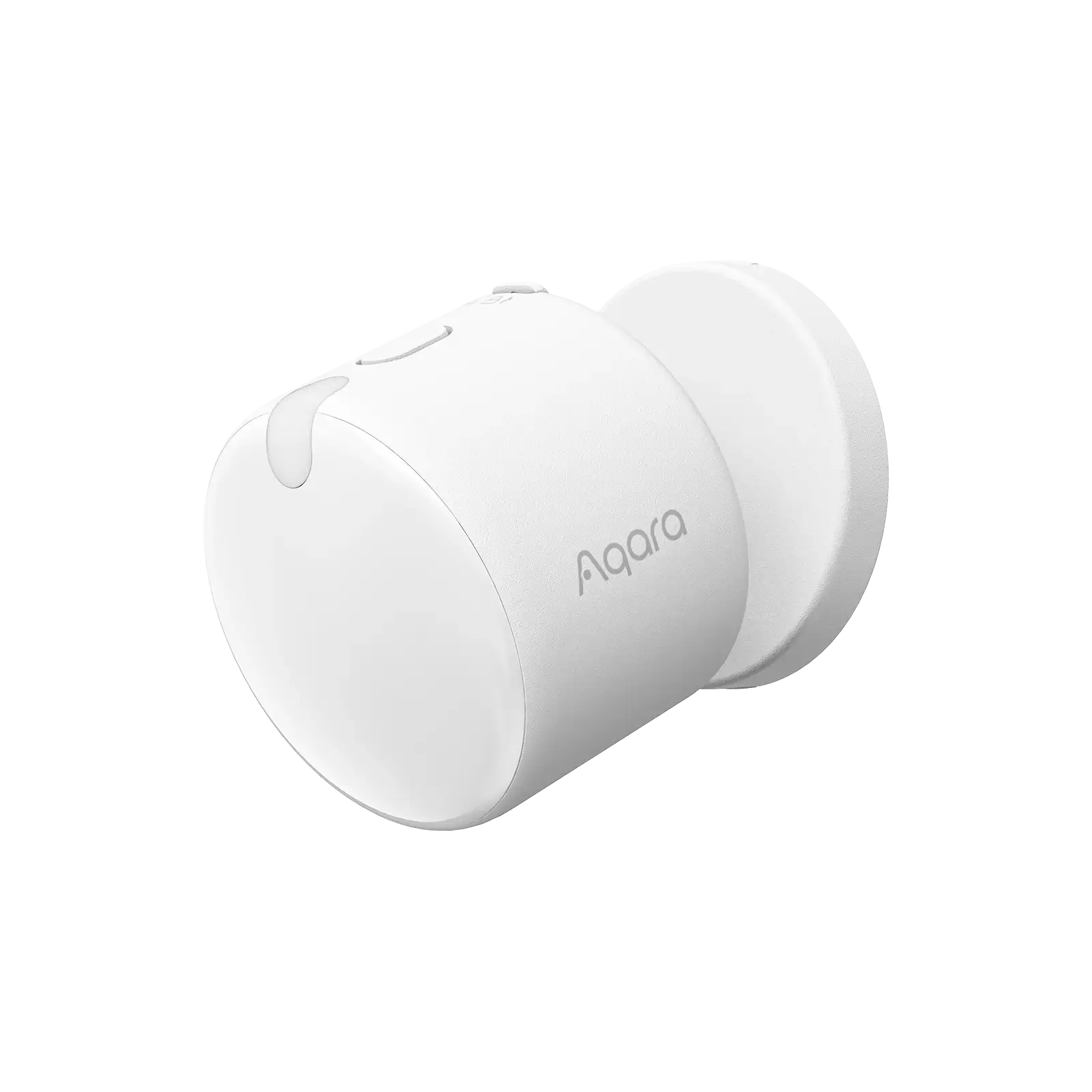
Alexa lacks the light-sensor function. For other supported platforms, light readings can help limit occupancy-triggered lighting to dim conditions. MS605 does not replace separate temperature or humidity sensors; Aqara FP300 includes those readings, although its Thread mode offers fewer range and detection-mode adjustments.
We would choose MS605 when cable-free placement and detailed tuning solve a real problem. Wired MS600 remains the better Meross comparison for longer rated presence range and avoiding batteries. Keep a basic motion sensor in a pass-through hallway if it already works, and keep an existing presence sensor if its cable and detection are satisfactory.
Content feedback
Spot a mistake or missing context?
Send a quick note so it can be checked against the source material.