What we like
- Longer rated stationary-presence range than the battery MS605
- Continuous power avoids replacing sensor batteries
- Adapter, USB-C cable, adjustable mount and cable clips included
- Detection-range masking and room learning help manage interference
What could be better
- The 1.5 m power cable constrains a useful sensing position
- Twelve-meter headline applies to motion, with more false-trigger risk
- Pet shield excludes part of the view rather than identifying pets
- Alexa cannot use the light reading to trigger a routine
Worth considering when the lights keep giving up on you
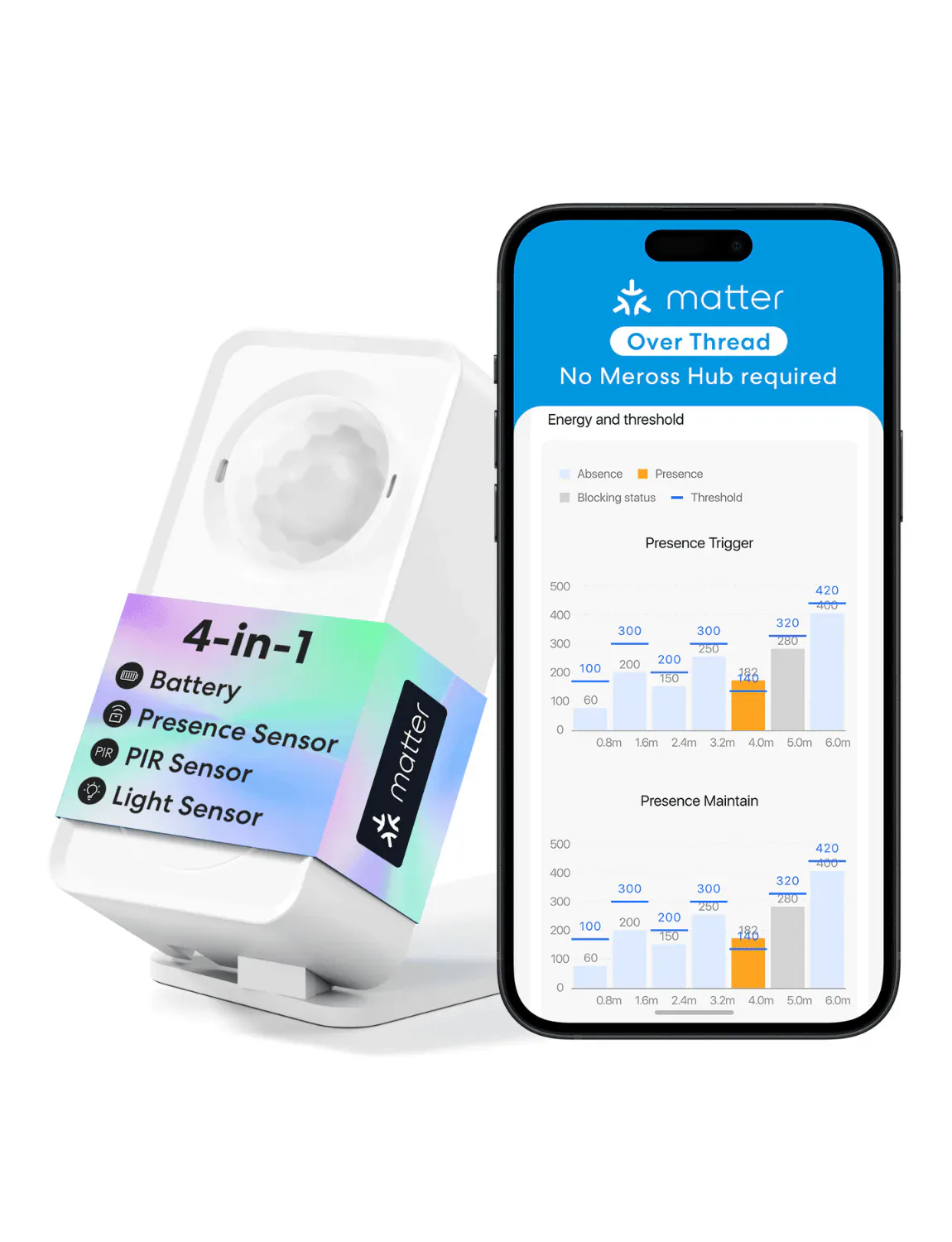
Meross MS600 has a useful job: keeping a room occupied while someone reads, works at a desk or watches television with little movement. It combines infrared motion sensing with 24 GHz radar, which is intended to pick up smaller body movements than a basic motion sensor can. A light sensor adds the possibility of running the lamp only when the room is dim.
The appeal is fixing that particular annoyance. A hallway where a simple movement trigger already works gains less from radar, extra settings and a permanent power cable. Keep the existing sensor there; spend on presence detection where staying still is the problem.
The wire buys range and removes a battery chore
MS600 runs continuously from USB-C power. The kit includes the adapter, a 1.5-meter cable, cable clips, an adjustable base and adhesive. That is a reasonably complete purchase, provided an outlet is within a sensible cable route of the best viewing position.
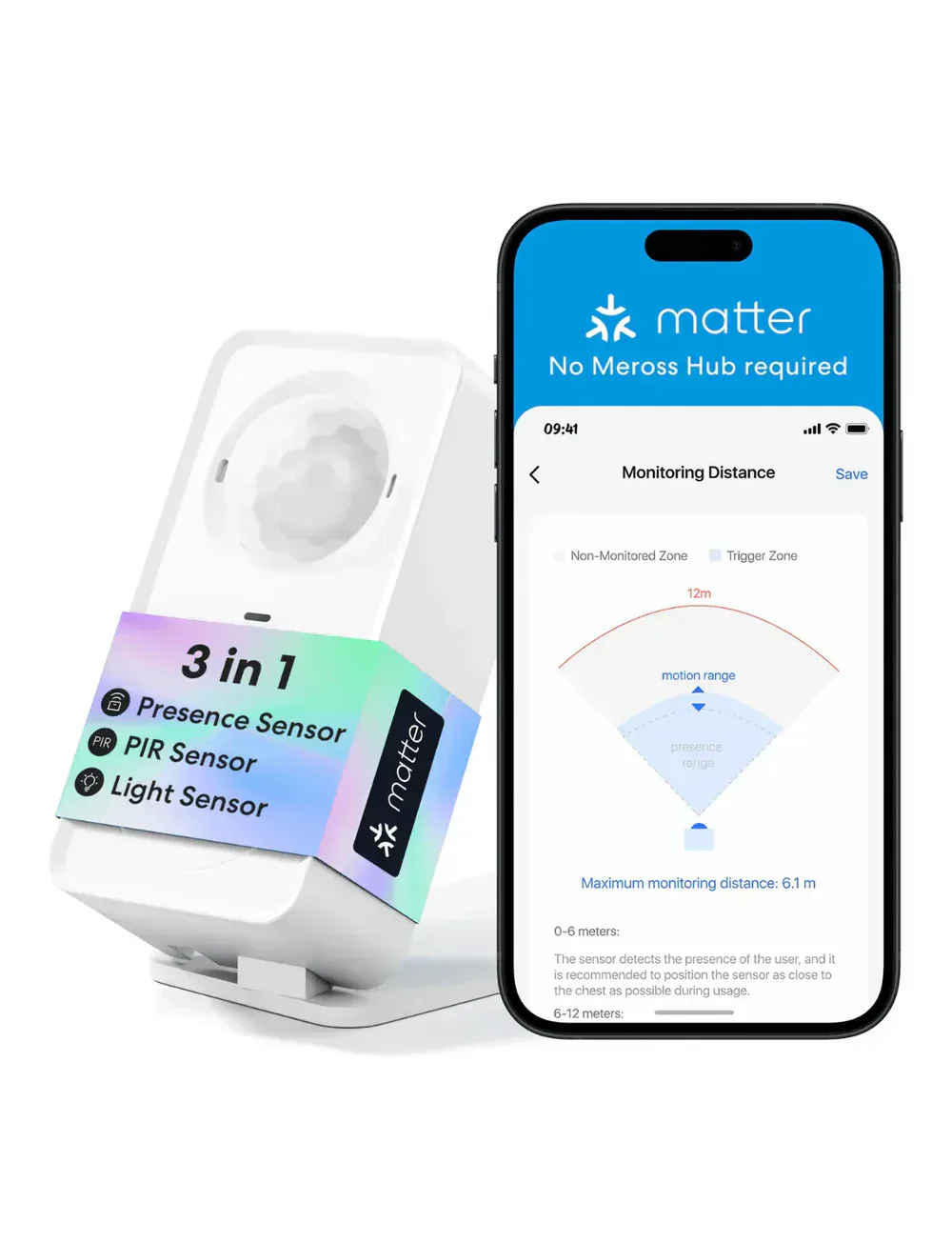
The position matters more than hiding the sensor perfectly. Meross recommends aiming toward the chest area of the person who normally sits in the room. Tucking it behind the sofa or pointing it at someone's back can make quiet presence harder to detect. A tidy cable route is worth little if the sensor cannot see the chair that motivated the purchase.
For a permanent desk or reading corner, avoiding battery replacement is useful. For a conspicuous wall with no nearby power, Meross MS605 is the more attractive design. MS600 is for indoor use; its wired construction should not be mistaken for outdoor suitability.
Twelve meters is the wrong number for a reading chair
Meross rates stationary-presence detection to six meters and motion detection to twelve. The manual associates the longer range with a more permissive detection mode that can report activity from either sensing method, increasing the risk of false presence. That is not twelve meters of equally dependable seated-person detection.
The six-meter rating still gives MS600 more reach on paper than MS605's four-meter presence range. Neither figure proves coverage around furniture, through obstructions or across every corner of a large room. We have not measured either sensor's detection accuracy.
MS600 also does not identify several people or map who is sitting where. Its manual says it follows the fastest-moving object as a reference. Buy it to answer whether the watched area is occupied, rather than to distinguish individual occupants.
Useful adjustments require some patience
Room learning, detection-range masking and absence timing give you ways to reduce unwanted triggers. A fan, swaying curtain or vibrating appliance can otherwise keep the room marked occupied. Shortening the lights-off delay too aggressively can create the opposite irritation: darkness while someone is still there.
The included pet shield is a physical mask over part of the infrared sensor's view. It can help exclude low movement, but it also stops seeing activity in the blocked area. It does not recognize a pet and selectively ignore it. Position and the household's actual movements still determine whether the compromise works.
The brightness reading is useful for broad dark-versus-daylight decisions. Meross averages it to avoid reacting to brief changes, so it is not an instant light meter. Its current FAQ also says Alexa cannot use the light value to trigger automations, weakening that part of the package for an Alexa home.
Choose it for the room, not the protocol
On September 10, 2026, Meross's USD listing was $40.99 for one sensor with a regional power adapter. Published delivery is free; additional local taxes can apply. Regional availability and checkout pricing can differ. That is $7 above the MS605 single-sensor listing, so the wired model is not automatically the budget choice.
It does avoid adding a Thread border router. Its direct Matter connection uses 2.4 GHz Wi-Fi, with a compatible Matter controller for your ecosystem's automations. Detection tuning remains in Meross's app.
We would choose MS600 for an unobtrusively powered, larger sensing area. Choose MS605 for easier placement in a smaller room with Thread already in place, or Aqara FP300 when temperature and humidity readings would also earn their keep. A working presence sensor needs no replacement simply because another one supports Matter.
Content feedback
Spot a mistake or missing context?
Send a quick note so it can be checked against the source material.