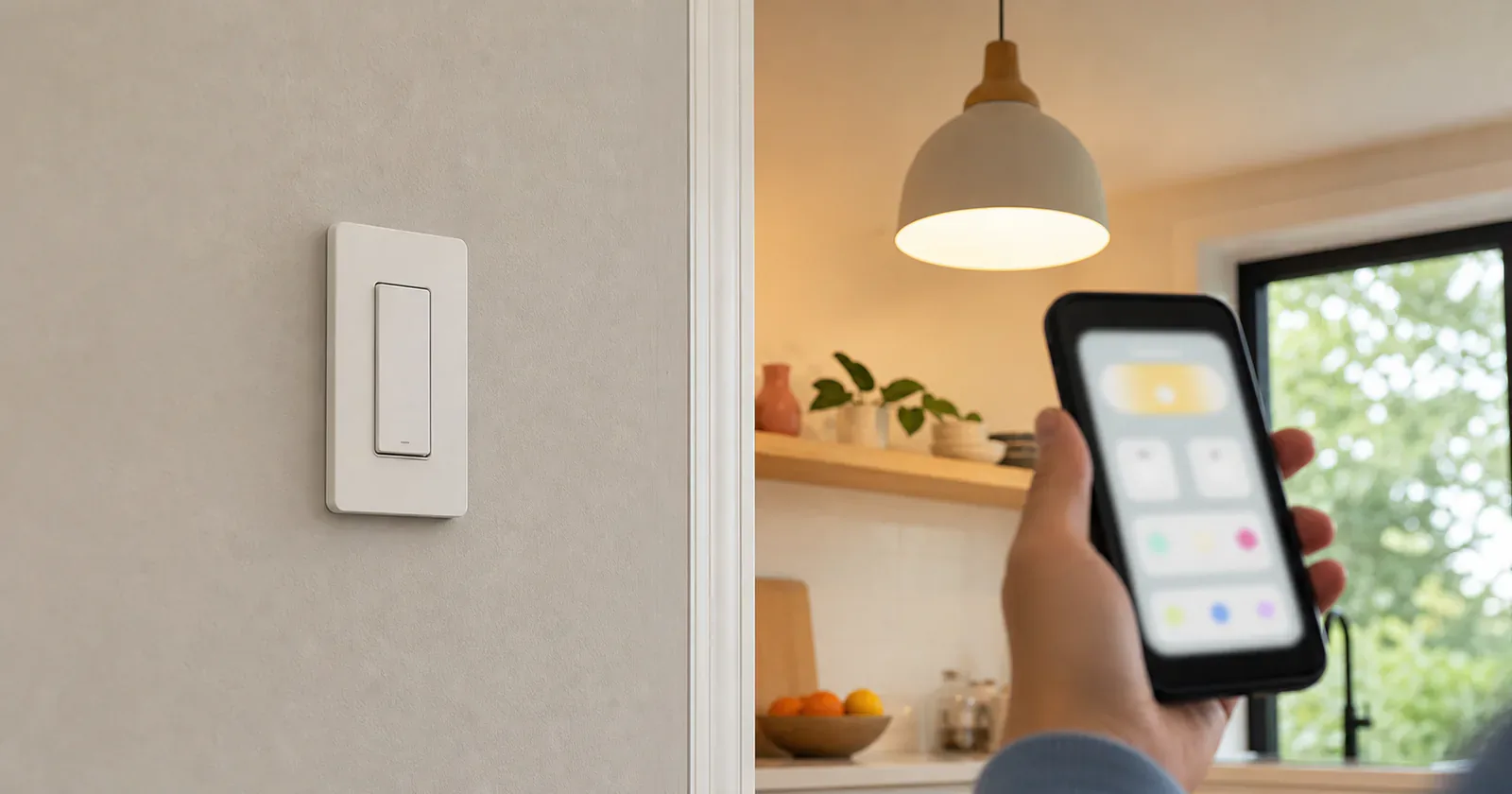
Google Home app 4.20 is reported to improve Matter switch support, which is easy to miss next to bigger camera and Nest thermostat notes. The Verge reported the update on June 23, 2026. For homes with physical wall controls, buttons, relays, and switch-labeled plugs, that small Matter line is the one worth testing.
Google has not published a detailed consumer changelog explaining which switch behaviors changed, which Matter switch device types are affected, or whether every user gets the behavior as soon as version 4.20 appears. Google's own release-note page says features can take time to roll out even when the app is current.
So the advice is simple: update, test the switches you already own, and do not replace a house full of wall controls based on the version number alone.
Why switches are messy
Matter switches are awkward because the word can mean several different products. It can mean an in-wall switch that directly controls a wired light. It can mean a relay behind a traditional switch. It can mean a battery button that starts automations. It can also mean a plug or outlet that Google Home lets you label as a different device type.
Those differences matter in Google Home because a switch is not always the final thing being controlled. A wall switch might expose the physical control. A separate light endpoint might expose the load. A button might only be useful as an automation starter. A plug might be renamed as a lamp or fan so Assistant does not treat it like a generic outlet.
Google's developer documentation makes that complexity visible. Its supported Matter device-type page says many Matter device types are supported in Google Home but not all are fully supported. It also has a specific note for products that combine an On/Off Light Switch with an On/Off Light, where endpoint ordering can change what appears in the Google Home app.
What Google Home owners should test
If you already own Matter switches, update the Google Home app and test the boring behavior first. Confirm that the switch appears with the right name and room, that the load it controls is represented the way you expect, and that voice commands do not turn off the wrong device group. Then check automation starters and actions separately.
For battery buttons and scene controllers, do not read this as a promise of richer button support everywhere. Google Home added switch-or-button press starters earlier in 2026, but button support and wall-switch support are different problems. Test single press, double press, long press, and release behavior only on the exact product you plan to keep.
For Thread switches, the old infrastructure rule still applies. Google's Matter support page says homes with a mix of Wi-Fi and Thread Matter devices need a hub that also works as a Thread border router. A better app interface will not fix a missing Thread path, a weak mesh, or a switch installed behind a circuit that is not compatible with the hardware.
Buy one normal switch first
This update makes Google Home a little more promising for switch-heavy Matter setups, but it does not remove the purchase checks. Before buying several switches, confirm the electrical fit, neutral-wire requirement, load type, dimming behavior, gang-box depth, and whether the product is Matter over Wi-Fi, Matter over Thread, or bridge-based.
The best first purchase is one switch in one normal room. Install it where the lighting job is simple, then verify Google Home control, Assistant voice behavior, automations, household member access, and any manufacturer-app features before replacing every wall control in the house.
Matterhome has not tested Google Home app 4.20 or its Matter switch changes. Until Google publishes more specific release notes, let one installed switch answer the question before the rest of the house becomes the test.
Content feedback
Spot a mistake or missing context?
Send a quick note so it can be checked against the source material.