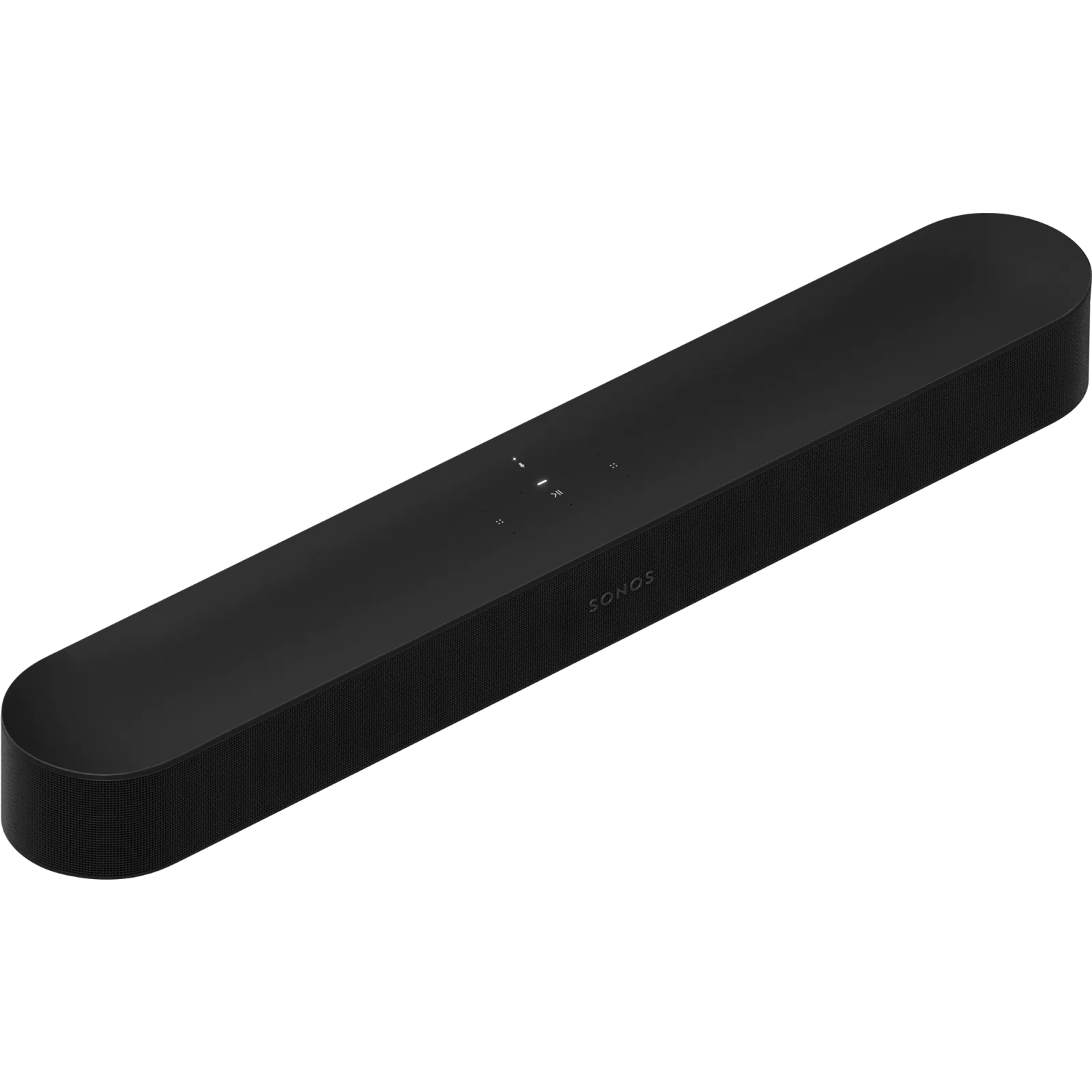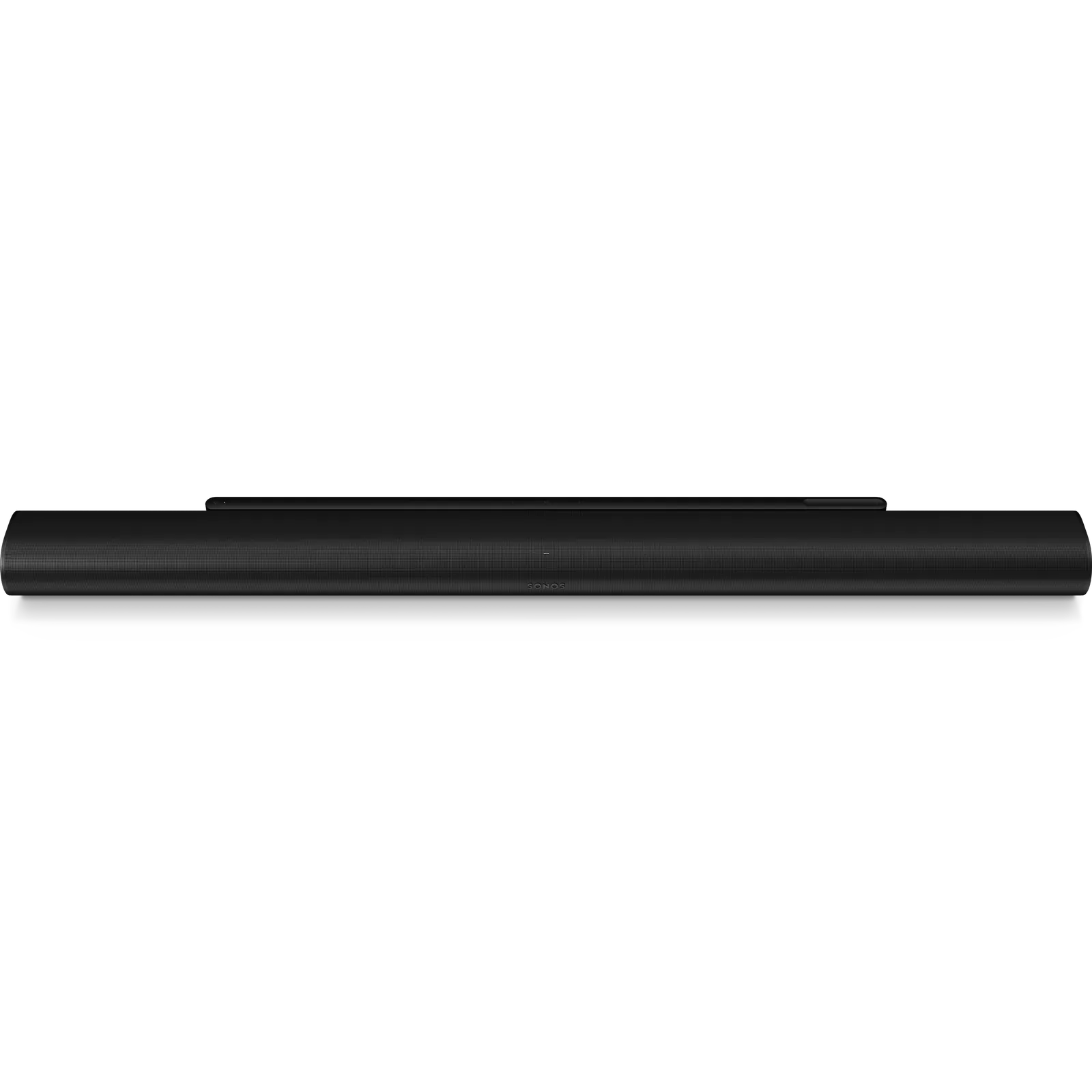
What we like
- Four speech-enhancement levels let dialogue take priority
- Upward-firing drivers and a dedicated bass design in one slim bar
- Trueplay quick tuning works with Android as well as iOS
What could be better
- Nearly 1.18 metres wide and needs open space around it
- Subwoofer and rear speakers make a full system much more expensive
- No HDMI source passthrough; the TV handles connected players and consoles
Buy it for the room you actually watch in
Sonos Arc Ultra makes sense when the TV is used enough to justify a substantial audio purchase, but a receiver and separate front speakers would complicate the room. It combines a wide soundbar, dedicated bass hardware, upward-firing drivers and Sonos music streaming in one object. The appeal is that combination of roles and restrained appearance.
At Sonos US, the bar was $1,099 and available to order with free shipping on September 11, 2026. That price buys the soundbar alone. I would shortlist it for a planned movie-room upgrade or an existing Sonos home, rather than assume it is the right answer whenever a television's built-in speakers disappoint.
Dialogue control is more useful than the channel count
Arc Ultra offers four levels of Speech Enhancement, from Low to Max. That gives a household more choice than a single dialogue toggle. It is especially relevant when voices keep getting lost among effects and music, because increasing the overall volume also increases those competing sounds.
The stronger settings involve a tradeoff. Sonos says High significantly reduces non-dialogue audio; Max prioritizes speech by controlling the range of the other sounds. That can suit the programme and listener, but it is not a free improvement to every soundtrack. Choose the amount of emphasis you actually prefer.
Sound Motion is the compact woofer design behind Arc Ultra's bass proposition. The upward-firing drivers also give Atmos height effects dedicated hardware. Neither establishes how convincing the result will be in your room: we have not measured its bass extension or listened to its surround presentation. Sonos's 9.1.4 description should not be mistaken for a box containing separate speakers to place around the sofa.
Trueplay quick tuning uses the bar's microphones and works with Android or iOS. Advanced tuning still needs a supported iOS device. That is a practical advantage over Beam Gen 2 for an Android household, without promising that room tuning can overcome an obstructed installation.
A slim bar still needs a wide, open home
Arc Ultra is 1,178 mm wide, 75 mm high and 110.6 mm deep. Its low profile can look tidy beneath a large screen, but the width makes a narrow cabinet or crowded alcove a poor match. Measure the furniture and screen clearance before treating it as a drop-in upgrade.
Sonos asks for at least 10 cm between the bar and the TV above it, and advises against enclosing it in a cabinet or corner. Its wall-mount guidance also leaves 30 cm clear at each end. Those requirements can matter more than whether the bar physically fits on the shelf.
There is one HDMI connection for the TV's ARC or eARC port, without source passthrough. Players and consoles connect to the television, so its ports and audio handling remain part of the purchase. eARC is required for formats such as Dolby TrueHD Atmos and multichannel PCM. Optical works through a separately sold adapter, but gives up the Atmos route that helps justify this expensive bar.
Price the finished system before starting it
The current US set with Arc Ultra, Sub 4 and two Era 300 rear speakers was $2,806. That is $1,707 above the standalone bar, even with the bundle discount. It is a useful reality check if the long-term plan already includes a sub and surrounds.
Start with the bar when keeping the room simple is the attraction. Add speakers only for something you find missing. Sonos grouping, AirPlay 2 and Bluetooth make music playback useful between films, but this remains an audio product, not Matter infrastructure.
Beam Gen 2 is $499 and much narrower. Sonos also lists the $699 Beam Ultra for preorder, with estimated September 29 shipping; its announced upward-firing drivers make it worth comparing after launch if Arc Ultra feels oversized. A preorder specification is not a demonstrated listening result.
Keep a working Arc or other soundbar if dialogue, bass and placement already satisfy you. Arc Ultra should solve a particular shortcoming, not become an automatic upgrade because its name is newer.
Content feedback
Spot a mistake or missing context?
Send a quick note so it can be checked against the source material.