What we like
- Included room sensor can prioritize the bedroom instead of the hallway
- Rotating ring and large display make the wall control part of the appeal
- Learning can make suggestions without changing your schedule automatically
- Broader equipment support and included wall trim
What could be better
- Still $140 more than the basic Nest at the checked US sale prices
- Room sensors cannot independently heat or cool each room
- Google Home remains central to learning and sensor schedules
- Exact HVAC wiring and power requirements can add installation costs
The bedroom sensor is the reason to spend more
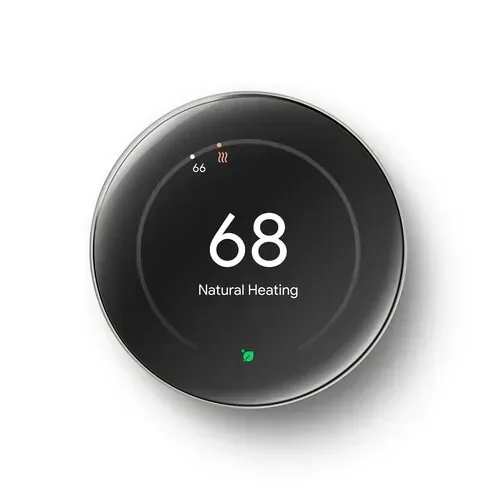
The fourth-generation Nest Learning Thermostat makes most sense when the thermostat is in the wrong place to judge your comfort. If the hallway is warm but the bedroom is cold, its included Nest Temperature Sensor lets the bedroom guide the heating. That is a more useful upgrade than a prettier temperature readout alone.
You can choose different sensors for different parts of the day, or average several readings on this generation. Both generations of Nest Temperature Sensor work with it, with up to six connected to one thermostat. Existing owners do not need to replace every sensor to move to this model.
There is a limit to what that solves. The sensor changes which temperature the heating or cooling responds to; it does not create separately controlled rooms. Getting the bedroom right can leave another room too warm or cold. Buy it to improve the thermostat's reference point, not to replace work on an uneven heating system.
A dial worth using, learning you can decline
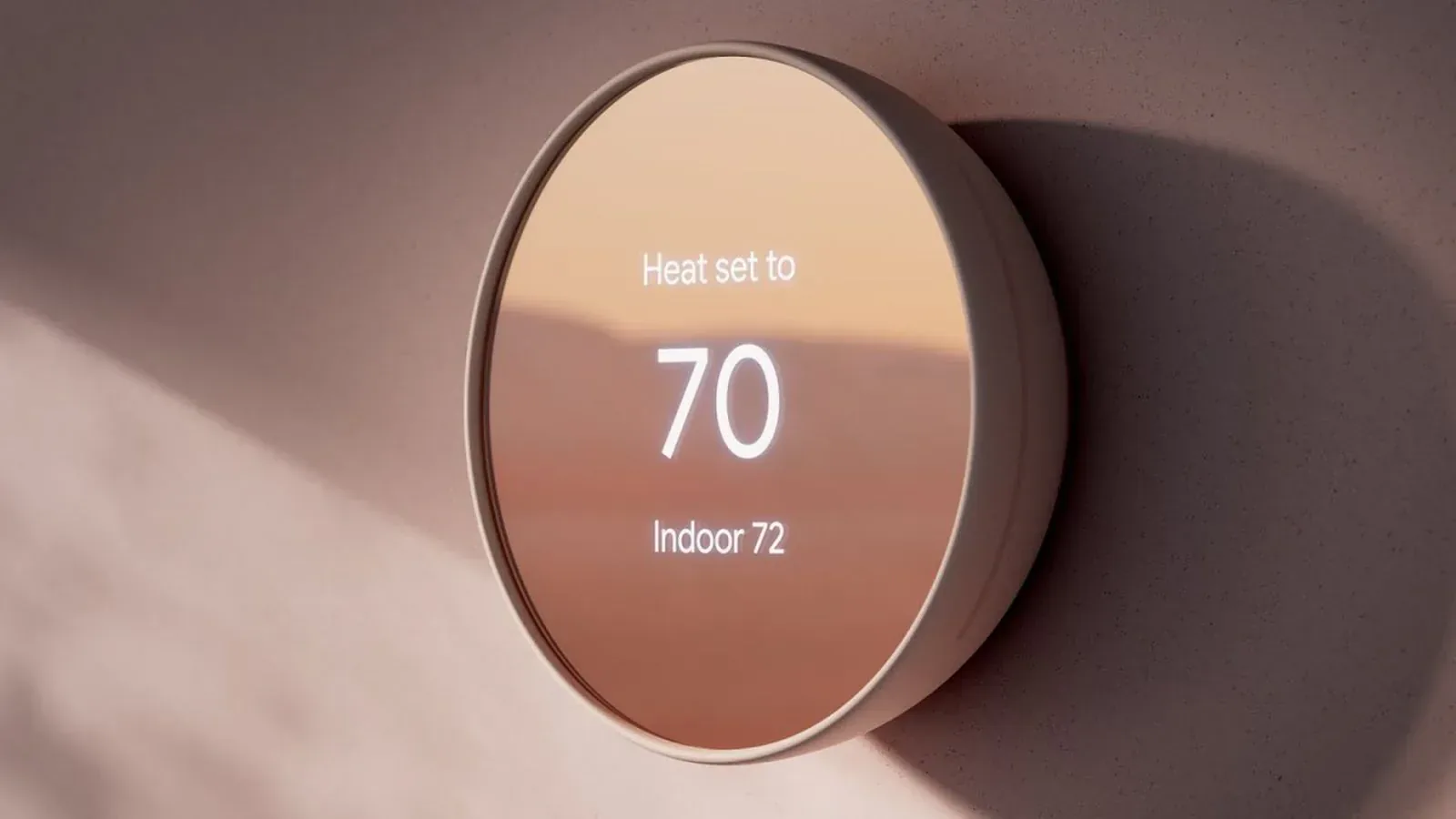
The rotating ring is a good reason to favor this Nest if several people adjust the temperature at the wall. The cheaper Nest uses a touch strip on its side. Here, the larger circular display can show a clock, weather or temperature from across the room, making the hardware useful even when nobody opens an app.
Smart Schedule can learn from your temperature changes and adjust the schedule automatically. More appealing to a household that already agrees on its routine is Suggestions mode: you approve proposed changes. You can also turn learning off. Paying for automation should not mean fighting it over bedtime temperatures.
Those features can reduce fiddling, but they do not prove a particular reduction in your bill. If your current thermostat already follows a sensible schedule and keeps you comfortable, there is no strong reason to replace it purely for promised savings.
More capable, with a few strings attached
The Learning model supports more complex HVAC equipment than the basic Nest, including certain ventilation, humidifier and dehumidifier arrangements. The purchase still depends on the exact wiring combination. Its terminals have shared uses, so a list of supported equipment is not a promise that every accessory can run together. These US/Canada models are for suitable 24 V systems; a similar-looking thermostat elsewhere is not proof of a match.
The software has improved since launch. Google's April 2026 version 2.4 adds on-device configuration without the mobile app and Matter bridging for thermostat sensors. That gives you more control away from Google's app than the thermostat offered at launch. Google Home still handles the learning and sensor-schedule controls described above; the update does not promise identical menus in every Matter app.
Matter runs over Wi-Fi, so this thermostat does not require a Thread border router. Its value is being able to share thermostat control with another home platform while retaining the Nest features you bought it for.
Buy it for a specific improvement
On September 10, 2026, Google's US store showed $239.99 on sale, normally $279.99. The basic Nest was $99.99 on sale: a $140 gap before tax or installation. The Learning bundle includes its room sensor, trim plate and electrical-box plate. That helps justify the premium if you need them; otherwise they are extras you are paying for.
Google's minimum critical-security-update commitment runs through August 20, 2029, measured from the original US sale date. It is not five new years from your purchase. That remaining commitment is another advantage over the 2020 model, whose minimum period has elapsed.
Choose this one for the sensor, dial or equipment controls you will actually use. Choose the basic Nest Thermostat for straightforward temperature control at a much lower price. Keep a working thermostat if neither option fixes a problem you have.
Content feedback
Spot a mistake or missing context?
Send a quick note so it can be checked against the source material.