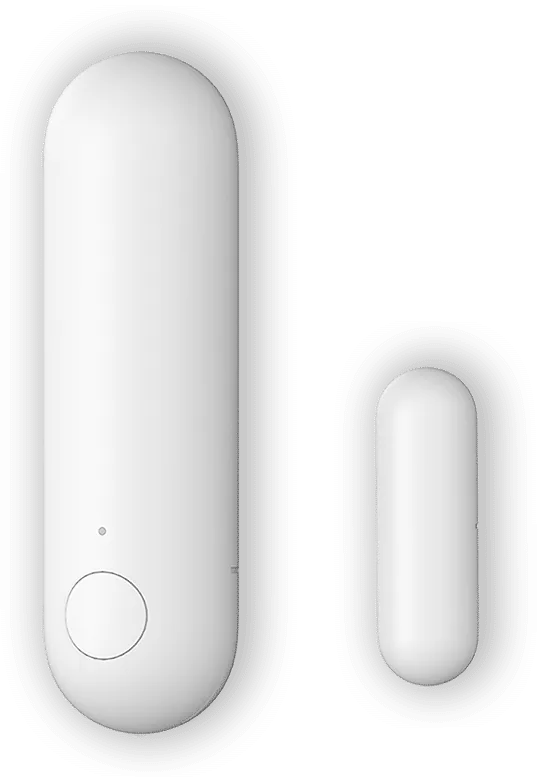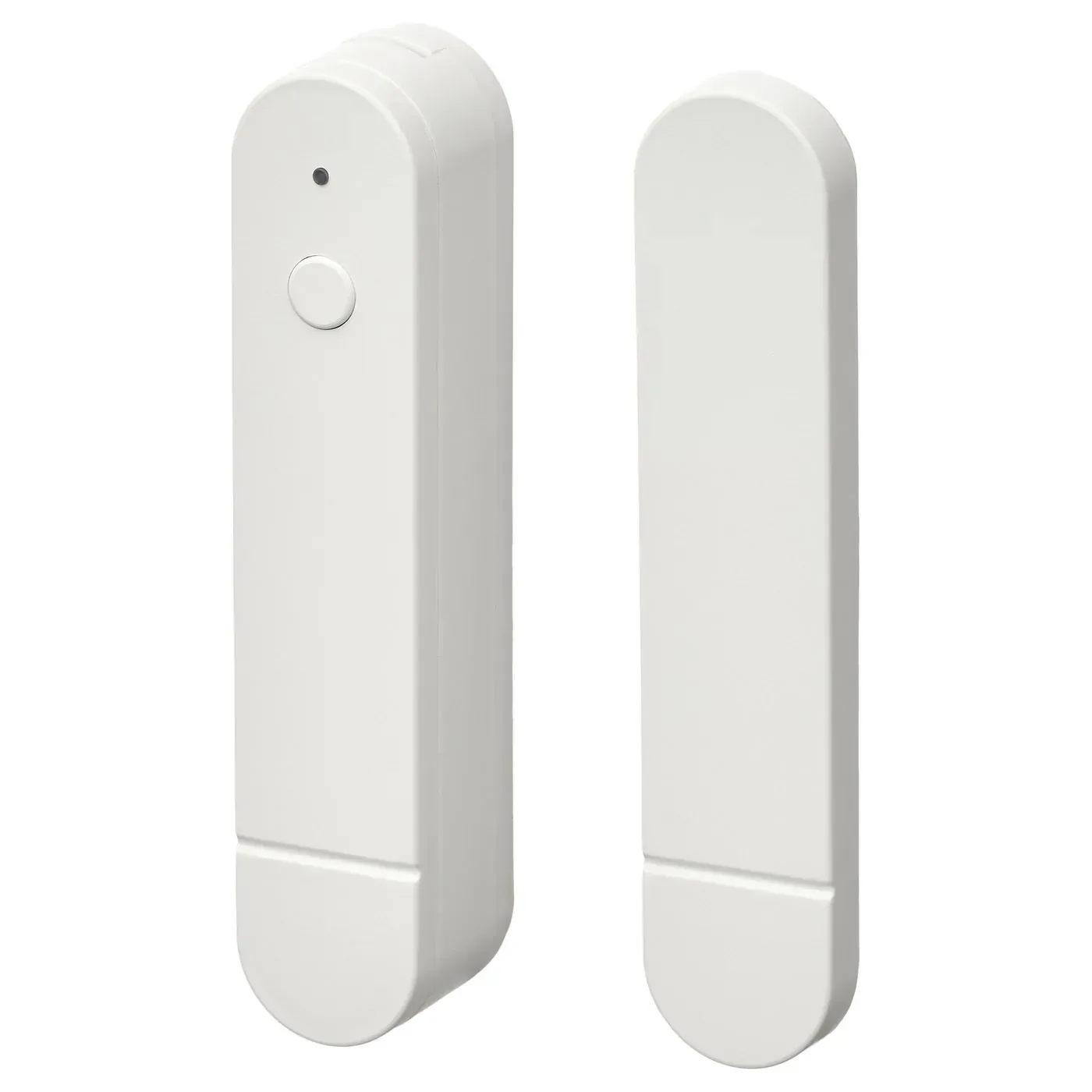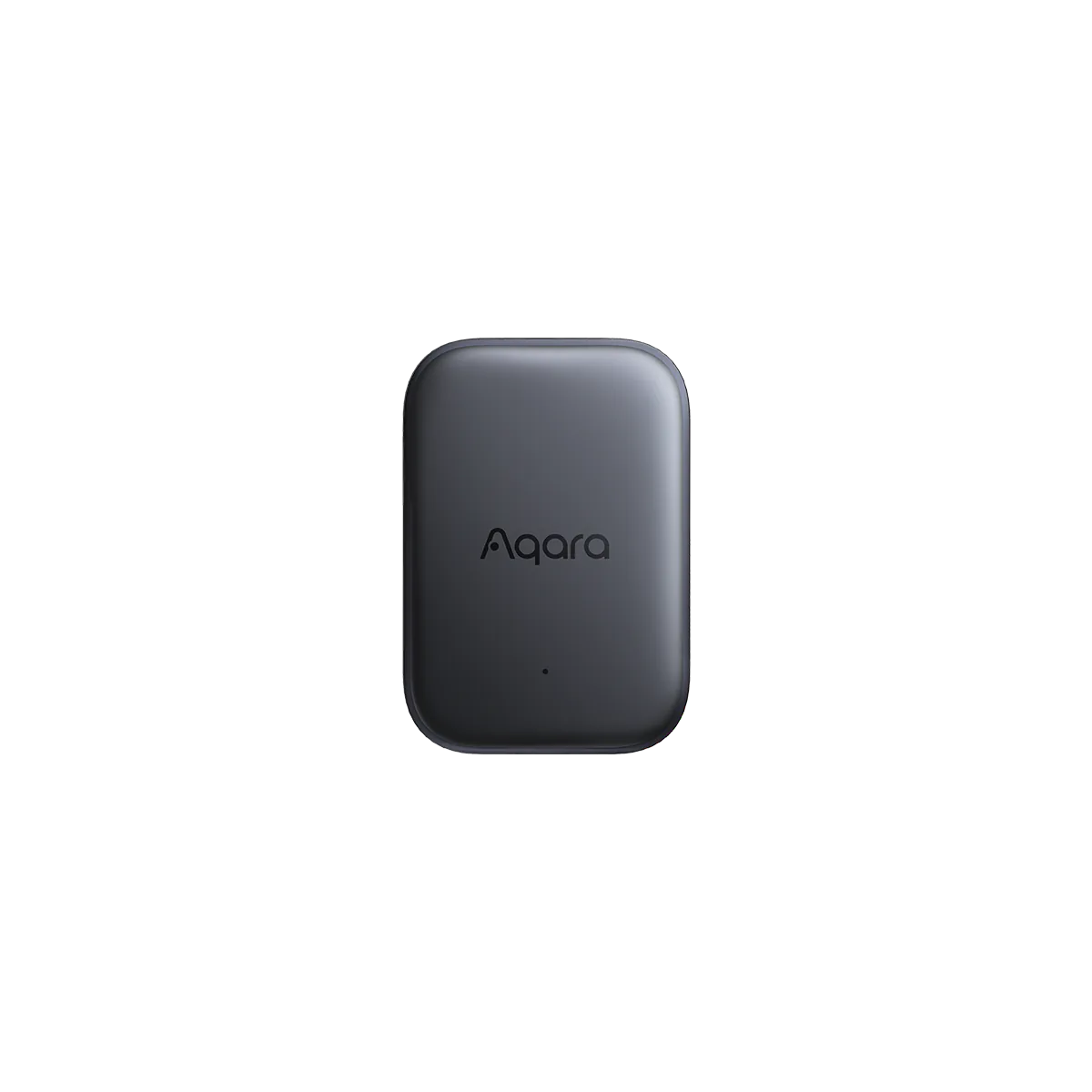
What we like
- One-piece mounting avoids aligning a separate frame magnet
- Works over Thread without an Aqara hub for hinged-door monitoring
- Gray and white versions suit different door finishes
- Optional object movement, tilt and tap events in Aqara Home
What could be better
- Open/close mode excludes sliding doors, drawers and rolling garage doors
- Object Monitoring stays in Aqara Home and needs a compatible Zigbee hub
- Calibration and nearby motors or magnetic fields can affect state readings
- Costs substantially more than IKEA’s conventional contact sensor
One piece can make an awkward door easier
P100's strongest idea is the missing second half. A conventional contact sensor needs a magnet on the frame, close enough to the sensor on the opening. Aqara instead measures changes in angle, letting you attach one small unit to the moving door or window. A narrow frame or uneven trim is therefore less of an obstacle.
The gray and white finishes give you some choice over how visible that unit becomes. On September 10, 2026, either color was $29.99 at Aqara's US store. A standalone order totals $39.98 with standard delivery in the contiguous US and DC, before tax. That is reasonable for a mounting problem it solves, expensive for a routine opening with plenty of room for a cheaper sensor.
The hinge is the deciding detail
Open/close detection relies on rotation around a horizontal or vertical axis. Swing doors, casement windows and tilting windows are the intended jobs. A sliding patio door or drawer moves without that rotation, so P100's open/close mode does not support it. Aqara also excludes rolling shutters, garage doors and 360-degree revolving doors.
For those sliding openings, use a conventional contact sensor whose two halves separate as the opening moves. Aqara P2 was the same $29.99 US price and includes a flat magnet for tight mounting. IKEA MYGGBETT was $11.99, with its AAA battery extra. P100 includes a replaceable CR2450 cell, but the battery alone does not justify the difference from IKEA.
One-piece mounting also brings calibration into the decision. The sensor needs a reference for the closed position; moving it or changes in nearby magnetic fields can require recalibration. Aqara advises keeping it away from smart-lock and curtain motors. We have not measured missed events or false alerts, so the nine-axis sensor and AI branding are not proof that it detects openings better than a magnet.
Object monitoring is the interesting extra
In Zigbee mode, P100 can instead watch an object for movement, vibration, a fall, a change of orientation or a triple tap. An alert when a normally stationary box moves, or a desk tap that triggers a scene, is a more distinctive use than another door notification.
That mode operates in Aqara Home with a compatible Aqara hub. The object events are not bridged into other Matter apps. Aqara currently excludes G5 Pro, G2H Pro, G350 and G410 camera hubs from adding P100 for this purpose. Owning an Aqara camera is therefore insufficient reason to assume the feature is available.
Only one monitoring mode operates at a time. Object movement can reveal that someone handled a drawer, but it does not turn the sensor into a reliable sliding-drawer closed-state detector. Aqara also specifically rules out using continuous washing-machine or dryer vibration to detect when the appliance finishes. Those limits make a defined use more valuable than a collection of hypothetical automations.
Buy it for the mounting problem
For hinged-door monitoring over Thread, P100 needs a Matter controller and Thread border router, without an Aqara hub. Extra orientation and tuning features depend on the app; do not assume every platform presents the same information. Indoor placement and accessible battery replacement matter more than the number of possible event labels.
Choose P100 when one-piece mounting makes a real difference, or when its Aqara-only object events solve a specific problem with a hub you already own. Keep a working contact sensor when it already fits and reports the opening correctly. P100's more elaborate sensing does not make that existing result less useful.
Content feedback
Spot a mistake or missing context?
Send a quick note so it can be checked against the source material.