What we like
- Works with or without a neutral wire, within its load limits
- Separate lower button can put a useful scene at the doorway
- Exact one-channel model supports a documented three-way arrangement
- Native Matter over Thread does not require an Aqara hub
What could be better
- Much more expensive than a basic neutral-required Wi-Fi switch
- No wired brightness control
- Three-way conversion involves both switch positions
- Aqara button customization and neutral-dependent metering narrow the feature set
The extra button needs a useful job
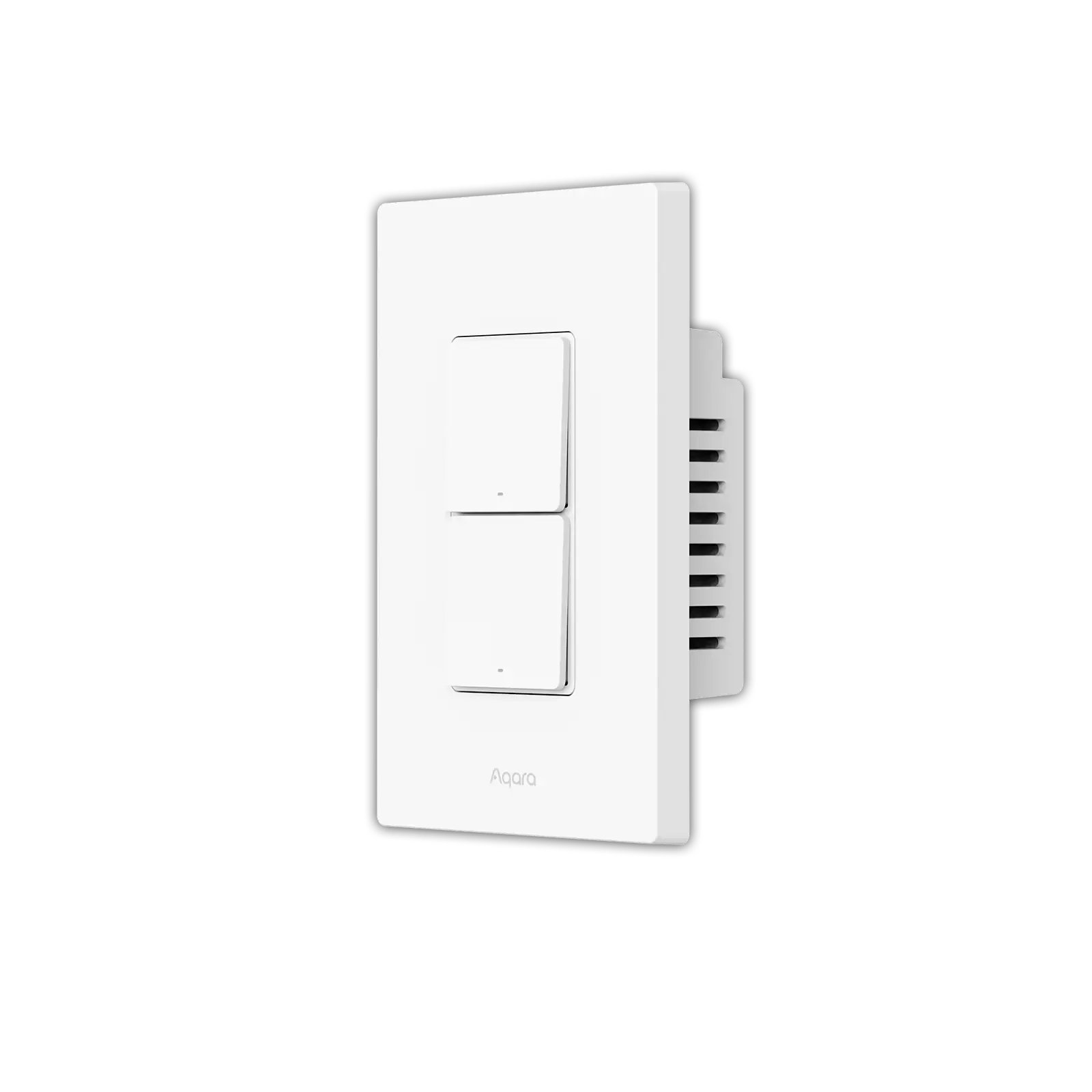
Light Switch H2 US is appealing when the doorway needs more than a plain on/off switch. The upper button controls one wired light circuit; the lower button can trigger a scene. Turning off the room's lamps as you leave, without opening an app, is a more convincing reason to buy it than adding another smart-home logo to the wall.
This review covers the WS-K02E two-button, one-channel version. The extra button is a wireless control, not a second wired output. Aqara also sells other US H2 variants, whose channel counts should not be mixed into this model's specification.
At $44.99 from Aqara's US store on September 10, 2026, it carries a sizable premium over a basic smart switch. A standalone order adds $9.99 standard shipping in the contiguous US and DC, bringing the price to $54.98 before tax and electrical installation.
No-neutral and three-way support can justify the premium
The switch can operate without a neutral wire, with a listed minimum load of 5 W in that configuration. That makes it a candidate for an older switch position where a neutral-required model would need additional wiring. It still needs a suitable lighting load and enough room in the box; the no-neutral label does not settle those questions.
This exact one-channel version also has a documented three-way arrangement for controlling one light from two positions. Aqara specifies one H2 and an ordinary switch, with wiring changes at both positions. It is therefore more involved than replacing one faceplate and leaving the other switch untouched. Have the electrician assess the complete circuit before ordering; the instructions are not a basis for buying two H2 units for that arrangement.
The US manual rates this model at 120 V, 60 Hz and 10 A for resistive/incandescent loads. That is not a fan or motor rating. If the room needs brightness adjustment, H2 Dimmer US serves a different lighting job; do not transfer this switch's three-way support to the dimmer.
Keep the everyday action obvious
The separate lower scene button is the best part of the design for a shared home. It can add a room-wide action while leaving the familiar upper light control in place. Aqara Home's Zigbee mode offers deeper button behavior, including multiple press actions and decoupling the upper button from the relay.
Decoupling means a physical press can run an automation without cutting power to the connected light. App, voice and automation commands can still control that relay, so this is not a guarantee that a smart bulb can never lose power. Choose it for a deliberate room design, not as an automatic fix for every smart-bulb problem.
Native Matter over Thread gives ordinary light control without an Aqara hub, provided the home has a Matter controller and Thread border router. Thread and Zigbee are alternative modes; changing between them requires a factory reset. Power monitoring additionally needs neutral wiring and the appropriate Aqara features. Buying primarily for those extras makes most sense in an existing Aqara home.
A basic circuit has a much cheaper option
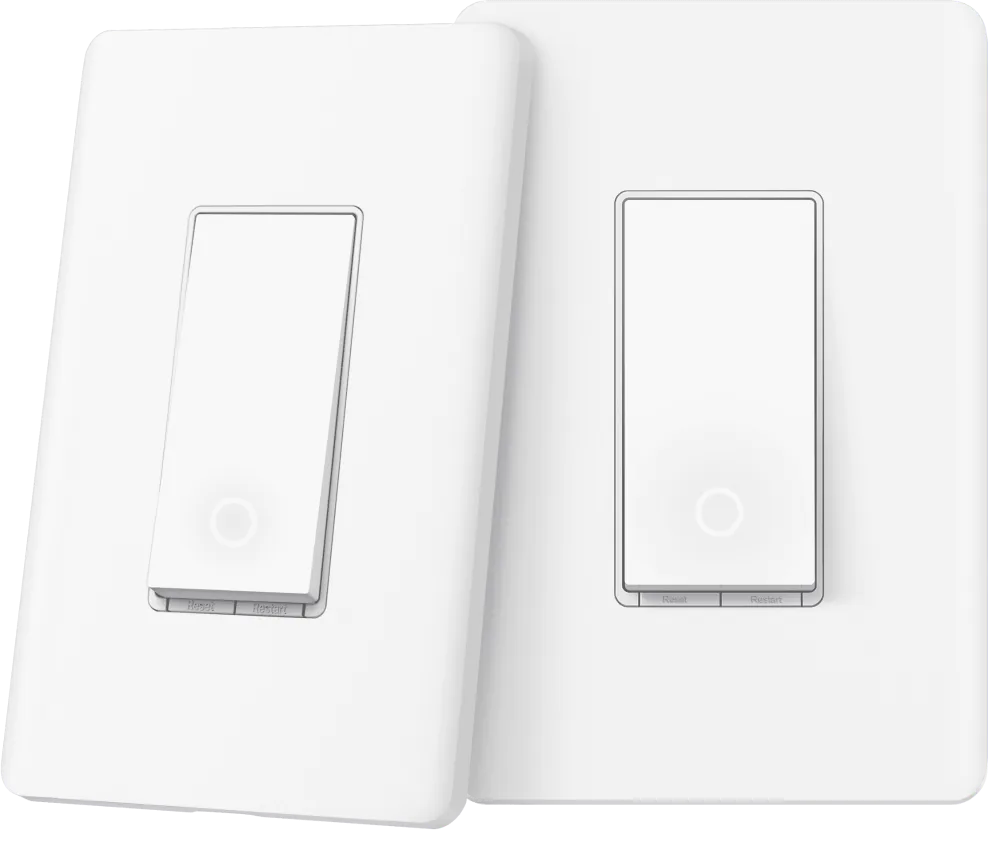
Tapo S505 was $12.99 for a single switch at its US store on the same date, before shipping and tax. It requires a neutral wire and uses Wi-Fi, so it is an alternative for a suitable single-location circuit, not a replacement for every H2 installation.
If all you need is remote on/off control and the wiring suits Tapo, H2's extra cost is hard to defend. Choose Aqara when its no-neutral option, documented three-way arrangement or scene button earns that premium. If the current switch already does everything the household needs, keeping it avoids both hardware and installation costs.
Content feedback
Spot a mistake or missing context?
Send a quick note so it can be checked against the source material.