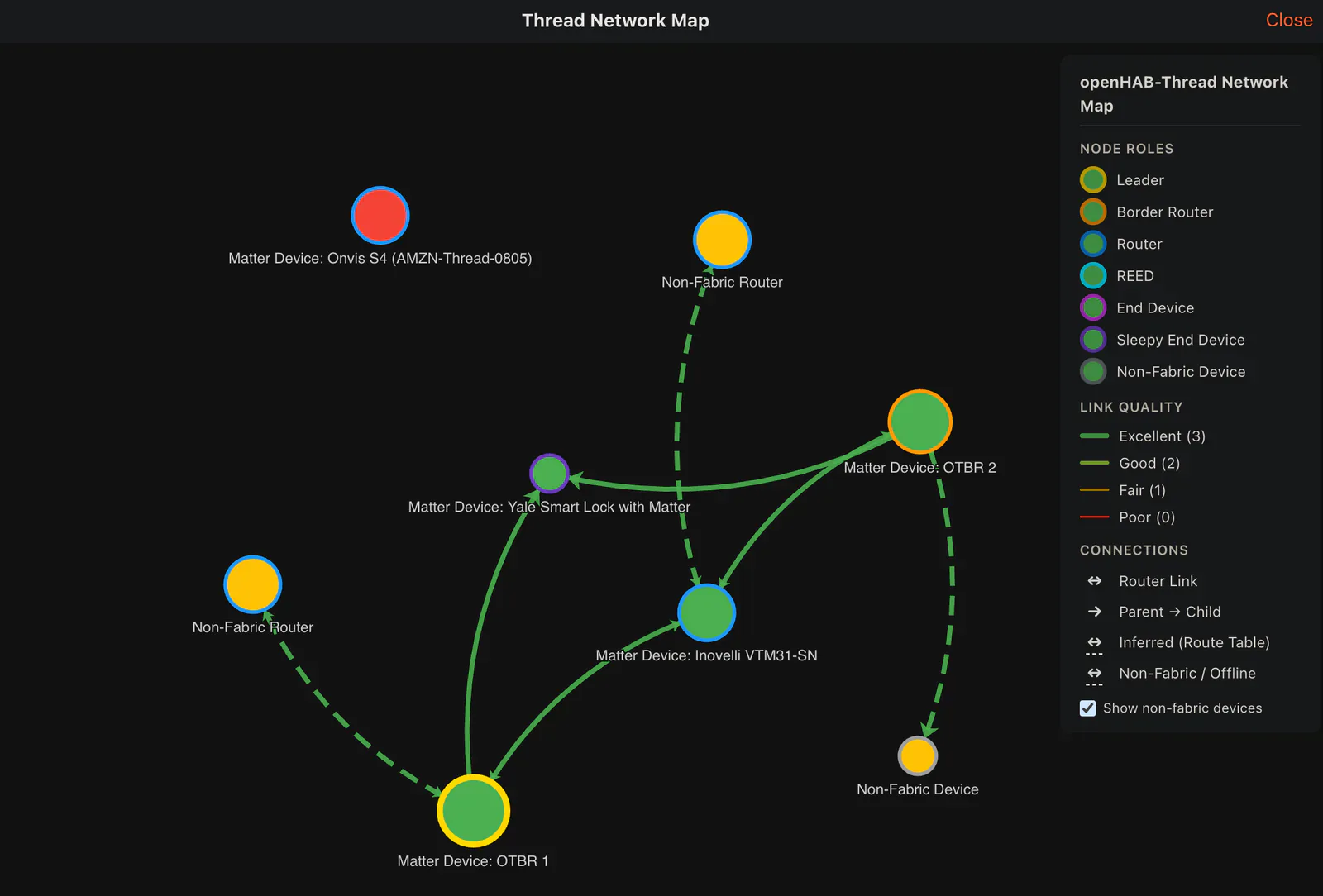
openHAB 5.2, released on July 5, 2026, can now update compatible Matter devices without handing the job back to a manufacturer's app. The open-source controller also adds a Thread network map, support for more Matter sensors and European-style deadbolt locks, and faster Thread reconnection. For an openHAB household, this week-old release is still timely because it changes both routine maintenance and the way a weak mesh can be investigated.
The firmware feature is the most useful change, but its limit matters. openHAB acts as a Matter over-the-air update provider and checks the Connectivity Standards Alliance's Distributed Compliance Ledger for certified firmware. An available update appears in Main UI, where the owner can start or cancel the installation and follow its progress.
That does not guarantee an escape from every vendor app. The device must support Matter updates, and its manufacturer must publish the firmware to the Matter network. openHAB's own binding documentation warns that not every device supports the process and that no update will appear when the manufacturer has not supplied one. Keep the vendor app available until the exact products in the home have proved that their updates arrive through openHAB.
The map makes Thread less opaque
The new network view shows Matter and Thread nodes, their mesh roles, link quality, and border routers, including routers from other vendors. That should make a common failure easier to reason about. A distant lock or sensor can look like an app problem when its real path has a weak link, a sleepy endpoint, or an awkward hop through the mesh.
The map can locate a likely problem, but it cannot repair the mesh. It does not move a border router, change radio interference, or force a battery device to choose a different parent. Use it to identify the suspect area, then test a physical change such as relocating a powered Thread router or reducing distance and obstruction. Matterhome has not tested how completely the view represents every mixed-vendor Thread network.
openHAB also says startup and reconnection are faster, commissioning is more reliable, and several Thread crashes and regressions have been fixed. Those are welcome claims for existing installations, but a backup and a planned maintenance window are still sensible before upgrading a controller that runs heating, locks, alarms, or other important automations.
More device data does not remove the setup work
Version 5.2 adds Matter support for smoke, carbon monoxide, and carbon dioxide sensors, European-style deadbolt locks, and the full set of 11 air-quality concentration measurements. This expands what openHAB can represent, but it does not promise that every model exposes every field or that another Matter platform will present the same controls.
Thread commissioning also retains an important infrastructure requirement. openHAB's current binding guide recommends first pairing a Thread device through a supported commercial border router, such as one from Apple, Google, or Amazon, then generating a new Matter code and adding the device to openHAB. The 5.2 map improves visibility after the network exists. It does not turn the openHAB mobile app into the missing Thread setup path.
Upgrade for the firmware workflow and network visibility, then verify one noncritical device before trusting either at scale. Check whether an update is actually offered, confirm the device returns after reboot, and compare its controls and automations before moving on to locks, alarms, or the rest of the Thread mesh.
Content feedback
Spot a mistake or missing context?
Send a quick note so it can be checked against the source material.