What we like
- 29 × 34 × 16 mm body takes less space than full-size Shelly 1
- Local schedules, timers and browser control at €13.90
- Existing units can gain Matter through a stable firmware update
What could be better
- 8 A AC ceiling; the higher-rated full-size model costs the same
- Needs mains power and a neutral; no energy monitoring
- Manual excludes SELV/PELV circuits despite the dry-contact output
The saving is space
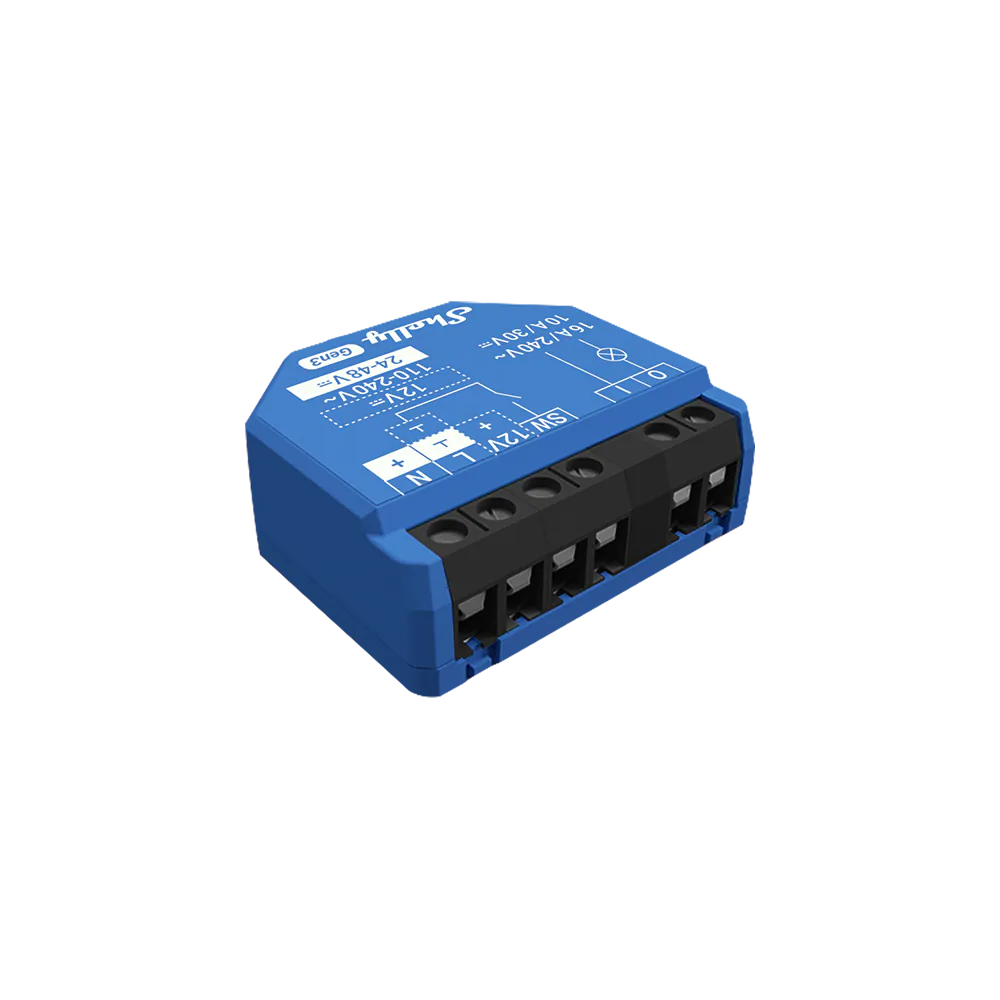
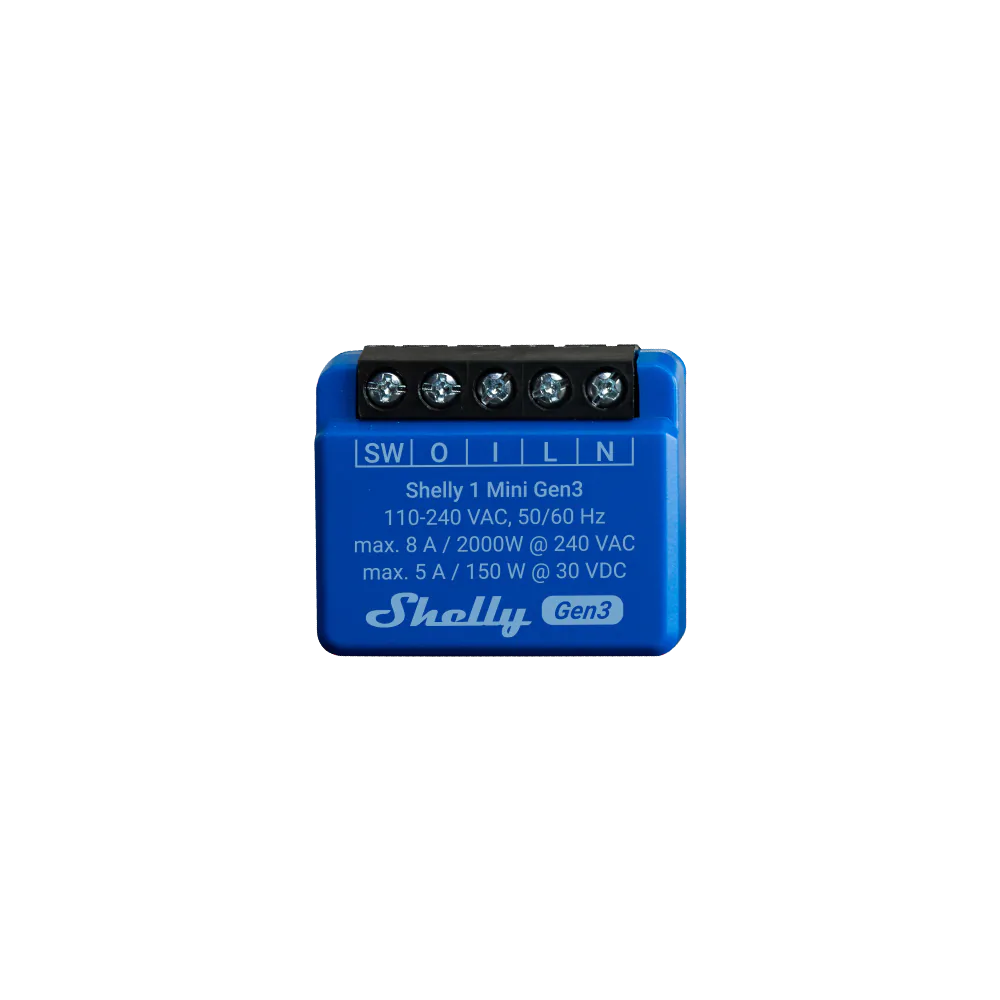
Shelly 1 Mini Gen3 is 29 × 34 × 16 mm, compared with 37 × 42 × 16 mm for the full-size 1 Gen3. That smaller footprint can be valuable behind a switch crowded by wiring. It is not thinner, though, and a compact module does not guarantee that the finished installation will fit.
Both models cost €13.90 in Shelly's EU shop on September 9, 2026. The single Mini was in stock, including VAT with shipping extra. There is no price reward for accepting its lower switching limits. Choose it when the smaller body solves a real problem; choose the full-size relay when the enclosure has room and its greater flexibility is useful.
Keeping an existing wall switch is part of the appeal, with app control and timers added out of sight. The module price excludes the electrical work, and the manual calls for a qualified electrician for mains installation.
A small relay with important electrical distinctions
The output uses dry contacts, but the Mini itself still needs 110 to 240 V AC and a neutral. It cannot run from a 12 V or 24 V DC supply. The specified output limits are 8 A AC and 5 A at up to 30 V DC; the smaller enclosure is not a way to squeeze a full 16 A relay into the same space.
There is another easily missed restriction: the printed manual excludes SELV/PELV circuits, the safety categories used by many extra-low-voltage systems. The dry-contact label therefore does not establish that it is suitable for an arbitrary garage opener, doorbell or other low-voltage control input. Have the intended circuit assessed rather than buying from the label alone.
The relay has overtemperature protection but no power meter. It cannot show appliance consumption, dim a light or report a door's position by itself. Those are different jobs that need different hardware or additional sensing.
Still useful after the newer generation arrived
Matter became available in stable firmware 1.6.0. An older Mini Gen3 can be updated and enabled for Matter, so replacement is not necessary just to add it to a Matter home. Local browser control, automatic timers and schedules are useful even without Shelly Cloud.
Scripting and MQTT provide additional options, but Matter reduces the available scripting memory. Simple switching is the stronger reason to buy this inexpensive module than a plan to run substantial custom code on it.
Which Mini makes sense?
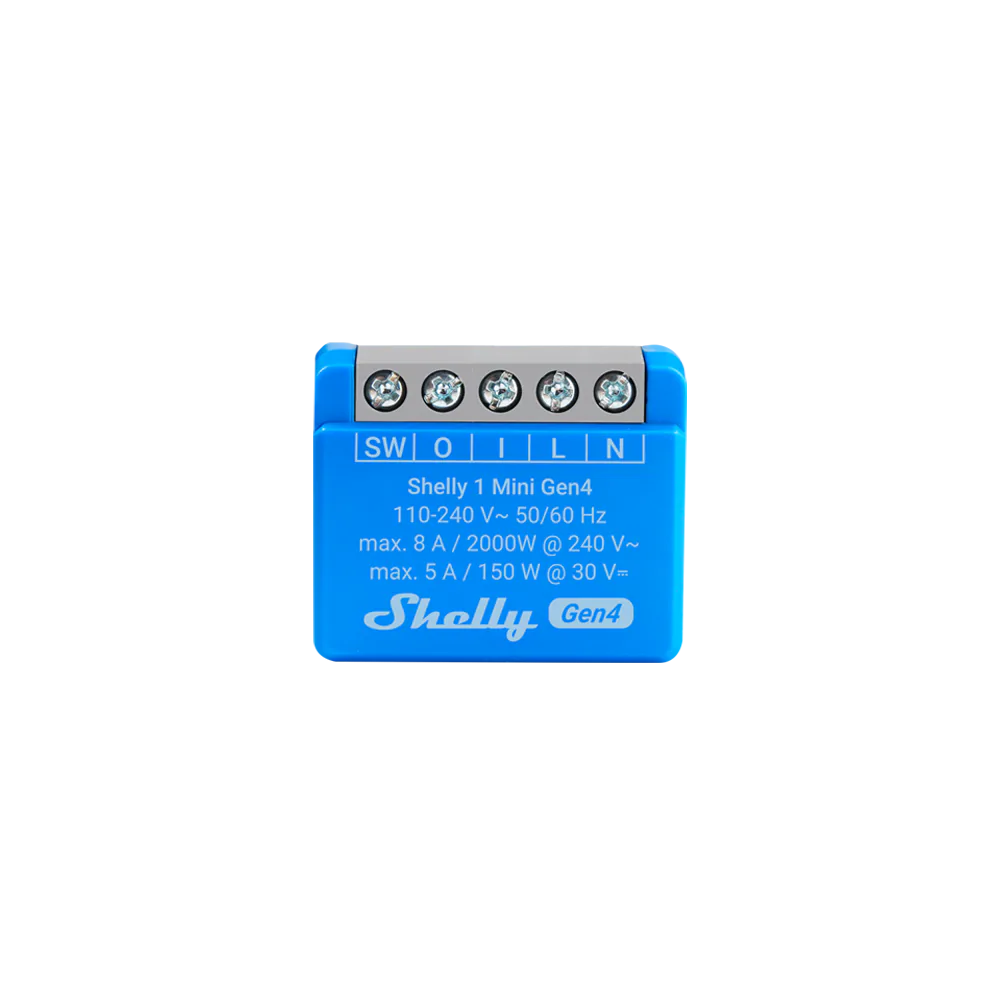
The 1 Mini Gen4 costs €19.90 and adds the option of Zigbee while retaining the same size and output ratings. That €6 premium makes sense if the alternative protocol has a role in your home. It brings no extra load capacity or energy monitoring.
For ordinary Matter switching in a tight space, Mini Gen3 remains good value. For a project that can use more room, 1 Gen3 is the more capable purchase at the same price, especially when the relay itself needs DC power.
Content feedback
Spot a mistake or missing context?
Send a quick note so it can be checked against the source material.