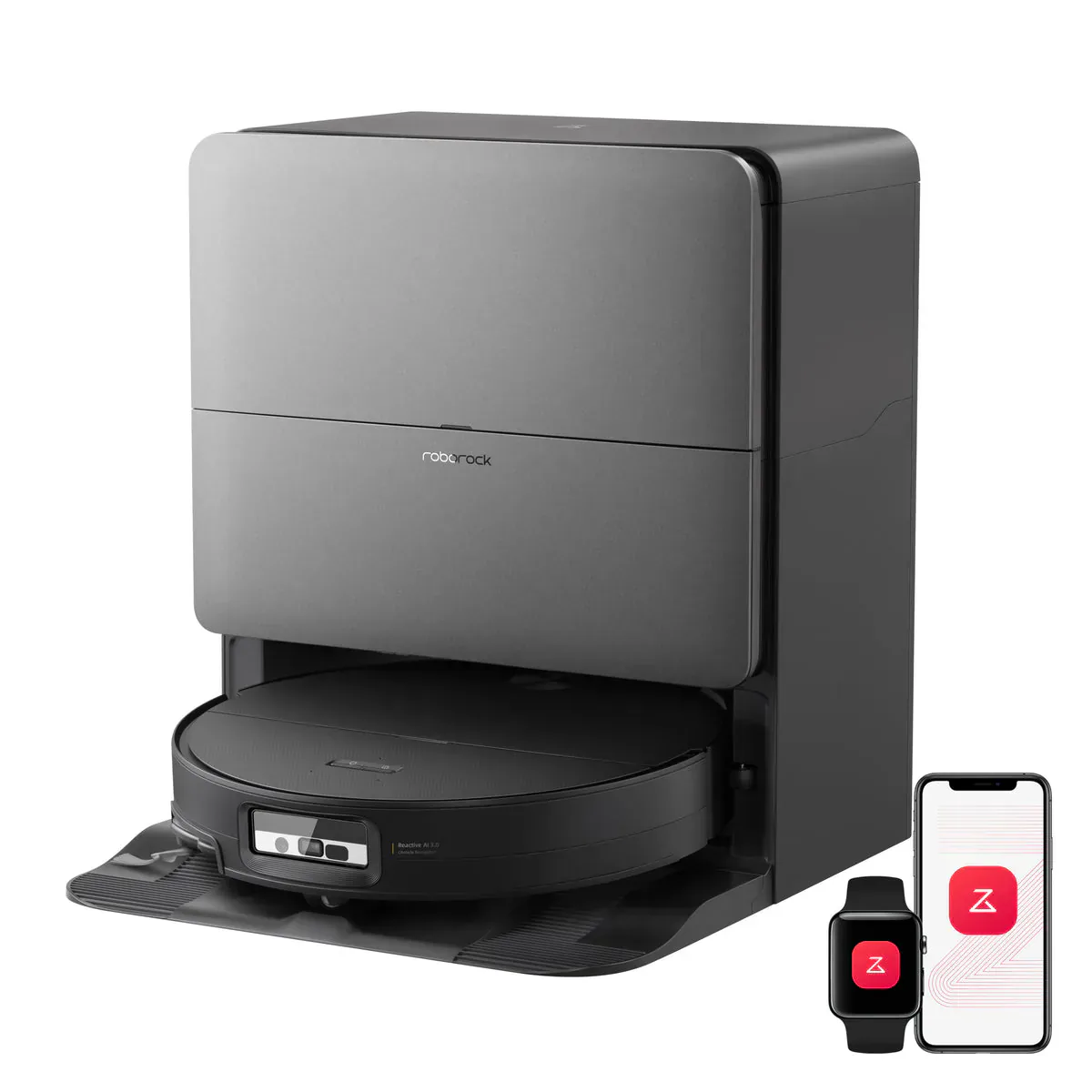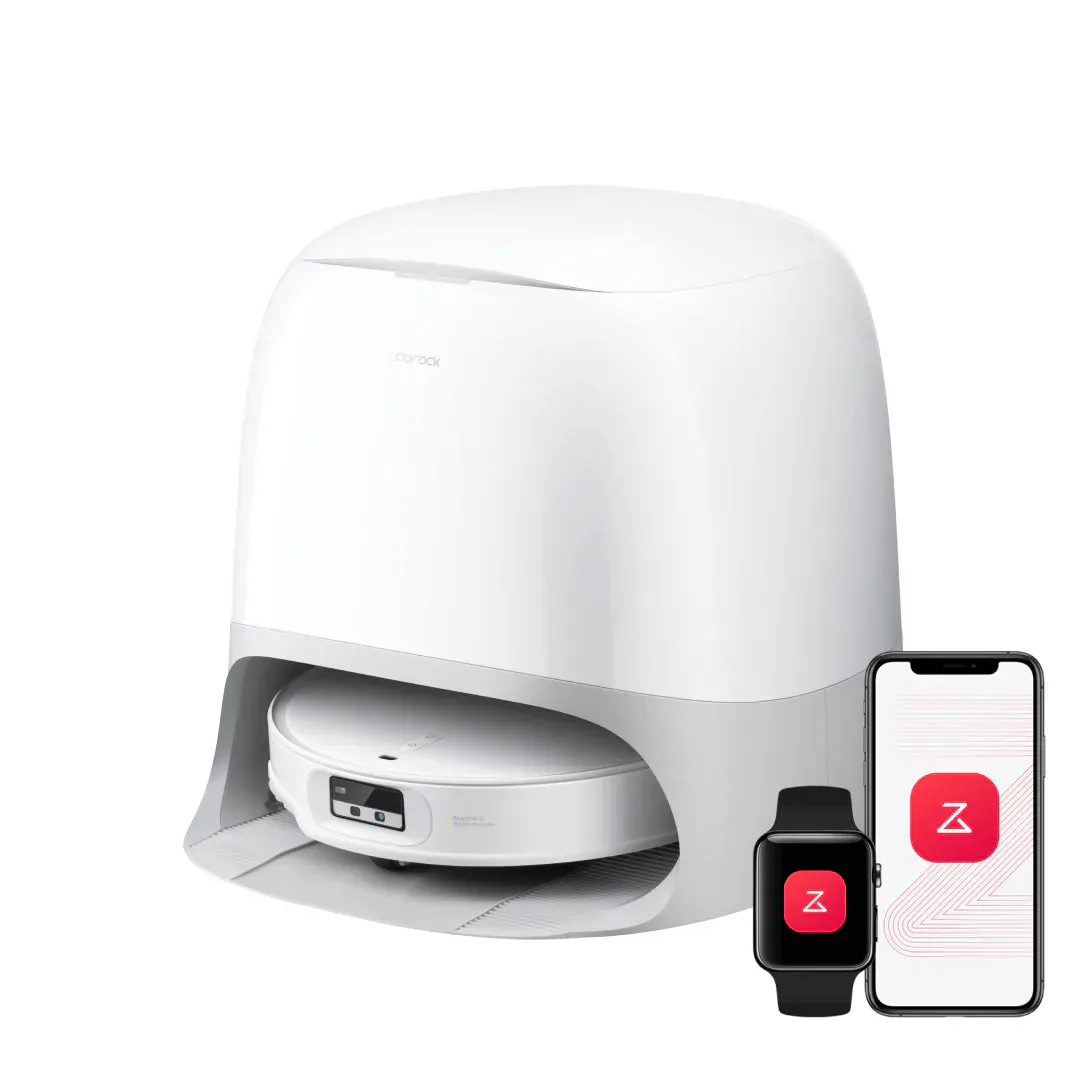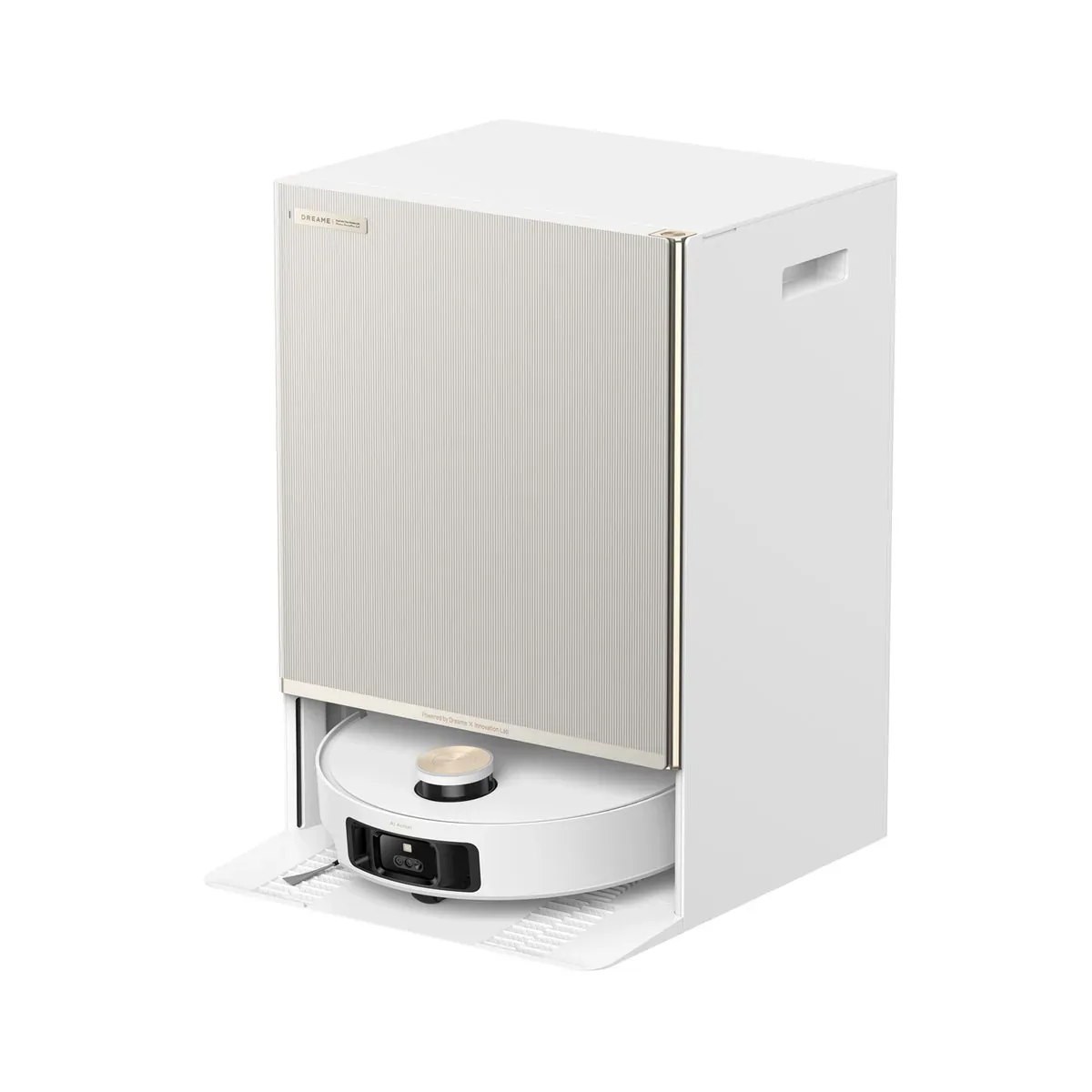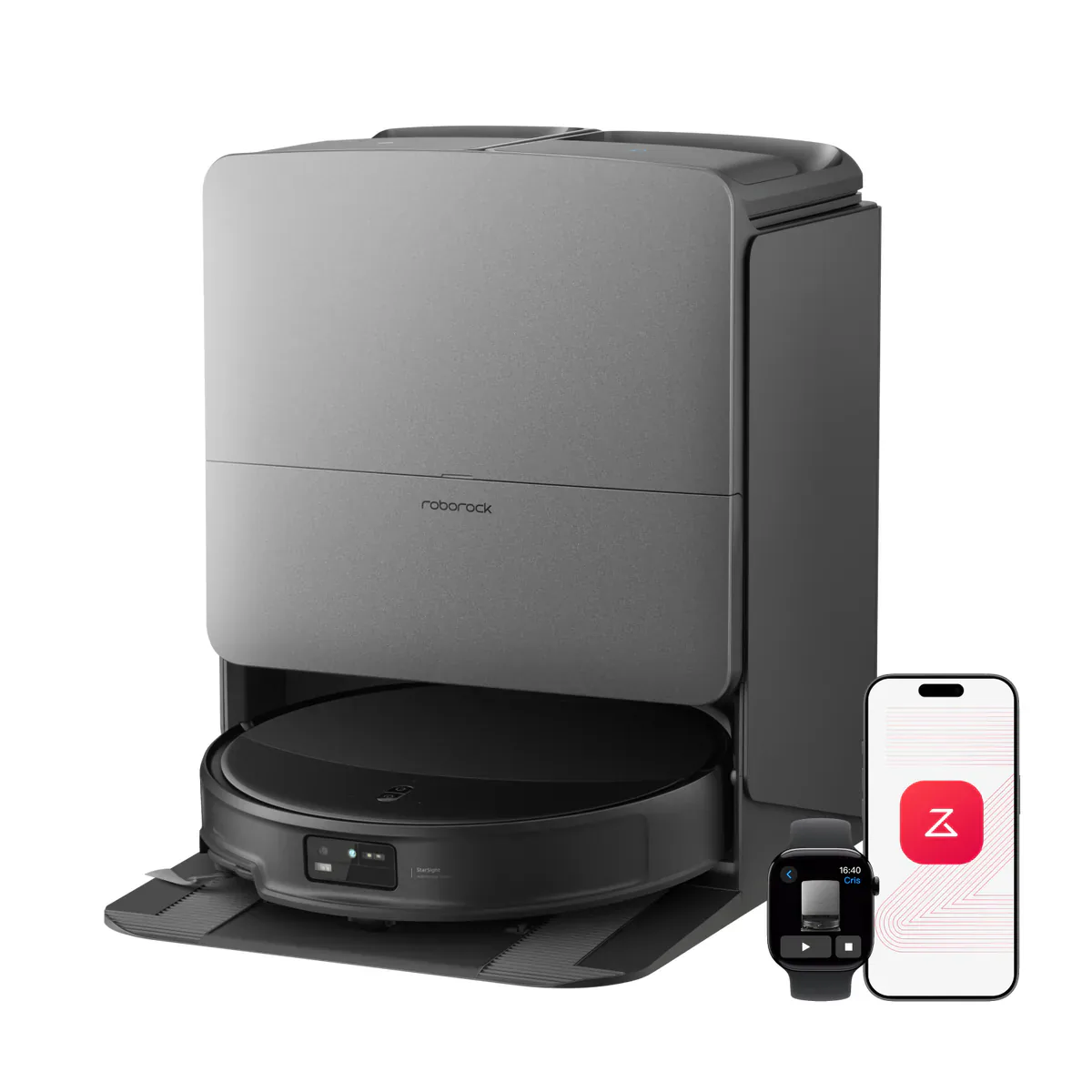
What we like
- 79.8 mm tower-free body reaches beneath low furniture
- Lifting chassis tackles substantial single and tiered thresholds
- Automatic pad removal, detergent dosing and dock washing reduce handling
What could be better
- €1,099 is €100 above the current German Sonic price
- Spinning pads return to the dock for washing rather than being rinsed on the floor
- Water tanks, wash tray, brushes and filter still need regular care
Pay for getting through the house
Saros 20 makes its best argument at an awkward doorway. Its lifting wheels and supporting arms are designed to get across transitions that strand an ordinary robot on one side of the house. Combine that with a 79.8 mm body without a raised navigation tower, and it becomes a serious option for a floor plan with both low furniture and tall thresholds.
That is a more useful reason to spend €1,099 than the advertised 36,000 Pa suction figure. Roborock's German store listed the standard Saros 20 at that price with free delivery on September 11, 2026. The separately selectable Set package and expired membership promotions should not be confused with this offer.
For a level apartment with accessible furniture, I would spend less. Much of what makes Saros expensive is equipment for a physical problem that many homes do not have.
Read the climbing number carefully
Roborock specifies a single threshold of up to 4.5 cm, or a suitable two-stage transition combining 4.5 cm and 4.3 cm. The headline 8.8 cm is the combined case. It is not a straight ledge of that height and certainly not a staircase.
The low body and climbing mechanism are complementary: one gets under things, the other over them. Measure both the gap beneath furniture and the shape of troublesome doorway tracks. A broad claim about whole-home coverage is less useful than knowing which particular obstruction you want the robot to pass.
Navigation uses 3D time-of-flight sensing and an RGB camera. The camera also supports remote viewing. That is useful if you want a mobile view of a pet, but it remains a camera in your home. Obstacle recognition does not remove the need to pick up loose cords before cleaning.
The spinning pads are a defensible choice
Two rotating pads do the mopping, with one extending toward edges; a separate side brush reaches toward corners. The robot can leave its mop holders at the dock for vacuuming, which is preferable to carrying wet fabric over carpet when a dry pass is the priority.
There is a reason to consider these pads over the Sonic's vibrating sheet. In its August 2026 comparison, Vacuum Wars found the standard Saros 20 better at dried-stain removal. That is an independent test result, not our measurement or a guarantee for every floor.
The pads are still washed at the dock between portions of the job. They do not receive continuous rinsing like a roller mop. For a kitchen that needs frequent wet cleaning, compare the mechanism as well as the robot's ability to reach it; neither a flagship label nor more suction establishes better mopping.
An elaborate dock still contains dirty parts
The station empties dust, refills the robot, doses detergent and washes and dries the pads. Its up-to-100°C claim concerns water used for dock washing, not boiling water applied to your floor. Warm-air dust-bag drying is another supporting feature, rather than a reason to assume the station stays clean indefinitely.
The dock measures 381 mm wide, 475 mm deep and 488 mm high. Allow room to lift out the water tanks and remove the wash insert. This tank version still needs clean-water refills and dirty-water disposal; automatic replenishment of the robot is not a plumbing connection.
The German manual schedules main-brush and filter cleaning every two weeks, side-brush cleaning monthly, and pad replacement every one to three months depending on use. Tanks and the removable wash insert need cleaning as needed. Budget for supplies and leave the machine where that care is easy to do.
Matter is a useful extra, with actual Home Assistant use reported by an owner. Detailed maps, cleaning settings and the camera remain in Roborock's app. Buying Saros solely to put a vacuum tile in your home dashboard would waste most of the price premium.
The cheaper options deserve the first look
Saros 20 Sonic was €999 in Germany at the same check. It shares the low clearance and advanced climbing, but uses a vibrating pad and retracting LiDAR. Choose between them for the mop and navigation design, not an assumption that Sonic must be the more expensive upgrade.
Qrevo CurvX was €649 plus shipping from €5.99. Its 79.8 mm lowered body handles the same height problem, while its less capable lifting chassis may be sufficient for your doorways. That is where I would start if you do not need automatic pad removal or detergent dosing. Keep a working Saros 10R or another robot that already reaches and cleans these floors; a new motor number alone does not justify replacing it.
Content feedback
Spot a mistake or missing context?
Send a quick note so it can be checked against the source material.