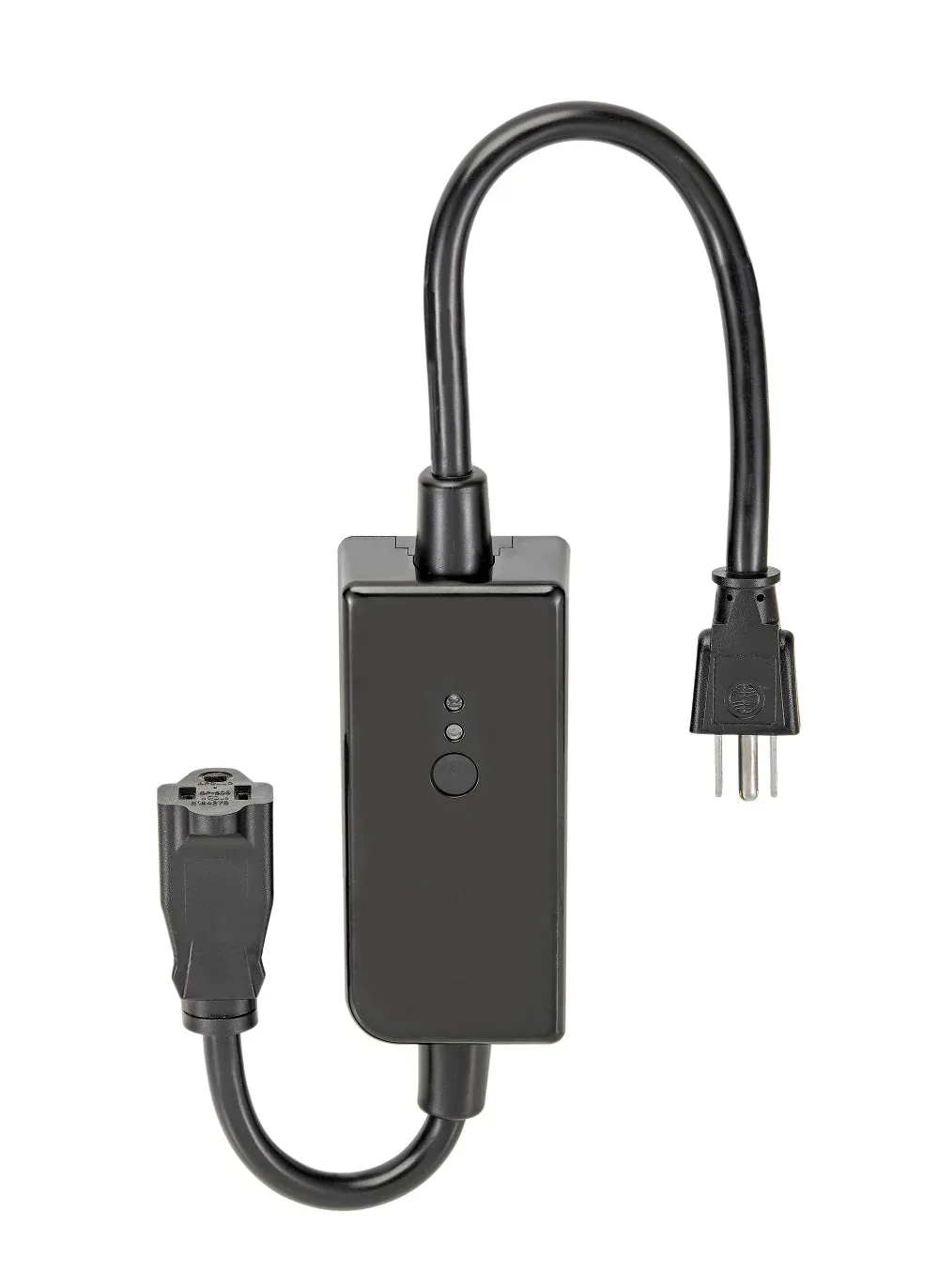
The Leviton D215O earns its $59.99 price outdoors, not in the Matter logo. A built-in light sensor can turn patio or landscape lighting on after dark, the enclosure is rated IP65, and the load ratings cover more than a string of LEDs. Matter adds direct on/off control through the major smart-home platforms without a Leviton hub.
That combination is useful for a porch, garden, or holiday display, but only after the receptacle, load, and Wi-Fi signal pass inspection. Matterhome has not tested the plug, so this guide stays with Leviton's current documentation and the controls a buyer can verify.
Start with the outdoor outlet
Leviton requires a GFCI-protected 120 V circuit for outdoor use and says the controlled outlet on the plug should remain at least 3 inches above the ground. The IP65 rating protects the device from dust, rain, sprinklers, hoses, snow, and UV exposure, but it does not excuse a receptacle or cord arrangement that can sit in water.
The load also matters. D215O is rated for 15 A general use, 5 A LED, CFL, or electronic ballast loads, 1,500 W incandescent or halogen lighting, 12 A magnetic ballast or low-voltage transformer loads, and motors up to 3/4 HP. Leviton specifically warns against high-power heating appliances, electronic low-voltage or high-frequency transformers, and HID lighting. If an extension cord is unavoidable, its manual recommends a 14 AWG, 15 A exterior-rated cord.
Check the network at the same time. This is a 2.4 GHz Wi-Fi device, and the wall between the router and patio can matter more than the distance shown on a floor plan. Leviton exposes signal strength in My Leviton and warns against putting the plug inside a metal enclosure. Test it with exterior doors closed before an automation becomes responsible for a pump or seasonal display.
Matter handles the switch, Leviton keeps the extras
D215O ships with Matter enabled. Leviton's current support page names Apple Home, Google Home, Alexa, and SmartThings, while the CSA record lists firmware 2.3.10 on hardware 1.0 with Matter 1.3 over Wi-Fi. Bluetooth is used during commissioning; day-to-day control stays on the local Wi-Fi network.
Scan the Matter code in the controller app if basic shared on/off control is the goal. My Leviton remains useful for firmware and diagnostics, and it owns the built-in light sensor, schedules, countdowns, and related brand settings. Up to three DAWSC Anywhere Switch Companions can also give the outdoor load a battery-powered wall control without making the companion part of Matter.
Home Assistant documents control of Matter devices over local Wi-Fi, but Leviton does not name Home Assistant for this exact plug. Treat that route as compatible in principle rather than product-specific confirmation. Pair it, confirm the switch entity, and watch availability at the final outlet before trusting an unattended routine.
Buy it when the outdoor hardware earns the premium
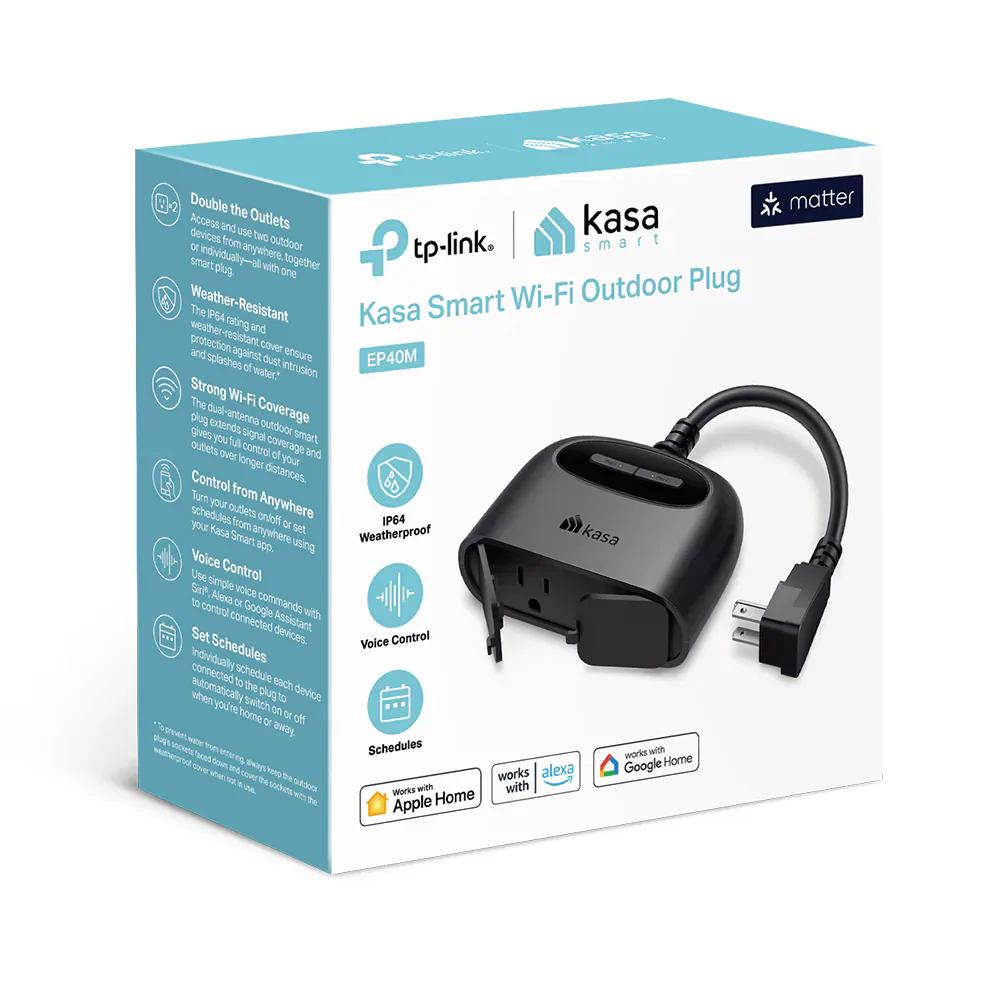
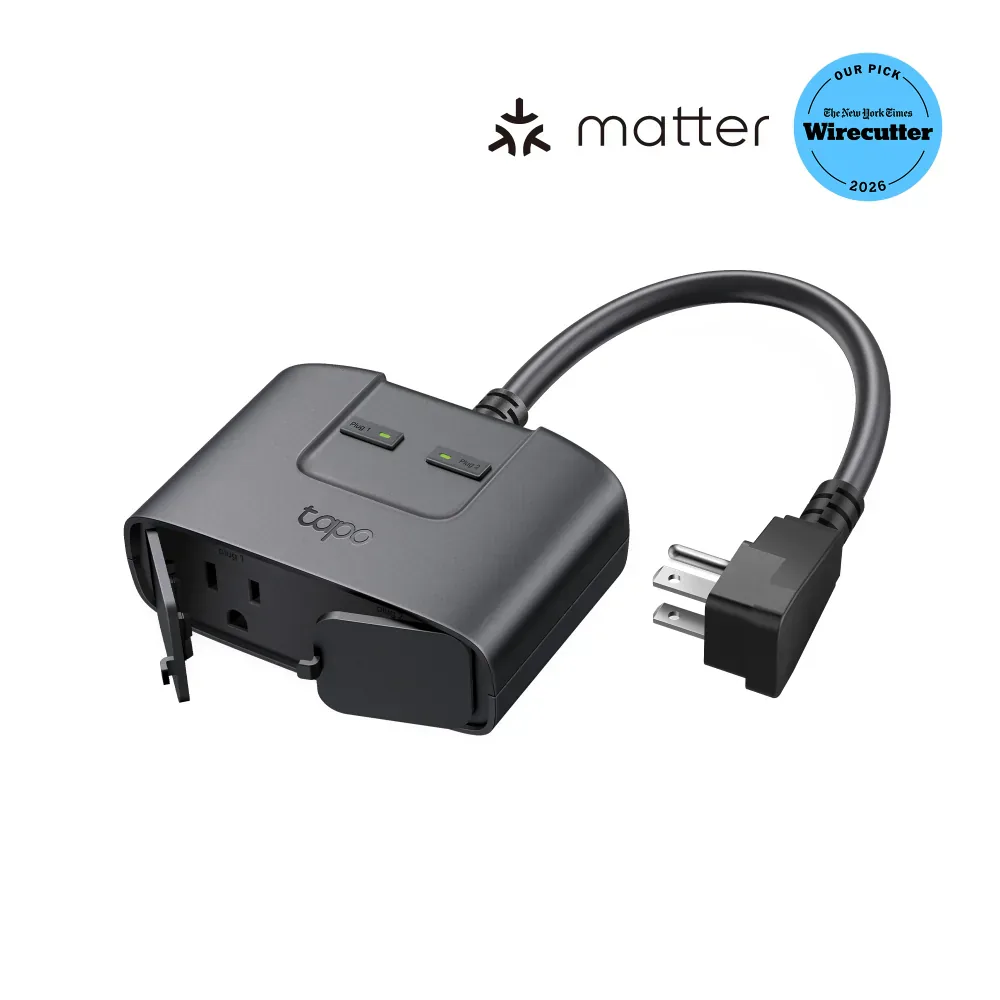
The best reason to choose D215O over Kasa EP40M or Tapo P400M is not basic Matter switching. It is the combination of the wide operating range, built-in dusk sensor, documented load support, and optional Leviton wall companion. Those are concrete advantages for a fountain, exterior fan, landscape transformer, or lights that should respond to actual darkness.
Skip it when one inexpensive on/off outlet will do, when dimming or documented energy data is part of the plan, or when Thread coverage is the real goal. For a weather-safe installation with strong Wi-Fi and a job for the light sensor, D215O is the more deliberate outdoor plug. Otherwise, the cheaper Matter alternatives solve the same basic switch command.
Best for
- Patio and landscape lights that should follow darkness rather than a fixed clock
- Holiday displays, fountains, and outdoor fans within the published load ratings
- Leviton households that want an optional battery wall switch for an outdoor load
Skip if
- The receptacle lacks GFCI protection or cannot keep the plug at least 3 inches above the ground
- Outdoor 2.4 GHz Wi-Fi is weak or the device would sit inside a metal enclosure
- You need dimming, documented energy monitoring, two independently controlled outlets, or Thread routing
Alternatives To Consider
Content feedback
Spot a mistake or missing context?
Send a quick note so it can be checked against the source material.