What we like
- Uses two readily available AA alkaline batteries
- Local audible warning works without a smart-home hub
- Home Assistant certification for local CO reporting
What could be better
- No concentration display on the alarm itself
- Does not detect smoke or replace an interlinked alarm system
- Retail and manufacturer battery estimates differ
Plain hardware with a practical advantage
Heiman HS-720ES-M is worth considering if you want a carbon monoxide alarm in a European Matter home and prefer batteries you can buy almost anywhere. Two AA alkaline cells power both its local warning and connected operation. There is no proprietary bridge, power cable or separate radio module to buy.
Smartdomo Germany had the exact model in stock at €39.90 including VAT on September 10, 2026. A single unit costs €44.89 with German delivery. That is a reasonable price for adding CO reporting to an existing Thread installation; it is a less attractive starting point if you must also buy the smart-home hub.
The missing screen is the main tradeoff
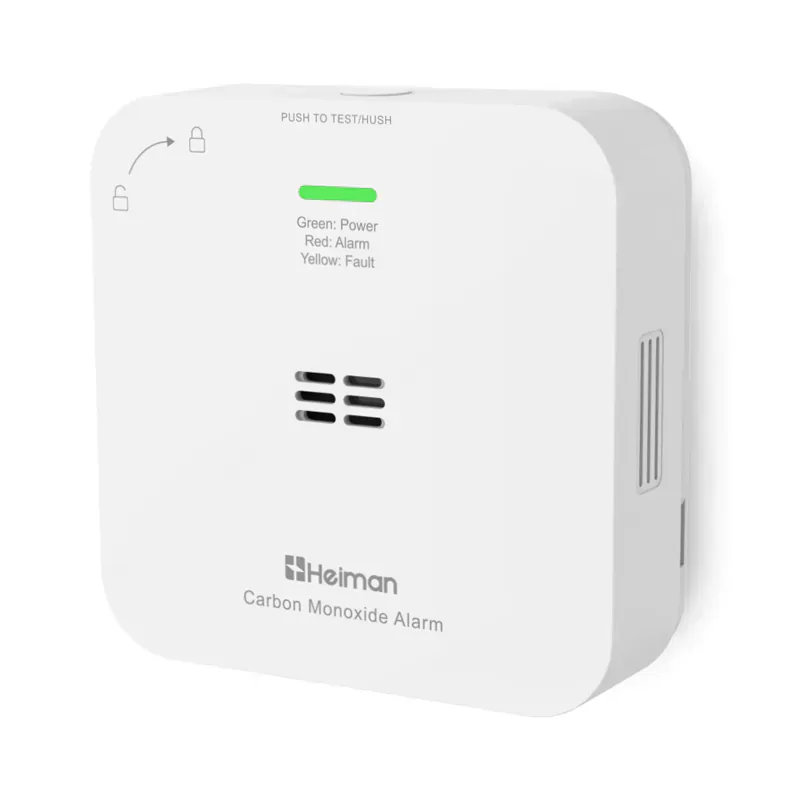
The white 85 mm square case has status lights, a sounder and a test/hush button. It is functional hardware rather than something to admire, but the clean front should be easy to live with on a wall. At roughly 28 mm deep, it is relatively shallow for an alarm powered by two AA cells.
What you cannot do is glance at a numerical CO reading. Heiman's shared manual also covers a 725 model with a display, and those illustrations can make the 720 seem more informative than it is. This model reports conditions through lights, sound and its smart-home connection. Choose a display-equipped alarm if a visible concentration reading is important to you.
It also detects CO only. Buying one does not add smoke detection, and it is intended for ordinary indoor residential use rather than a caravan or boat. The manufacturer manual specifies EN 50291-1:2018; that is the relevant CO-alarm specification, separate from its Matter connection.
Ordinary batteries, finite service life
The replaceable AA supply is a real benefit over an unusual cell format. You still need access to remove the alarm from its mounting plate, so a battery-powered device is not maintenance-free just because it needs no wiring.
Heiman's current specifications and manual estimate five years from the batteries, while Smartdomo's copy says three. Neither is a result we have tested. Budget for replacements when the unit calls for them instead of treating a particular number of years as guaranteed.
The sensor itself has a maximum ten-year life. That does not mean ten years from one pair of batteries, and changing them does not extend the alarm indefinitely. The distinction matters more than a long battery headline when deciding what this will cost to own.
Buy it for an alert you actually want
HS-720ES-M is certified for Works with Home Assistant. In an existing system, a CO event can become a configured notification or part of a dashboard without a Heiman bridge. Connected features need a Matter controller and Thread border router; the local audible alarm does not. Check the complete notification path through the manufacturer's prescribed test, rather than assuming a visible device tile means an alert will reach you.
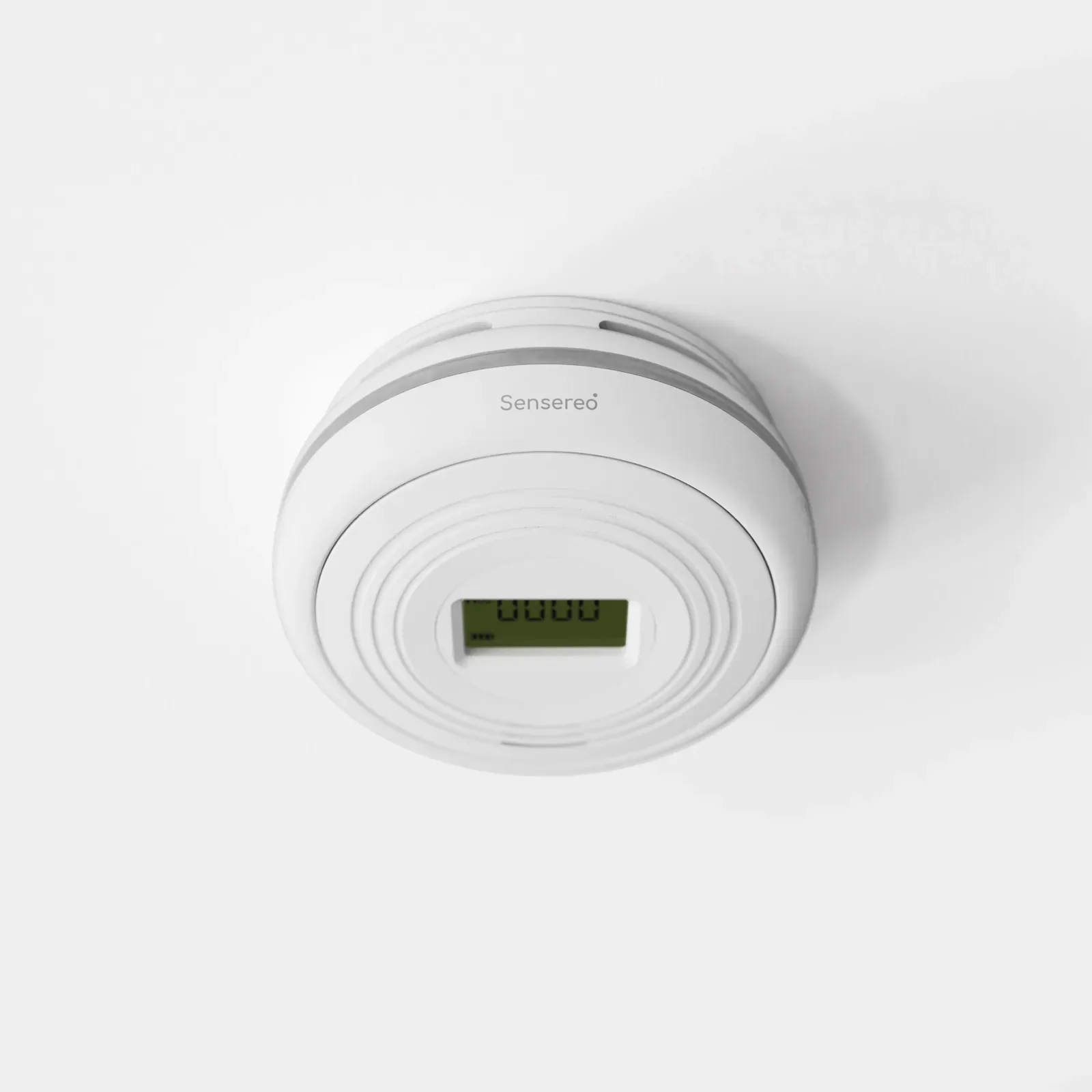
For a European buyer who wants smoke detection and a CO display in one unit, Sensereo MSC-1 is the more relevant comparison. Its manufacturer lists both features and European smoke/CO certification, with a $69.99 direct-store price before destination-specific charges. Combining the functions still depends on an installation location suitable for both.
I would choose Heiman for the simpler CO-only job and the familiar batteries. I would keep an existing suitable alarm within its service life if phone notifications are not useful enough to justify replacing it. Neither option needs a change merely to add another Matter device to the house.
Content feedback
Spot a mistake or missing context?
Send a quick note so it can be checked against the source material.