What we like
- The lowest listed price among Apple’s current Thread home hubs
- Small speaker with Siri, room sensors and an included power adapter
- Can form a stereo pair with another HomePod mini
What could be better
- Needs an iPhone or iPad for initial setup
- Some music services depend on AirPlay from a nearby phone or tablet
- No Dolby Atmos or surround-sound playback
A small speaker that earns its place
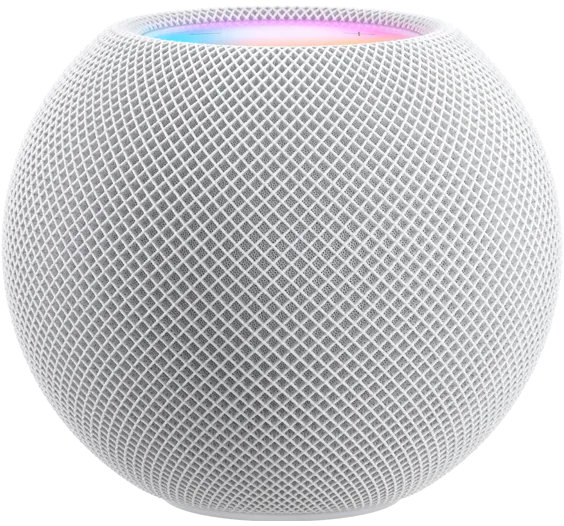
HomePod mini is the Apple hub we would buy for a kitchen counter, bedside table or office where Siri and everyday listening are useful. Its permanently powered Apple Home hub supports remote access and automations, with a Thread border router for compatible accessories. The speaker gives it a useful everyday role alongside those background jobs.
The appeal is doing several modest jobs in one powered location. You get voice control, music and podcasts, plus temperature and humidity readings for the room. The included 20 W adapter means there is no separate power supply to add to the order. There is no battery, so this is a speaker to leave in place rather than carry into the garden.
Apple's listed prices on September 10, 2026 were $129 in the US, £129 in the UK and €139 in Germany. Regional taxes and checkout terms apply. At those prices it is the least expensive of Apple's current Thread home hubs, though buying another hub you do not need still costs more than keeping the one you have.
The music service can decide the purchase
The full-range driver and passive radiators make sense for a small, unobtrusive speaker. Two minis can form a stereo pair, but they do not gain Dolby Atmos or 5.1/7.1 surround playback. A pair is a $258 US hardware purchase at the checked price, so it deserves more thought than simply adding a second cheap speaker.
The bigger practical restriction is how you play music. Apple Music and supported connected services can work through Siri. Other services may rely on AirPlay from a nearby iPhone or iPad; in that mode, playback can stop when the mobile device leaves range. Check the service you actually use before treating voice playback as equally independent across every app.
An iPhone or iPad is also required for initial setup. Someone who only owns an Android phone or a Mac should not buy the mini expecting a standalone speaker they can configure with either device.
Useful extras, without an upgrade obligation
The room sensors are a welcome extra when you want a general temperature or humidity reading where the speaker sits. They are less compelling as the reason to buy: prolonged loud playback can reduce their accuracy, and the useful sensing location may be different from the best place for a speaker.
Home Assistant users do not automatically need to discard an existing mini. Home Assistant lists it as a usable Thread border router, although Home Assistant still supplies its own Matter controller. That is a reason to reuse one, not a reason to buy a Siri speaker solely for another platform.
Spend more only for a different job
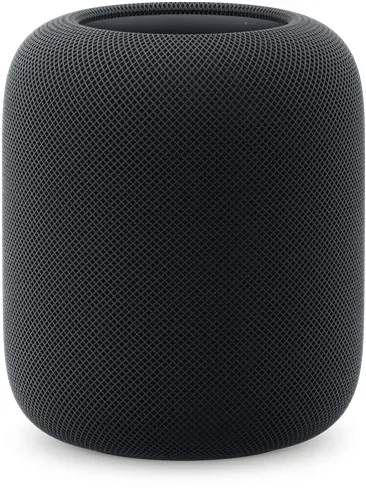
The full-size HomePod adds a woofer, multiple tweeters, room sensing and Spatial Audio. Its $349 US list price is $220 more, without buying a different basic Matter hub role. Choose it because you want those audio capabilities.
The 128 GB Apple TV 4K is worth considering when you also need a streamer and want Ethernet. Otherwise, the mini is the more economical entry. If a working Thread-enabled Apple TV or HomePod already covers the home, buy another mini for a room that needs a speaker, not as an automatic smart-home upgrade.
Content feedback
Spot a mistake or missing context?
Send a quick note so it can be checked against the source material.