What we like
- Adds separate fan-speed and light-dimming control without replacing a compatible fixture
- $60 standalone price is modest when the existing fan is worth keeping
- Direct Thread connection needs no Inovelli hub
What could be better
- Works only with supported 120 V AC fan motors, not DC-motor fans
- A normal wall control raises the hardware price to at least $115 before installation
- Newly certified firmware is not yet listed as production, and platform setup guidance has gaps
A $60 fix for the right old fan
The Inovelli VTM36 is worth considering when a ceiling fan still looks right and works well, but its pull chains or basic remote do not. The small controller sits inside the canopy and gives a compatible fan three speed settings while dimming its light separately. At $60 in the United States or CA$87 in Canada, it can be a more sensible project than discarding an otherwise good fixture.
That recommendation has a narrow target. The module is made for 120 V, 60 Hz AC ceiling or exhaust fan motors, specifically split-capacitor or shaded-pole designs. It does not support DC-motor fans, 240 V equipment or a fan whose motor and light cannot be wired separately. Matterhome has not tested motor noise, speed consistency, heat inside a canopy or dimming quality. Check the exact fixture and wiring before treating the price as the whole cost.
The canopy has to fit more than the module
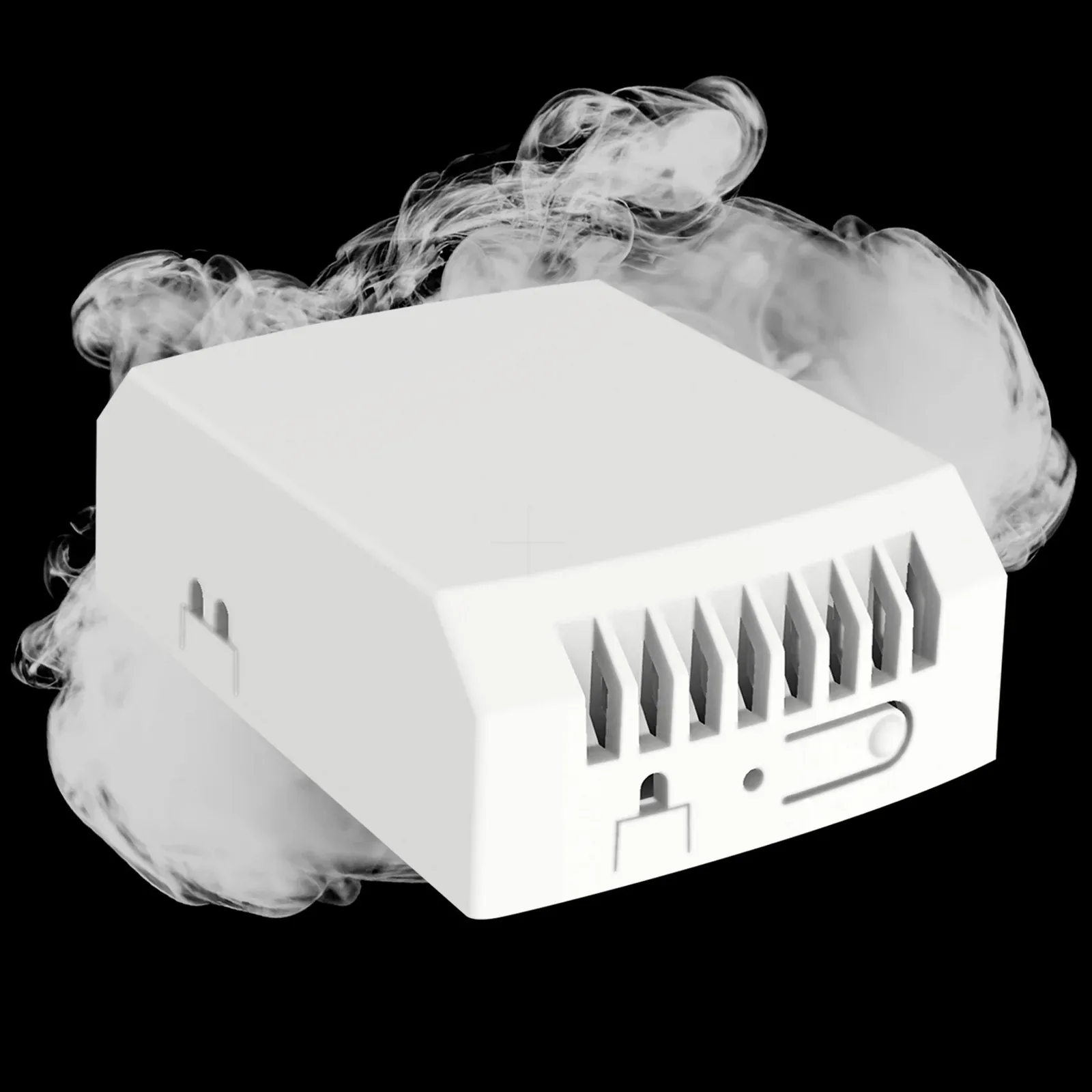
The controller measures 2.13 by 3 by 1 inches. That is compact, but the canopy still needs room for the body, connections and external Thread antenna. Its fan output is rated for 1.2 A. The light output is rated for 300 W incandescent, 150 W LED or 100 W CFL. Those limits are not permission to guess at an unlabelled motor or crowded ceiling box.
Inovelli's wiring guide gives the module constant power. A retained ordinary wall switch therefore has to stay on, or remote control disappears with the power. The module can be reset without opening the canopy by cycling power six times, but normal daily control deserves a better plan than a switch nobody may touch.
The standalone module makes the most sense when app, voice or an existing compatible control already covers the room. Inovelli's package with its White Series dimmer costs $115 US, and the package with the on/off switch costs $117.50. Both are available now, but those totals still exclude delivery, a faceplate and electrical work.
Matter control is useful but uneven
VTM36 connects directly over Thread, so it needs a compatible Matter controller and Thread border router but no separate Inovelli hub. Apple Home exposes the fan and light as separate controls. SmartThings has the fullest documented setup, including configuration through Inovelli's Edge driver. Home Assistant's exact guide confirms control of both loads, although parts of its configuration guidance are unfinished.
Google Home has an exact pairing path, but Inovelli has not completed its instructions for changing fan and light modes there. Alexa is harder to judge. Inovelli's current store page says Amazon Echo does not support the Matter Fan profile, while its August setup guide documents successful pairing with two components. Do not buy this module specifically for Alexa until Inovelli or Amazon resolves that contradiction for the controller you own.
A wall switch also needs more setup than the bundle picture suggests. Inovelli says its usual arrangement relies on platform scenes until Matter binding is supported by the chosen hub. That can provide a familiar paddle for the light and another button for fan speed, but it is not the same as a simple hardwired dual control that works independently of the automation platform.
The new certificate is ahead of the released firmware
The module works now on production firmware 1.0.0, and Inovelli publishes current pairing guides for the exact model. A new Matter certificate issued on October 1 covers firmware 1.1.0, but Inovelli's own changelog still lists 1.0.0 as production and 1.0.1r1 as an unstable beta available by request. Certification is not an update notification, so buyers should not assume 1.1.0 will arrive on a particular date.
The beta work matters because it changes how configuration endpoints appear and includes binding fixes. Inovelli warns that updating can reset settings, leave duplicate controls, break existing bindings or require a factory reset. That is manageable for an enthusiast already maintaining Home Assistant or SmartThings, but it weakens the case for hiding the module above a ceiling and forgetting about it.
Choose the smaller job
If the fan light already has its own satisfactory wall control and only the motor needs smart speed control, Inovelli's $70 VTM35-SN fan switch is the cleaner purchase. It puts the control at the wall and avoids adding a second hidden device. The canopy module earns its place when both loads need separate control and keeping the existing fixture is the goal.
If the current fan has an incompatible DC motor, too little canopy space or other reasons to replace it, a complete fixture such as the Govee 52-Inch Ceiling Fan with Lights is the more honest comparison. That costs much more, but it includes the fan, lighting, remote and direct Matter-over-Wi-Fi control as one designed system.
Buy VTM36 for a checked, compatible retrofit where separate fan and light control justifies the ceiling work. Skip it when the fan identity is uncertain, Alexa is the only controller, or the installed total approaches the cost of the replacement fan you already wanted.
Content feedback
Spot a mistake or missing context?
Send a quick note so it can be checked against the source material.